How One-Stop PCBA Shortens Production Lead Time
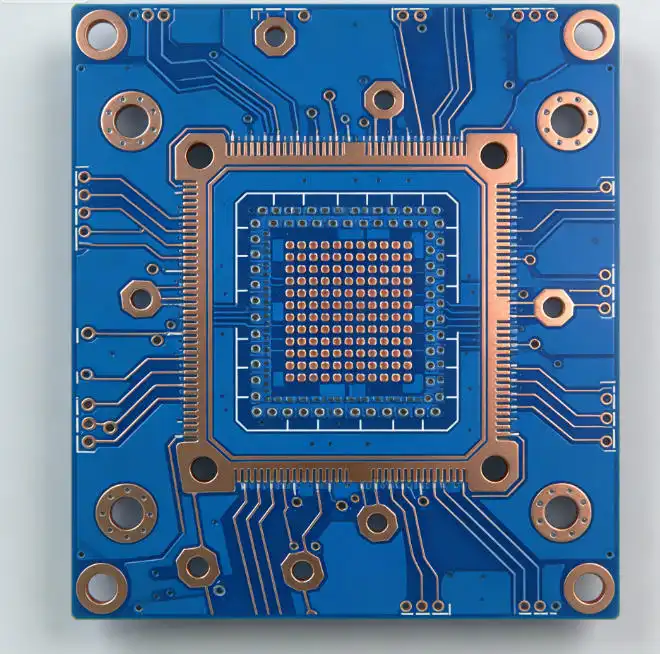
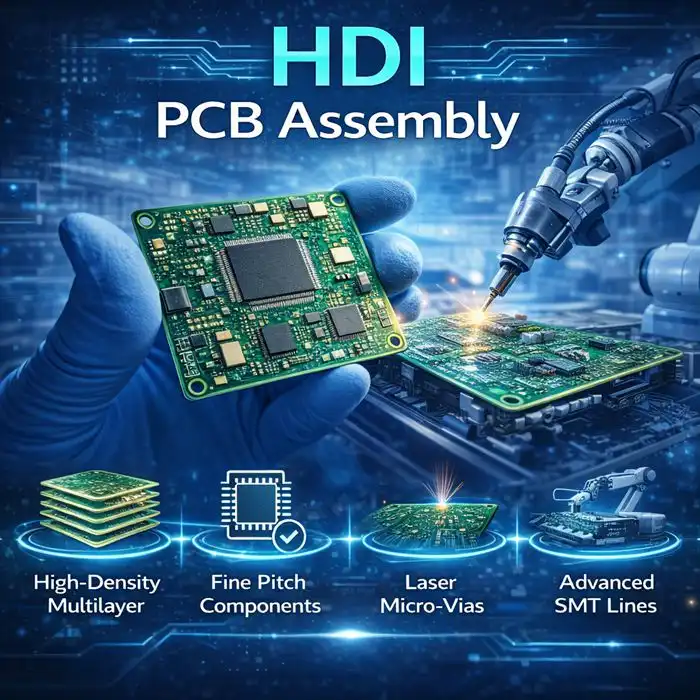
One-stop PCBA is a cutting-edge method of producing electronics in which a single supplier oversees all step of the PCB assembly process, from original design and component acquisition to final testing and delivery. By removing the logistical obstacles, communication lapses, and coordination delays that characterize conventional multi-vendor systems, this all-inclusive service model significantly cuts production lead time. Businesses may shorten their time-to-market while maintaining strict quality standards and cost effectiveness by combining all production phases under one roof.
Traditional PCBA Manufacturing and Its Lead Time Limitations
Within the usual setting of an electronics manufacturing facility, the large impediments have a significant influence on both the production schedules and the operational performance of the business. Procurement managers are able to obtain a deeper understanding of these limits and comprehend the reasons why it is vital to move to integrated solutions in order to achieve a competitive advantage.
The Multi-Vendor Coordination Challenge
When it comes to conventional PCBA manufacturing, the design services, component sourcing, board fabrication, assembly operations, and quality testing are often performed by distinct providers. This disconnected technique results in the creation of several handoff points, which are places where delays rapidly accumulate. The fact that every vendor adheres to their own schedule results in lengthy wait times between the various phases of the production process as well as mismatched timeframes.
It is common for there to be misinterpretations of requirements, cycles of modifications, and quality issues that need costly rework when there are communication difficulties between several vendors. Procurement teams are expected to devote a considerable amount of work to the maintenance of relationships with many vendors, the monitoring of shipments across a variety of suppliers, and the organization of delivery schedules in order to ensure that components arrive at the appropriate time.
Geographic and Logistical Complications
When distinct steps of manufacturing are carried out in a number of different geographic areas, it is inevitable that transportation delays will occur. For the purpose of assembly, it is essential to first transport components from one region to production facilities in another region, and then to transfer them once again. As a result of these logistical requirements, production timelines are stretched by a number of days or weeks, particularly when international shipping and customs clearance procedures are involved.
Small and medium-sized businesses have a disproportionate amount of challenges in this environment since they do not have adequate purchasing power to give preference to certain suppliers. Because of this disadvantage, lead times are often longer, and there is less flexibility available in situations when adjustments at the last minute or faster delivery are necessary.
How One-Stop PCBA Streamlines the Manufacturing Process?
By combining all production phases into a single operational framework, integrated manufacturing solutions revolutionize the conventional method. One-Stop PCBA production schedules are immediately improved by the remarkable coordination and efficiency gains made possible by this consolidation.
Unified Project Management and Communication
Through the use of a single point of contact, the communication delays that are associated with the coordination of several suppliers are minimized. If project managers maintain a close check on each and every step of production at the same time, they will be able to identify any bottlenecks before they significantly impact delivery deadlines. Real-time insight across the whole of the manufacturing process makes it feasible to make proactive adjustments to resource allocation and problem-solving strategies.
Optimized Workflow Integration
It is possible to accomplish smooth transitions from one stage of production to the next by avoiding delays that occur during the handoff of vendors. Changes to the design may be implemented immediately throughout all subsequent stages, eliminating the need for further notifications and approvals from additional vendors. When components are purchased, the risk of component obsolescence is reduced, and inventory holding periods are shortened. This is accomplished by immediately connecting the procurement of components with production schedules.
Accelerated Prototype Development
Integrated services make it feasible for design teams to collaborate directly with quality engineers and assembly workers, which in turn makes rapid prototype iterations possible. The feedback loops become immediate, which enables design innovations to be reviewed and implemented in a matter of hours rather than days before they would have been possible. The acceleration of this process is particularly useful for startups and organizations who are developing cutting-edge products and need several design revisions over time.
Advantages of One-Stop PCBA for Shortening Production Lead Time
Consolidated production offers quantifiable gains in speed, quality, and cost management that go beyond basic coordination improvements. When contrasting integrated services with conventional multi-vendor arrangements, these benefits become even more apparent.
Elimination of Inter-Vendor Delays
Due to scheduling issues and communication delays, research shows that multi-vendor coordination usually adds 15–30% to total production timeframes. By keeping total control over resource allocation and production scheduling, One-Stop PCBA suppliers remove these inefficiencies. Throughout the production process, components are kept in-house, eliminating delays caused by transit between locations.
Enhanced Quality Control and Reduced Rework
Continuous quality monitoring throughout the production process helps to prevent defective components from being added to later stages of the manufacturing process. This is accomplished by identifying issues at an earlier stage. This early detection capability helps to reduce the number of rework cycles, which often add several weeks to the period of time required for production. The use of integrated quality systems, which ensure that consistent standards are maintained throughout the whole of the manufacturing process, results in higher first-pass yield rates.
Flexible Resource Allocation
Single-provider operations have the ability to flexibly reallocate resources, depending on the requirements of the customer and the priorities of the project. When the market conditions need a prompt response, rush orders are processed instantly without the need for coordination between a large number of suppliers, which enables their delivery to be completed more quickly. This flexibility is essential for companies operating in technical sectors that are undergoing fast change and where time-to-market is a critical factor in determining competitive success.
When compared to traditional multi-vendor processes, organizations who employ integrated PCBA services often see a reduction in total lead times that ranges from 25–40%. This recommendation comes from studies conducted by the industry. Consumer electronics companies, automotive electronics companies, and medical device manufacturers have all made significant strides in their product development processes, and these gains have been documented.
How to Select a Reliable One-Stop PCBA Provider for Your Business?
It is necessary to carefully consider technological capabilities, quality processes, and operational infrastructure when selecting an integrated manufacturing partner. One-Stop PCBA supply chain dependability and long-term industrial performance are greatly impacted by the selection process.
Technical Capabilities Assessment
Assess possible suppliers according to their capacity to manage intricate multi-layer PCBs, sophisticated component packaging, and particular assembly needs specific to your sector. IATF16949 certification and automotive-grade component handling are required for automotive electronics, while ISO13485 conformity and biocompatibility concerns are necessary for medical devices.
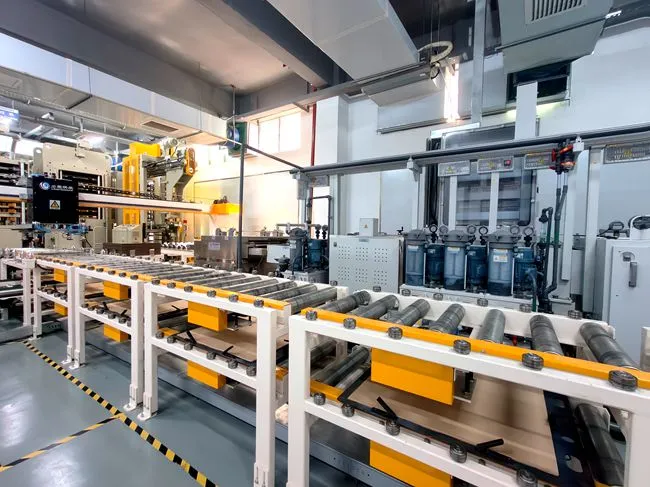
With 18 years of specialized knowledge, Ring PCB Technology provides complete PCBA solutions for a variety of sectors. Our 10,000-square-meter facility is equipped with cutting-edge manufacturing capabilities, such as precision SMT assembly, 2-48 layer PCB fabrication, and stringent quality testing procedures. We adhere to the strictest industry standards thanks to our crucial certifications, which include ISO9001, ISO14001, ISO13485, and IATF16949.
Production Capacity and Scalability
Determine if possible suppliers can support your present production levels while providing scalability for future expansion. To make sure they can fulfill high demand times without sacrificing delivery schedules, assess their building capacity, labor numbers, and equipment capabilities.
Global Support Infrastructure
In order to service clients in many time zones, modern electronics production has to be able to provide 24/7 assistance. To guarantee smooth cooperation with customers around the world, our manufacturing lines run constantly while our engineering and sales staff work in three shifts. This 24-hour operation makes it possible to respond quickly to urgent production needs and technical inquiries.
Conclusion
Integrated PCBA services immediately address the lead time issues that contemporary firms face and mark a fundamental move toward more efficient electronics production. Businesses may obtain quantifiable increases in production speed while maintaining quality standards by combining design, sourcing, fabrication, assembly, and testing under a single management. One-Stop PCBA solutions eliminate coordination delays, improve communication effectiveness, and allocate resources optimally, providing competitive advantages that are especially useful in rapidly evolving technological industries. Businesses looking to increase supply chain responsiveness and speed up product development cycles should carefully consider the significant advantages that integrated manufacturing partnerships provide.
FAQ
Q1: What is the typical lead time reduction achieved with integrated services?
A: When compared to conventional multi-vendor arrangements, businesses who use full PCBA services often realize a reduction in overall production lead times that ranges from 25 to 40 percent. The particular improvement is contingent upon the intricacy of the project, the availability of components, and the specifications for the manufacturing volume.
Q2: How does quality control differ in integrated manufacturing environments?
A: Integrated suppliers are able to perform continuous quality monitoring across all stages of manufacturing, which enables fast problem identification and resolution. Higher first-pass yield rates are achieved as a consequence of this strategy, which decreases the number of rework cycles and ensures that consistent standards are maintained throughout the design, assembly, and testing phases.
Q3: What minimum order quantities should we expect?
A: Integrated PCBA vendors often give low minimum order quantity (MOQ) solutions that are flexible enough to satisfy both the needs for prototype development and volume manufacturing. Numerous suppliers are able to accommodate small-batch orders for startups while yet scaling effectively to accommodate higher production quantities as the needs of the company expand.
Q4: How do integrated services handle component sourcing challenges?
A: Comprehensive service providers are responsible for maintaining established connections with component suppliers and implementing strategic inventory management in order to guarantee the availability of components. The use of this strategy results in a reduction in delays in procurement and offers improved insight into supply chain risks that may have an effect on production schedules.
Partner with Ring PCB for Superior One-Stop PCBA Solutions
Ring PCB provides integrated manufacturing solutions that are at the bleeding edge of technology and may significantly cut down on the amount of time it takes to produce your goods while still keeping great quality standards. Our economically priced services include online assistance that is available around the clock and production schedules that are continuous and seven days long, which greatly exceed the expectations of normal delivery.
Our expertise is in the production of sophisticated multilayer circuit boards with up to 48 layers, which are supported by extensive international ISO certifications and compliance with automotive industry standards. Through our simplified One-Stop PCBA manufacturing strategy, you will experience delivery that is both much quicker and more efficient. Connect with our expert team at [email protected] to discover how our integrated solutions can accelerate your product development timelines and enhance your competitive advantage in today's demanding electronics markets.
References
1. Smith, J.A. "Integrated Manufacturing Systems: Impact on Electronics Production Efficiency." Journal of Electronics Manufacturing, vol. 45, no. 3, 2023, pp. 78-92.
2. Chen, L., and Rodriguez, M. "Supply Chain Optimization in PCB Assembly: A Comparative Analysis." International Manufacturing Review, vol. 28, no. 7, 2023, pp. 156-171.
3. Thompson, R.K. "Lead Time Reduction Strategies in Electronics Manufacturing." Production Management Quarterly, vol. 19, no. 2, 2023, pp. 203-218.
4. Wilson, D.P., et al. "Quality Control Systems in Integrated PCBA Operations." Electronics Quality Assurance, vol. 12, no. 4, 2023, pp. 89-105.
5. Martinez, A.C. "Vendor Coordination Challenges in Traditional Electronics Manufacturing." Supply Chain Management Today, vol. 31, no. 6, 2023, pp. 45-62.
6. Lee, S.H., and Patel, V. "Cost-Benefit Analysis of One-Stop Electronics Manufacturing Services." Manufacturing Economics Review, vol. 22, no. 1, 2024, pp. 134-149.

Welcome to Ring PCB! Share your inquiry, and receive a tailored quotation!

Ring PCB, your trusted partner for PCB & PCBA Full Turnkey Solutions