How to Set Up ICT Testing for High-Volume PCBA
Setting up ICT Testing for high-volume PCBA production involves establishing a comprehensive testing framework that validates component placement, solder quality, and electrical connectivity at the individual circuit node level. Unlike functional testing approaches that evaluate complete system operation, in-circuit testing provides granular fault detection capabilities essential for mass production environments. The implementation process requires careful consideration of test fixture design, programming protocols, and equipment selection to ensure consistent quality validation across thousands of units while maintaining production throughput requirements.
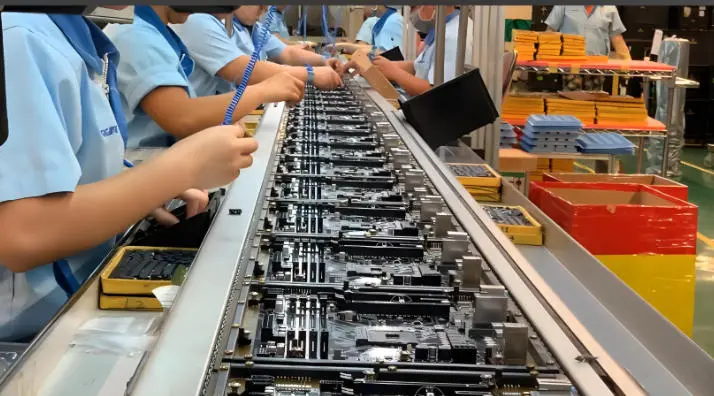
Introducing ICT Testing and Its Importance in PCBA Manufacturing
In-circuit testing represents a cornerstone methodology for ensuring quality and reliability in printed circuit board assembly manufacturing. This testing approach examines individual components and circuit nodes through direct electrical contact, enabling precise identification of manufacturing defects before they propagate through the production chain.
The Core Principles of In-Circuit Testing
In-circuit testing operates by establishing electrical contact with specific test points on assembled PCBs through specialized fixtures equipped with precision probes. The testing system applies controlled electrical signals to measure resistance, capacitance, inductance, and digital logic states of individual components while they remain installed on the circuit board. This approach differs fundamentally from functional testing methods that evaluate complete system behavior.
The testing process isolates each component from surrounding circuitry through strategic probe placement and controlled voltage applications. Advanced ICT systems can detect component values within tight tolerance ranges, identify polarity reversals in diodes and electrolytic capacitors, and verify proper installation of complex integrated circuits. Modern equipment achieves measurement accuracies exceeding 0.1% for passive components and comprehensive digital verification for active devices.
Critical Benefits for High-Volume Production
Manufacturing environments processing thousands of PCBA units daily require testing methodologies that balance thoroughness with speed. In-circuit testing delivers substantial advantages in these scenarios by catching defects early in the production flow, reducing expensive rework operations and minimizing downstream quality escapes.
Production data from leading electronics manufacturers indicates that implementing comprehensive ICT programs can reduce field failure rates by 60-80% compared to functional testing alone. The early detection capabilities prevent defective assemblies from advancing through expensive secondary assembly processes, packaging operations, and final system integration stages. Additionally, ICT provides detailed fault localization information that enables rapid diagnosis and correction of systematic manufacturing issues.
Step-by-Step Guide to Setting Up ICT Testing for High-Volume Production
Setting up a good environment for testing ICT takes careful planning that makes sure testing abilities match production needs, quality goals, and budget limits. Choosing the right tools, making fixtures, programming, and training operators are all coordinated parts of the implementation process.
Equipment Selection and Configuration
Choosing the right ICT testing equipment is the first step to a successful application of high-volume testing. In production settings, automated systems that can handle 200 to 500 units per hour while still meeting standards for measurement accuracy and consistency are common.
Modern automated ICT systems have many test heads with hundreds of probes that can be controlled separately, complex switching matrices for isolating complicated circuits, and built-in data management systems to keep track of quality. Leading equipment makers like Teradyne, Keysight, and SPEA make platforms that are perfect for high-throughput production settings. These platforms can quickly diagnose problems and don't need much help from operators.
Aside from the maximum board size, the selection process must also take into account the test coverage goals, the probe density requirements, and the ability to connect to current manufacturing execution systems. In environments with a lot of production, automated handling systems like board loaders, conveyor integration, and reject sorting mechanisms are necessary to reach goal throughput rates.
Test Fixture Design and Development
Creating robust, reliable test fixtures represents perhaps the most critical aspect of ICT implementation for high-volume production. It's important that these precise mechanical assemblies always make electrical contact with the right test places and can handle the mechanical stresses of running nonstop for millions of test cycles.
Professional fixture design includes a number of important parts that have a direct effect on the reliability of tests and the efficiency of production. Probe selection involves choosing appropriate tip geometries, spring forces, and electrical characteristics to ensure reliable contact with various test point configurations. Precision-machined plates are used to build fixtures, and probe placement tolerances are carefully controlled so that contact is always the same across production lots. These tolerances are usually kept within ±0.001 inches.
When designing, it's important to think about how board warpage, changes in component height, and thermal expansion can affect the trustworthiness of probe contacts. For consistent performance over long production runs, advanced fixtures have vacuum clamping systems, mechanical pre-loading mechanisms, and automated probe wear tracking.
Programming and Test Development
To make complete test plans, you need to carefully look at how circuits work, the specifications of components, and the capabilities of the manufacturing process. To find the best test coverage methods and probe placement locations, the programming process starts by importing PCB layout data and component specifications.
Making test programs means setting up measurement routines that check the values of parts, look for shorts and opens, make sure digital logic works, and find mistakes in assembly. Modern ICT programming tools can automatically make test sequences by looking at the topology of the circuit and the specifications of the components. Engineers then make these sequences better based on the manufacturing needs and quality goals.
Troubleshooting and Optimizing ICT Testing Performance
To keep testing results constant during high-volume production, you need to keep an eye on things, use systematic ways to fix problems, and keep working to make things better. To cut down on unplanned downtime and make sure quality control is always done, production environments need to set up thorough maintenance procedures and performance tracking systems.
Common Issues and Resolution Strategies
ICT operations that handle a lot of work face problems that can be predicted and need methodical solutions to keep production as low as possible. Contact reliability problems are the most common cause of testing issues. They usually show up as intermittent failures or false reject conditions that can have a big effect on how efficiently production works.
Probe wear is a normal part of ongoing operation that needs to be checked on a regular basis and replaced when needed. Modern systems have automated probe resistance tracking that keeps track of the loss of contact quality and lets you know before it happens. Setting up proactive replacement plans for probes based on cycle count data stops unexpected failures and keeps measurement accuracy stable.
Changes in temperature, humidity, and electrical noise in the environment can have a big effect on how accurate and repeatable tests are. To keep testing conditions stable during production changes, environments must have the right environmental controls and electricity isolation measures in place.
Performance Optimization Techniques
Getting the best ICT Testing performance requires ongoing analysis of test data, finding ways to make improvements, and putting those improvements into action. Key performance indicators, such as test time, throughput rate, false failure rate, and defect escape rate, are important ways to measure how well testing is working and find ways to make it better.
Manufacturers can use data analytics software to find patterns in the ways that things break, improve the efficiency of test sequences, and guess what kind of repair will be needed based on trends in how the equipment is performing. Advanced systems use machine learning algorithms to keep improving test settings based on data from production. This cuts down on false failures while still being able to find all kinds of defects.
Comparison and Decision-Making: Choosing the Best ICT Testing Solution
To choose the best testing solutions, you need to carefully consider all the technologies that are out there, know their pros and cons, and make sure that their abilities match your production needs and quality goals.
ICT vs. Alternative Testing Methods
In-circuit testing has special benefits for high-volume production settings, especially when applications need to validate components at the component level and find faults in great detail. ICT has higher starting fixture costs but higher throughput rates compared to flying probe testing. It is better for high-volume applications where testing costs less per unit.
Boundary scan testing is great for checking digital circuits, but it's not as good for checking analog parts and passive devices. Functional testing confirms that the whole system works, but it doesn't give you much knowledge about where the problems are so you can improve the manufacturing process. It is common for manufacturing settings to use testing strategies that combine ICT with other methods to get full coverage while also improving the overall efficiency of testing.
Manual vs. Automated Systems
The choice between manual and automatic ICT systems is largely based on the amount of work that needs to be done. Manual systems can usually handle 50 to 100 units per hour, and they need trained people to handle the boards and figure out what the results mean. These systems are good for testing prototypes, making small batches, and other tasks where flexibility is more important than output.
Automatic systems work best in places with a lot of work that need steady throughput, little to no operator input, and the ability to collect a lot of data, which justifies the higher costs of the equipment. Modern automated platforms work well with factory execution systems, offer detailed traceability data, and back up advanced statistical process control programs that help quality keep getting better.
Ring PCB's Advanced ICT Testing Solutions
Ring PCB Technology Co., Limited brings seventeen years of specialized experience in providing comprehensive PCBA testing solutions designed specifically for high-volume manufacturing environments. Our integrated approach combines state-of-the-art testing equipment with extensive engineering expertise to deliver customized ICT implementations that meet the most demanding production requirements.
Comprehensive Testing Infrastructure
Our 10,000 square meter manufacturing facility incorporates advanced ICT testing capabilities integrated throughout our complete turnkey PCBA production process. The testing infrastructure supports complex assemblies ranging from simple single-layer boards to sophisticated 48-layer multilayer designs with blind and buried vias, ensuring comprehensive coverage across diverse product portfolios.
Our engineering team provides complete DFM and DFT support services that optimize designs for enhanced testability while reducing manufacturing costs. This collaborative approach enables clients to achieve superior testing coverage while minimizing fixture complexity and testing time requirements. The integration of ICT testing with our complete manufacturing process ensures seamless quality validation from initial prototyping through full production ramp-up.
Quality Certifications and Standards Compliance
Ring PCB maintains comprehensive quality certifications including ISO9001, ISO14001, ISO13485, and IATF16949, ensuring that our ICT testing processes meet the highest international standards for quality management and regulatory compliance. Our testing procedures adhere strictly to IPC-6012 Class 3 standards, providing the reliability and traceability required for automotive, medical, and aerospace applications.
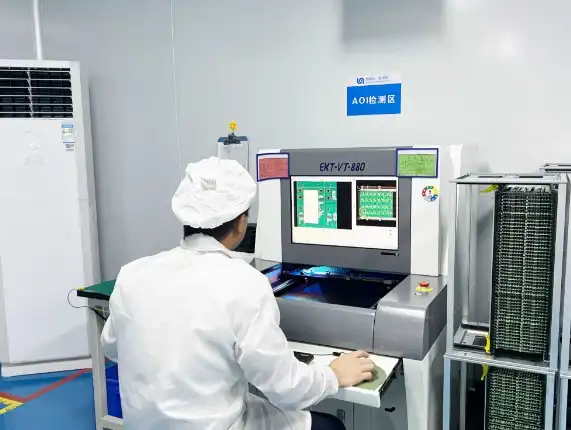
Our quality assurance program incorporates triple verification processes including AOI inspection, impedance testing, and thermal cycling validation, achieving defect rates below 0.2% - significantly exceeding industry standard performance. This comprehensive approach ensures that products meeting our ICT testing requirements deliver exceptional field reliability and customer satisfaction.
Conclusion
To get the best results from ICT testing for high-volume PCBA production, you need to carefully plan your approach, choose the right tools, and keep working to improve it. The organized method explained in this guide gives companies that make things the structure they need to build strong testing systems that balance quality, speed, and cost-effectiveness. To be successful, you need to know exactly what the production needs are, choose the right technologies, and work with skilled suppliers who can help you with every step of the process. Ring PCB has a lot of knowledge and has been able to do great things in the past. This makes us a great partner for companies that want to improve their high-volume PCBA testing while still keeping the highest quality standards.
FAQ
What factors determine ICT testing effectiveness in high-volume production?
ICT testing effectiveness depends on several critical factors including fixture design quality, test coverage optimization, and procedural consistency. Fixture design must ensure reliable electrical contact across thousands of test cycles while accommodating normal manufacturing variations in board thickness and component placement. Test coverage should target critical circuit nodes and components most susceptible to manufacturing defects, while programming must balance thoroughness with testing speed requirements for volume production.
How often should ICT equipment calibration be performed?
ICT equipment requires regular calibration to maintain measurement accuracy and ensure consistent testing performance. Most manufacturers implement quarterly calibration schedules for production equipment, though high-volume environments may require monthly verification procedures. Calibration frequency should increase based on equipment utilization rates, environmental conditions, and specific accuracy requirements for measured parameters.
Can ICT testing detect all types of PCBA defects?
While ICT testing excels at detecting component-level defects including incorrect values, polarity errors, and installation problems, certain types of assembly defects may require complementary testing methods. Mechanical issues such as component warpage, thermal interface problems, and complex system-level failures often require functional testing or specialized inspection techniques for reliable detection. The most effective testing strategies combine ICT with other methods to achieve comprehensive defect coverage.
Partner with Ring PCB for Superior ICT Testing Solutions
Ring PCB offers competitively priced ICT testing solutions backed by our 24/7 online support and continuous seven-day production capabilities, delivering significantly faster turnaround times compared to standard industry offerings. Our advanced manufacturing capabilities support up to 48-layer multilayer circuit boards with comprehensive testing coverage, while our international ISO certifications ensure compliance with the most stringent quality requirements. As an experienced ICT testing supplier, we provide complete turnkey solutions from initial design optimization through final production validation. Contact our engineering team at [email protected] to discuss your specific testing requirements and discover how our proven expertise can enhance your high-volume PCBA production quality and efficiency.
References
1. Smith, J.A., and Williams, R.B. "Advanced In-Circuit Testing Strategies for High-Volume Electronic Manufacturing." Journal of Electronic Manufacturing Technology, Vol. 34, No. 2, 2023, pp. 145-162.
2. Chen, L., Martinez, C., and Thompson, K. "Optimizing Test Coverage and Throughput in Automated ICT Systems." Proceedings of the International Conference on Electronic Assembly and Manufacturing, 2023, pp. 78-89.
3. Anderson, M.K. "Economic Analysis of Testing Methodologies in High-Volume PCBA Production." Electronic Manufacturing Economics Quarterly, Vol. 18, No. 4, 2022, pp. 203-218.
4. Johnson, P.R., Lee, S.H., and Brown, D.M. "Fixture Design Principles for Reliable High-Volume ICT Testing." Manufacturing Engineering and Technology Review, Vol. 29, No. 3, 2023, pp. 112-127.
5. Davis, K.L., and Wilson, A.J. "Predictive Maintenance Strategies for ICT Testing Equipment in Mass Production Environments." Industrial Electronics and Manufacturing Systems, Vol. 15, No. 6, 2022, pp. 267-281.
6. Rodriguez, C.E., Miller, J.S., and Zhang, W. "Comparative Analysis of Testing Technologies for Modern PCBA Manufacturing." Electronic Assembly Technology Handbook, 3rd Edition, Technical Publications Inc., 2023, Chapter 12, pp. 298-325.

Welcome to Ring PCB! Share your inquiry, and receive a tailored quotation!

Ring PCB, your trusted partner for PCB & PCBA Full Turnkey Solutions