What to Look for in a High-Volume PCBA Factory
It's important to know what makes great High-Volume PCBA providers stand out when you're looking for a trusted partner for large-scale electronics manufacturing. When it comes to High-Volume PCBA assembly, which includes production runs of thousands to millions of units, stability, speed, and cost-effectiveness are what give one company an edge over another. With scalable processes, advanced automation, and strict quality standards, the right factory can turn your idea into goods that are ready to sell. If you're starting consumer goods, automotive systems, or medical devices, choosing a manufacturer with proven mass production skills will have a direct effect on how reliable your products are, how quickly they can be sold, and how much money you make.
Understanding the High-Volume PCBA Manufacturing Landscape
Assembly for mass production is very different from assembly for prototypes or low volumes. Small-batch makers focus on being flexible and customizing their products, while large-scale facilities aim for accuracy and high throughput. Most of the time, these companies make boards for OEMs, contract makers, and brands that need tens of thousands of them every month.
What Defines High-Volume Production Capacity?
True High-Volume PCBA capability means keeping up the same level of output over long production cycles without lowering the standard. These kinds of facilities can run multiple SMT lines at the same time, handle mixed-technology boards quickly, and keep track of millions of dollars' worth of parts. When measuring production capacity, both the possible maximum output and the steady, reasonable throughput while quality limits are taken into account.
Market Dynamics Driving Volume Assembly Demand
Consumer gadgets, electric cars, and the widespread use of Internet of Things (IoT) devices are all driving up the need for cost-effective mass assembly. Companies are under a lot of pressure to lower unit costs while still meeting dependability standards. This makes the battle among PCBA providers very tough. If you know about these market forces, you can figure out which makers are putting money into the right technologies for automation, quality systems, and process optimization that will give your customers real benefits.
How Volume Manufacturing Reduces Unit Costs?
There are several ways that economies of scale show up in the making of High-Volume PCBA. Capital costs are spread out over millions of parts by automated placing equipment. When you buy boards, solder parts, and passive components in bulk, you can get better prices. Optimized production schedule gets the most use out of all of the tools. When compared to low-volume options, these factors save a lot of money per unit, but you have to plan carefully because of the minimum order amounts and setup costs.
Core Criteria for Selecting a High-Volume PCBA Factory
To find the right production partner, you need to carefully look at their success in a number of different areas. You need more than just basic claims about your capabilities; you need proof that they are consistently carried out at scale. For high-demand projects, experience in High-Volume PCBA production ensures that they can handle large-scale manufacturing without compromising on quality or timelines.
Manufacturing Technology and Equipment Standards
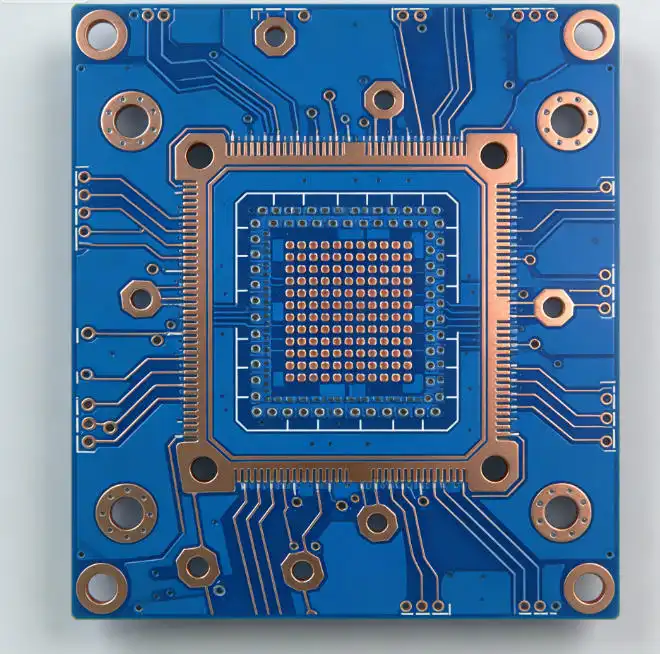
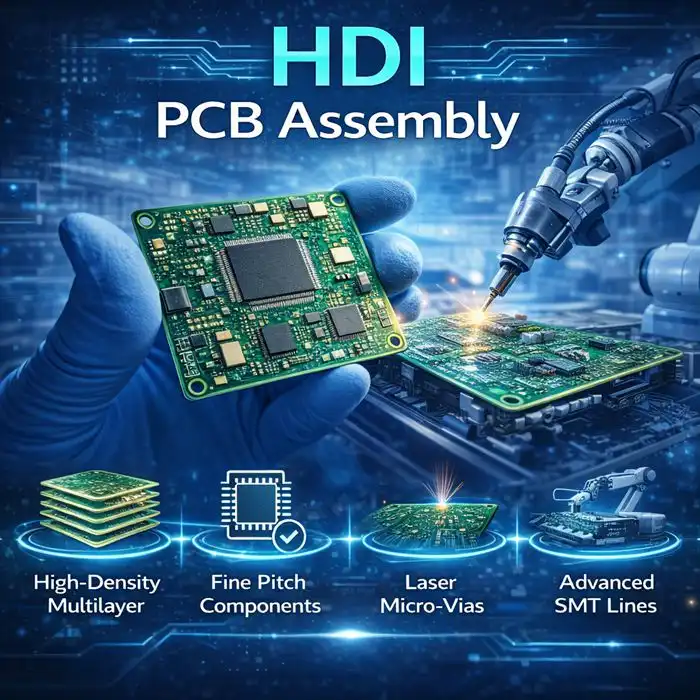
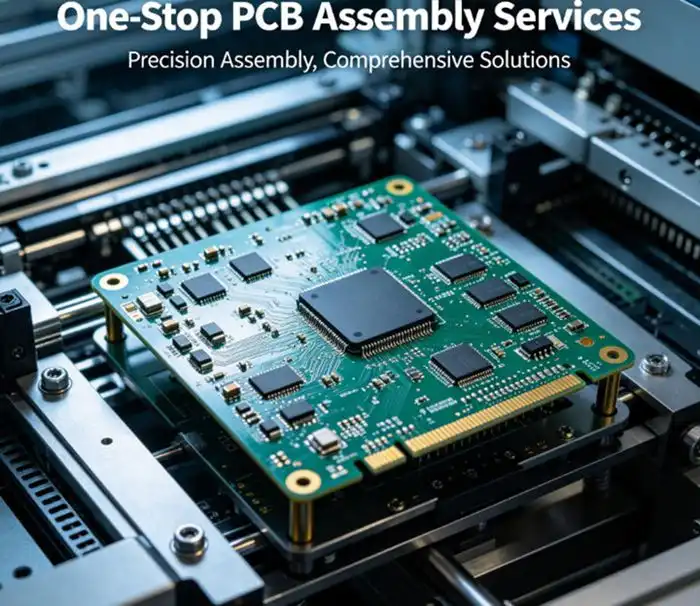
Modern assembly processes are built on top of advanced SMT placing machines. Look for places that use well-known types of tools that can place more than 50,000 parts per hour and be accurate to within ±0.02mm. Printers that can do more than one thing, reflow ovens that can precisely profile temperature, and automatic optical inspection systems should all work together as production cells instead of separate stations. Certain types of connectors, power components, and older designs still need to be able to be put together through holes, which can be done with selective wave soldering or robotic insertion systems.
Our plant uses cutting edge LDI laser exposure technology and vacuum lamination methods to make sure the accuracy of complicated multilayer boards with anywhere from 2 to 48 layers. This high-tech manufacturing infrastructure helps with tough tasks in the medical device, aircraft, and telecoms industries that need to be reliable.
Automation Level and Process Control
In settings where a lot of things are made, automation and regularity go hand in hand. Handling by humans between process steps is kept to a minimum on fully automated lines, which lowers the risk of pollution and placement mistakes. Material handling systems should be able to feed component reels, handle board swaps, and move units through inspection stations without any help from a person. Process monitoring software keeps an eye on real-time performance data and alerts you to problems before they lead to bad goods.
Some types of products may work better with semi-automated processes, especially ones that need to be changed over often or have special building needs. Figuring out where your product fits on this range helps the factory adapt its powers to your needs instead of trying to be as automated as possible no matter what the application calls for.
Quality Management Systems and Certifications
While ISO 9001 approval is a good starting point for quality management, standards that are specific to a field are more reliable. IATF 16949 certification proves competence in the car business, ISO 13485 certification proves competence in the medical device manufacturing sector, and AS9100 certification proves competence in the aerospace sector. For these certifications, you need to have regular audits, written down methods, and programs for ongoing growth that go beyond just checking boxes for compliance.
We have many certificates, such as ISO9001, ISO14001, ISO13485, IATF16949, and UL recognition, which show that we are dedicated to meeting the needs of a wide range of industries. Our quality systems keep failure rates below 0.2%, which is much lower than the industry average of 1%. They cover the whole production process, from inspecting new materials as they come in to checking their final functionality.
Production Capacity and Scalability
Given capacity numbers need to be understood in the context of the whole. A plant that says it can do 5 million placements every day needs to be clear about the board complexity, component mix, and quality standards that this output is based on. Monthly board output for goods like yours, average line usage rates, and plans to increase capacity are more useful measures.
Scalability is very important when market demand changes or when product life cycles go longer than expected. Manufacturers who are running below their full capacity leave room for demand spikes, while those who have plans to expand show that they want to meet the needs of growing customers instead of pushing their infrastructure to its limits.
Material and Technical Considerations in High-Volume PCBA
Choosing the right components and substrates has a big effect on both the yield of production and the stability of the product over time. The effects of material choices made during the planning phase are amplified by mass production, especially in High-Volume PCBA where even small material variations can have a significant impact on overall performance and quality.
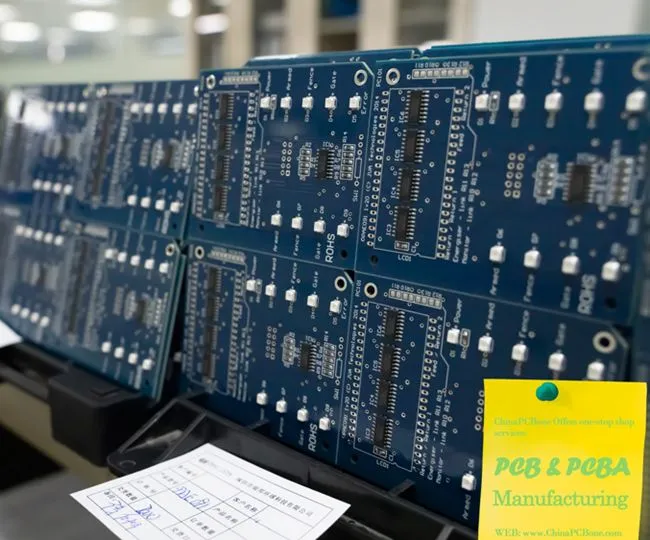
PCB Base Material Selection for Mass Production
FR-4 is still the most common material used in industrial electronics because it has good electrical and thermal qualities and doesn't cost too much. For high-frequency uses, low-loss materials like Rogers or Taconic substrates are needed, which can only be processed by people who know how to do it right. Metal-core PCBs or heavy copper constructions are good for designs that need to deal with heat management because they get rid of heat well in power electronics, EV charging systems, and industrial controls.
Consistency in materials across production lots stops differences in building. Reliable makers get PCB substrates from qualified providers with quality records that can be tracked. This makes it easy to find the root cause of problems as soon as they happen. This supply chain discipline tells the difference between businesses that are skilled and those that aren't by letting them source materials whenever they want.
Component Sourcing and Supply Chain Management
The risk of counterfeit parts is highest during High-Volume PCBA production, when the cost of materials has a big effect on how competitive a product is. Reliable makers get their supplies from authorized distributor networks or straight from component manufacturers, and they keep records of the chain of custody. Before putting together a kit for production, incoming inspection processes check the physical measurements, electrical parameters, and validity of each component.
Electronics manufacturing has been having trouble lately with supply chain problems, which makes inventory management strategy a key difference. Keeping key component stock on hand can help factories avoid allocation problems, but it costs a lot of money and needs complex inventory systems. Finding out how a possible partner buys parts can tell you a lot about how mature their operations are and how stable their finances are.
Design for Manufacturing (DFM) Support Services
The best assembly partners don't just build what you tell them to, they also use their production knowledge to help with the planning process. DFM analysis finds possible problems with assembly, offers different parts that will increase yield, and makes pad shapes work best for reliable soldering. This way of working together keeps redesigns from being too expensive after tools and production settings have been paid for.
Our engineering team does full DFM and DFA optimization and checks ideas to make sure they can be made before they start production. We find possible problems with trace sizes for high-current uses, thermal via placement for heat-sensitive parts, and component spacing that makes automatic placement less effective. This aggressive help lowers the risks in your design and often shows you ways to lower the cost of your bill of materials.
Thermal Management in High-Power Applications
Complex temperature design is needed for things like EV chargers, industrial motor drives, and high-performance computers. When compared to standard 1 oz models, heavy copper PCBs (with 2 oz or more of copper weight) are better at carrying current and spreading heat. Thermal vias make electrical paths that move heat from parts to heatsinks or frame structures.
To make these designs that need to withstand high temperatures, process changes are needed to account for the extra copper mass, which impacts reflow profiles and soldering parameters. This kind of specialized knowledge is usually held by factories that have worked on a lot of high-power projects and have experience with car electronics and industrial controls.
Comparing Leading High-Volume PCBA Manufacturers
The global High-Volume PCBA production environment is very different in terms of location, technology specialization, and cost structures. Instead of automatically choosing the cheapest choice, your selection factors should be based on what's most important to the project.
Evaluating Regional Manufacturing Options
Cost savings come from established supply lines, economies of scale, and competitive labor markets in Asia, where most of the manufacturing is done. Global technology names use factories in China, Taiwan, and Southeast Asia that have been shown to be able to produce a lot of goods at once. But longer wait times, trouble communicating, and worries about intellectual property should be taken into account.
North American and European makers put a lot of emphasis on being able to turn orders around quickly, working together on designs, and following all the rules for industries like aerospace and medical products. Even though the unit costs are usually higher than Asian options, being close to the factory has benefits like faster prototyping processes, easier facility audits, and less supply chain risk. Most of the time, the best results come from hybrid methods that use regional skills at different stages of a project.
Technology Specialization and Industry Focus
Some companies become very good at making things for certain industries, learning a lot about how to make things that helps customers in those industries. Assembling medical devices needs different validation methods, systems for keeping devices clean, and ways to track them than making consumer electronics. IATF-compliant qualification methods, increased temperature tests, and vibration protection are needed for electronics used in cars.
Usually, matching your product group with a manufacturer's area of expertise is more important than just looking at cost. Their years of experience mean that they have fewer production problems, can solve problems faster, and can make ideas based on the history of similar products. We're very good at telecommunications, medical devices, car systems, and industrial electronics because we've worked with clients in these tough fields for years.
Cost Structure Analysis Beyond Unit Price
To compare quotes, you need to look at more than just the total landing costs for each unit. Costs for transportation, tools, minimum order amounts, and payment terms all have a big effect on the economics of a job. When market windows get smaller or demand estimates turn out to be too hopeful, the ability to rush orders and the fees that come with them are important.
If you buy more, you should get bigger volume discounts that make sense as you add more to your cart. These discounts should reflect real cost cuts, not just random price levels. Clear cost breakdowns that separate PCB manufacturing costs, component costs, assembly charges, and testing fees let you find ways to save money and make sure your prices are fair based on market standards.
Best Practices for Smooth Procurement and Partnership
Building good ties with manufacturers is more than just making orders and waiting for delivery. Strategic relationships built on mutual knowledge deliver superior long-term results, especially when it comes to High-Volume PCBA, where ongoing collaboration can help optimize processes, improve efficiency, and ensure the highest quality throughout production runs.
Effective Communication and Documentation Standards
Sharing data accurately avoids misunderstandings that slow down work or lower quality. The base is made up of complete assembly plans, correct bill of materials (BOMs) with part numbers from manufacturers, and clear specification papers. Gerber files should have all the levels that are needed and be named correctly. It is not enough to assume that people understand test methods, acceptance standards, and packaging requirements; they need to be clearly defined.
Setting up communication rules early on makes it clear how to escalate issues, how often to send updates, and how to call someone in an emergency. Language barriers can make working with foreign producers difficult at times. To keep everyone on the same page, it's helpful to confirm verbal conversations in writing. Our engineering and sales teams work in three shifts and speak three languages. We offer help 24 hours a day, seven days a week, 365 days a year, so there are no time zone problems and you can get answers quickly to pressing questions.
Negotiation Strategies for Long-Term Contracts
Usually, promises to buy a lot of something lead to better prices, but it takes a lot of work to find the right balance between commitment levels and unclear demand. Using tiered pricing systems and setting quarterly volume goals gives manufacturers freedom while also giving them information they need to plan their capacity. Including terms that allow for reasonable changes in volume saves both parties from market volatility.
Terms of payment have a big effect on both producers' and clients' cash flow. Using milestone payments to spread out the risk—deposits when the order is placed, partial payment when the work is done, and full payment after inspection—makes sense. As trust grows through successful project completion, relationships that are already in place often move toward better terms.
Quality Monitoring and Continuous Improvement
Tracking quality measures over time lets you spot trends before they cause a lot of defects. Asking makers for regular updates on first-pass yield, flaw types, and corrective actions shows that you care about quality products and holds them responsible. Business reviews every three months are a good time to talk about ways to make things better, ways to make processes more efficient, and how to use new technologies.
During production, we have strict quality control measures in place, such as automatic optical inspection, X-ray examination for secret solder joints, and functional testing methods that are specifically designed for your product. When problems happen in the field, our quality systems keep thorough records that can be tracked back to the source. This lets problems be looked into quickly and helps with efforts to make things better all the time, which is good for everyone.
Conclusion
Choosing a manufacturing partner for large-scale High-Volume PCBA production is a long-term strategy choice that will affect the quality of the product, its ability to compete on price, and its success in the market. Instead of just looking at unit prices, the review process should carefully look at things like professional skills, quality systems, supply chain management, and the ability to work together. Superior value is delivered throughout the lifetime of a product by factories that have advanced technology, relevant industry certifications, open communication practices, and proactive engineering support.
Geographic factors weigh the benefits of lower costs against the advantages of being close by, protecting intellectual property, and making sure the supply chain is resilient. If you take the time to carefully research possible partners, ask to see samples of their work, tour the facility, and check their references, you can avoid making mistakes that cost a lot of money, cause delays in production, and hurt the image of your products.
FAQ
Q1: What lead times should I expect for high-volume PCBA orders?
A: Lead times depend a lot on how complicated the design is, how readily available the parts are, and how busy the plant is at the moment. Standard High-Volume PCBA production usually takes three to five weeks from the time an order is confirmed until it is shipped. This time includes making the PCB, getting the parts, putting it all together, checking it, and making sure it's of good quality. With extra fees, rush services can cut down on time to 7–10 days, but part wait times are more often what limits the time it takes to put the parts together. Setting up forecasting contact with your manufacturer lets you make better plans and maybe even cut down on lead times by using smart inventory for parts.
Q2: How do manufacturers maintain consistent quality across millions of units?
A: Instead of just inspecting, process control is what makes sure that the quality of mass production is consistent. Automated equipment makes it less likely for people to make mistakes when placing and connecting parts. Statistical process control constantly checks key parameters and sends out alerts when measures move too close to the limits that were set. Stable manufacturing conditions are kept up by calibrating tools on a regular basis, planning preventative repair, and controlling the environment. Statistically acceptable sample sizes and sampling inspection methods, like IPC-A-610 Class 2 or Class 3 criteria, make sure that quality is being maintained without having to check each board individually.
Q3: What certifications indicate a truly capable high-volume manufacturer?
A: ISO 9001 is a standard for quality control that can be used in any industry. Sector-specific certifications, such as IATF 16949 for the car industry, ISO 13485 for medical devices, or AS9100 for aircraft, show that a company has the right skills for that industry. UL certification proves that a product meets electrical safety standards. Being a member of the IPC and following standards like IPC-A-610 for assembly acceptance and IPC-6012 for PCB manufacturing show that you are committed to the best practices in your business. Multiple licenses from well-known groups show that a company is mature and invests in quality systems instead of just meeting the bare minimum requirements.
Partner with Ring PCB for Superior High-Volume PCBA Manufacturing
As your High-Volume PCBA source, Ring PCB gives you great value thanks to our integrated manufacturing skills and unwavering commitment to quality. Because our 10,000-square-meter plant is open 24 hours a day, seven days a week, and has three shifts of constant production, we can get your orders to you much faster than the usual shipping schedules in the industry. We make complicated multilayer boards with up to 48 layers that are as precise as aircraft standards. Our work is backed by a number of approvals, such as ISO9001, IATF16949, and ISO13485.
Our vertical integration and efficient operations, not lower quality, are reflected in our competitive price systems. Our tech teams are available 24 hours a day, seven days a week, and they work together to optimize DFM, which lowers your costs and makes it easier to make. Get in touch with [email protected] right away to talk about your project needs and get a full quote that shows how our cost-effective method to making reliable, scalable electronics works.
References
1. Coombs, Clyde F. "Printed Circuits Handbook." McGraw-Hill Education, 7th Edition, 2016.
2. Prasad, Ray P. "Surface Mount Technology: Principles and Practice." Springer Science & Business Media, 2nd Edition, 2013.
3. Hwang, Jennie S. "Modern Solder Technology for Competitive Electronics Manufacturing." McGraw-Hill Professional, 2005.
4. Judd, Michael and Brindley, Keith. "Soldering in Electronics Assembly." Newnes Publishing, 2nd Edition, 1999.
5. Lau, John H. and Ricky Lee. "Chip Scale Package: Design, Materials, Process, Reliability, and Applications." McGraw-Hill Professional, 1999.
6. Bahl, I.J. and Trivedi, D.K. "A Designer's Guide to Microstrip Line." Microwaves Journal, Volume 20, 1977.

Welcome to Ring PCB! Share your inquiry, and receive a tailored quotation!

Ring PCB, your trusted partner for PCB & PCBA Full Turnkey Solutions