Top 5 Benefits of HDI PCBA for Compact Electronics
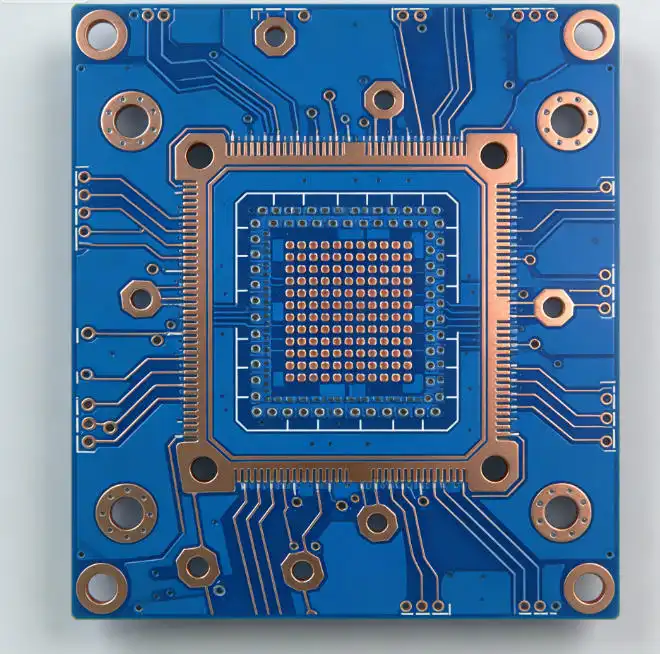
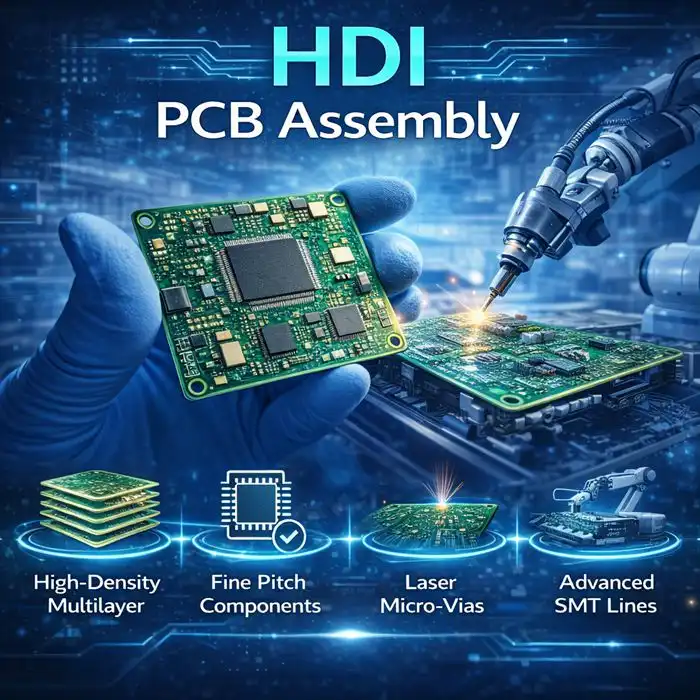
HDI PCBA, or High-Density Interconnect Printed Circuit Board Assembly, is a completely new way to make electronics that offers speed, dependability, and miniaturisation that have never been seen before. This cutting-edge technology uses microvias, buried and blind vias, and ultra-fine trace shapes to fit more usefulness into smaller spaces. This is important for today's medical devices, communication equipment, consumer electronics, and vehicle systems. These five main benefits will help you understand why HDI PCBA is so important for developing small electronics, whether you're a buying manager looking at providers or an engineering lead looking for cutting-edge solutions.
Enhanced Miniaturization and Space Efficiency
These days, gadgets need to be smaller and lighter without losing any usefulness. HDI PCBA technology solves this problem by using new building methods that increase the number of circuits on a board while lowering its overall size.
Advanced Interconnection Technologies Drive Compact Designs
HDI systems use microvias that have diameters as small as 0.006 inches, while regular through-hole vias have sizes that are usually bigger than 0.012 inches. This difference may not seem like much, but it saves a lot of room on boards with more than one layer. Microvias connect layers that are next to each other without taking up important routeing room across the whole board stack. This lets designers put components closer together and increase the routeing density. Blind vias connect the outer layers to the inner layers, and hidden vias only connect the inner layers to each other. Both of these methods avoid going through the whole thickness of the board for no reason.
The outcome is real: smartphones that use HDI technology have 40–60% more components per square inch than regular PCB designs. Wearable tech benefits even more because every millimetre of room saved directly translates to more battery life, better sensor integration, or a smaller device profile. This miniaturisation helps IoT monitors used in industrial settings fit into tight fixing spaces while still being able to do their full job.
Finer Line Widths and Spacing Enable Greater Functionality
In traditional PCB production, line lengths and spacing are kept at about 4-6 mils (0.004-0.006 inches). It is common for HDI manufacturing to achieve trace and spacing configurations of 3/3 mil, and more advanced facilities like Ring PCB can make even tighter shapes. This accuracy doubles the number of routeing channels that can be used per unit area, which makes it possible to use complicated circuits that would need bigger boards or more layers otherwise.
We've seen that procurement managers always put space efficiency first when looking at assembly partners. This is especially true for consumer goods, where the size of the products directly affects how competitive they are in the market. One company that makes medical devices shrunk the size of their portable diagnostic units by 35% when they switched from normal multi-layer boards to HDI kits. This let them make new shapes that their customers had asked for. This optimisation of room didn't mean sacrificing usefulness; in fact, the redesigned product added more connection and sensors.
Real-World Applications Demonstrate Measurable Advantages
In addition to its theoretical benefits, HDI PCBA actually makes things better in a wide range of situations. Manufacturers of automotive electronics use HDI boards in modern driver assistance systems, which need to handle more sensors but have limited space on the dashboard. HDI technology is used by companies that make communication gear in small base station units and networking gear, where saving rack room has a direct effect on deployment costs.
When moving from standard to HDI assemblies, it's common for a thorough DFM (Design for Manufacturing) study to find the best via structures and layer stackups. During the planning phase, this important help comes from partners with a lot of experience who can find ways to save room while still making the product reliable and easy to make. When buying teams work together in this way, they can reach their miniaturisation goals without having to deal with unexpected production problems or lower quality.
Superior Electrical Performance and Signal Integrity
Good gadgets are different from great ones when it comes to electrical performance, especially in high-speed situations where signal degradation directly affects usefulness. The HDI PCBA design naturally enhances signal integrity in a number of ways that take into account the science of sending high-frequency signals.
Shortened Signal Paths Reduce Transmission Losses
Every inch a signal moves adds resistance, capacitance, and inductance that lower the strength of the signal. By shortening the space between parts, HDI assemblies keep these parasitics to a minimum. Microvias make the most direct vertical links possible, so you don't have to use the winding paths that are often needed with through-hole vias. This directness is very useful in RF applications, high-speed digital connections, and precise analogue circuits where the integrity of the output affects how well the whole system works.
In modern devices, data transfer speeds often go over a few gigahertz. At these speeds, even small changes in impedance can cause signal distortion and echoes. The best way to control impedance in HDI stackup systems is to carefully manage the dielectric width and choose the copper weight. All of Ring PCB's HDI products have an impedance range of ±7%, which meets the strict needs of 5G communication systems, high-resolution medical imaging equipment, and car radar modules.
Optimized Layer Stacking Minimizes Crosstalk and EMI
The way the layers are organised in HDI systems naturally protects the signal layers from each other. When reference planes are placed next to high-speed data layers, they create controlled impedance settings that keep electromagnetic fields in check. Crosstalk between neighbouring traces is greatly reduced by this design, which is very important when routeing dense signal packages in small areas.
People who work in procurement in the aircraft and medical device industries have to meet very strict electromagnetic compatibility standards. In this case, HDI systems naturally have benefits: when the signal and reference layers are tightly coupled, loop areas that act as antennas are cut down, which lowers both emitted emissions and the chance of interference from outside sources. At frequencies above 1 GHz, testing from approved labs regularly shows that HDI designs have 15–25 dB better crosstalk performance than regular PCB builds.
Material Selection Enhances High-Frequency Performance
The structural benefits of HDI are made better by new base materials. Low-loss dielectrics keep signals intact over a wide range of frequencies, and fixed dielectric constants keep resistance constant as temperatures change. Materials that have been shown to work well under temperature cycling and mechanical stress are often used in high-reliability uses.
Manufacturing partners who know a lot about materials can help buying teams make these choices. For each application, the best substrate strikes a mix between cost, mechanical stability, electrical performance, and temperature management. When it comes to materials, medical devices that need to be able to withstand sterilisation need different ones than car parts that have to deal with extreme temperatures under the hood. This customised method makes sure that the electricity performance requirements match the needs of the business and the rules set by the government.
Improved Reliability and Durability for Compact Electronics
Total cost of ownership is based on how reliable a product is, which includes warranty costs, breakdowns in the field, and damage to the brand's image. HDI PCBA technology makes things more reliable by using better materials, better manufacturing methods, and building them in a way that makes them stronger.
Premium Substrates Resist Common Failure Mechanisms
Two main ways that PCBs fail are delamination and microcracking, which are usually caused by temperature stress cycling or mechanical shock. HDI systems use high-Tg (glass transition temperature) surfaces that keep their shape over a wider range of temperatures. These materials don't separate the layers when they expand and contract like standard FR-4 does. This is especially important for car electronics that need to work in temperatures ranging from -40°C to +125°C.
The microvia building method also helps make things more reliable. When compared to physically made holes, laser-drilled microvias have smooth barrel walls and good copper plating adhesion. The smaller measurements of the vias mean that there are fewer places where stress builds up during thermal cycles. Filled and plated microvias make things even more reliable by getting rid of the empty areas where contaminants could gather or where stress from different temperatures builds up.
Rigorous Manufacturing Controls Ensure Consistent Quality
Leading HDI makers use process controls that go above and beyond IPC Class 3 standards. IPC Class 3 is the strictest level of reliability and includes life-supporting and important applications. These controls are used at every step of the production process, from checking the materials as they come in to doing the final electricity tests. Before the assembly process starts, automated optical inspection devices check the quality of the via formation, the accuracy of the trace shape, and the accuracy of the solder paste deposition.
X-rays show internal via designs and solder link quality that optical tools can't see. Impedance testing confirms the electrical properties of sample cards that are made at the same time as production boards. Environmental stress screening finds hidden flaws in goods before they are shipped, which almost completely eliminates failures in the field. With these thorough quality systems, we've kept failure rates below 0.2%, which is a lot lower than the average for the business, which is around 1%.
Long-Term Reliability Translates to Business Value
Purchasing professionals are becoming more and more aware that the original purchasing price is only one part of the total cost of a product. Costs for warranty claims, product refunds, and unhappy customers are much higher than the savings from using shady sources. HDI parts made by qualified makers are more reliable, which protects the brand's image and the supply chain.
A company that makes telecom equipment that we work with reported a 60% drop in field returns after switching their outdoor base station modules to HDI parts. HDI construction's better thermal performance and mechanical steadiness got rid of breakdowns that were caused by changes in temperature and vibration. This increase in dependability made them more competitive while lowering service costs and customer complaints. These are results that are much more important than small price changes between parts.
Faster Time-to-Market with Advanced HDI PCBA Manufacturing Solutions
When a product hits the market often decides how well it does, which makes production flexibility a competitive advantage. HDI PCBA production has changed over time to support short development processes without lowering quality or limiting the ability to customise.
Rapid Prototyping Accelerates Design Validation
Developing a product requires making small changes over and over again. In the past, each design cycle took weeks because sample boards had to be waited for. These times are cut down by a huge amount when you use the fast development services that modern HDI makers offer. With quick-turn capabilities, prototypes can be made in days instead of weeks, which lets engineering teams quickly test designs, find problems, and make fixes.
This speeding up is especially helpful when a new product is being introduced because delays in the plan directly affect market window times. When startups go up against well-known companies, they need to be faster to get to customers before the bigger companies copy their ideas. Even well-known companies are under a lot of pressure to update their product lines before rivals come out with better ones. These tight development plans are made possible by rapid testing.
Turnkey Services Simplify Supply Chain Management
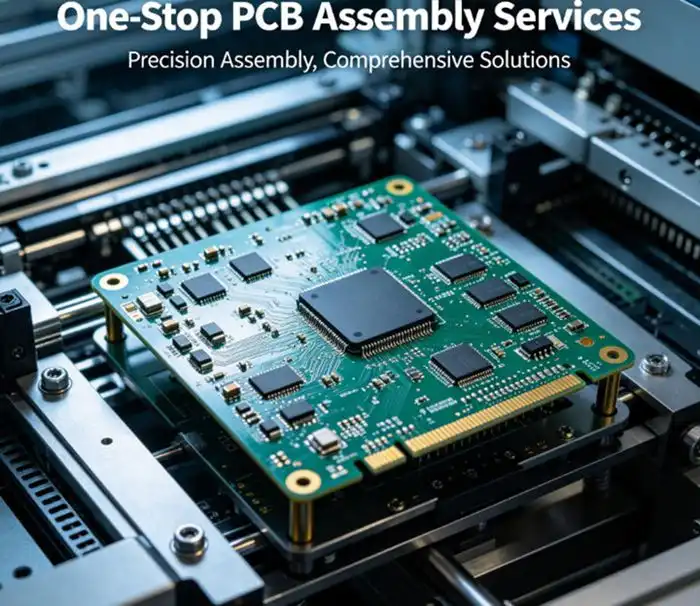
Getting PCBs made, buying parts, and putting them together from different sources all at the same time adds complexity, communication delays, and quality handoff risks. With turnkey HDI PCBA services, all of these tasks are handled by a single source, which speeds up the buying process and lowers the amount of work that managers have to do.
Integrated sellers find parts through established distribution networks and can often get better prices and supply than individual customers could on their own. During the quotation process, Design for Assembly (DFA) reviews find possible assembly problems before production starts. This keeps expensive redesigns from having to be done after the parts have been bought. Communication and responsibility are easier when there is only one point of contact. For example, procurement managers only have to coordinate with one engineering team instead of several fabrication and assembly providers.
Scalable Production Supports Business Growth
Products go from a concept to trial production to full-scale production, with needs for volumes that are many times higher or lower. Flexible HDI providers can adapt to this change so that customers don't have to switch manufacturing partners as their needs grow. Prototypes can easily be turned into test builds of hundreds or thousands of units, and then production numbers can reach hundreds of thousands of units per year.
This ability to grow is very important for making purchases and managing risks in the supply chain. Setting up ties with suppliers, verifying manufacturing methods, and getting regulatory approvals all require big investments. Keeping things the same from research to production protects these investments and makes sure that quality stays high as production levels rise. Companies escape the quality risks and timing problems that come with moving output from one manufacturer to another.
Our work plan runs 24 hours a day, seven days a week, and we have three shifts of engineers to help customers from all over the world. In the US, procurement managers talk to expert teams directly during business hours and get quick answers to pressing questions or problems that came up out of the blue. Continuous manufacturing cuts lead times by a lot compared to normal 5-day production plans. This is a huge benefit when launch dates are getting close or when demand spikes out of the blue.
Versatility Across Diverse Compact Electronics Applications
The main benefits of HDI PCBA technology are that it is small, reliable, and good at electrical performance. These benefits can be seen in almost every area of electronics. When buying teams understand these application-specific values, they can see possibilities in the products they already have.
Consumer Electronics Demand Continuous Innovation
The most well-known HDI uses are in smartphones, computers, wearable tech, and wireless speakers. These goods need to do as much as possible in as few units as possible, and customers expect features, battery life, and industrial design to get better every year. HDI assemblies make it possible to fit powerful computers, multiple cameras, biometric sensors, and transmission radios into devices that are only a few millimetres thick.
In the same way, gaming and virtual reality gear use HDI technology to get the processing power and sensor integration they need for engaging experiences while keeping their easy shapes. Smart home devices, like smart thermostats and small security cams, use HDI assemblies to build wireless connection, sensor arrays, and local processing power into housings that don't stand out and look good in homes.
Automotive Systems Integrate Advanced Electronics
There are dozens of computer control units in modern cars that handle everything from the powertrains to the entertainment systems. The HDI assemblies in advanced driver assistance systems (ADAS) handle data from many radar units, cameras, and ultrasonic devices in real time. This lets features like adaptive cruise control, lane-keeping assistance, and emergency stopping work. For these safety-critical uses, HDI building is needed for its dependability and signal purity.
Another rising use of HDI is in battery control systems for electric vehicles. These circuits keep an eye on the volts of each cell in battery packs with hundreds of cells, controlling charging and draining to get the best performance and life span. HDI systems are the best choice when there are a lot of channels to connect, accurate measurements are needed, and the working conditions are tough. More and more, HDI boards are being used in automotive lighting systems to handle LED displays with advanced dimming, colour change, and adaptive beam patterns.
Medical Devices Require Uncompromising Quality
HDI parts are needed for diagnostic tools like portable blood glucose monitors and advanced imaging systems to work properly. Implantable devices, such as pacemakers and neurostimulators, are the hardest HDI applications to make because they have to be very small, reliable, and compatible with living things. Because HDI building achieves high component density, these life-supporting devices can fit inside a person and work for years without any upkeep.
Surgical robots and minimally invasive tools use HDI assemblies in their control systems and end effectors. Their small size makes treatments less invasive and improves patient results. Multiple sensors, wireless connection, and local processing are all built into portable or wearable patient monitoring systems that keep an eye on patients all the time without limiting their movement. Medical beauty equipment uses HDI boards to carefully control the delivery of laser and RF energy, which is needed for safe and effective treatments.
Aerospace and Communication Equipment Push Technical Boundaries
Defence technology, aircraft, and satellite systems all work in harsh conditions and need to be very reliable. When every gramme counts when it comes to fuel use or carrying capacity, HDI parts are very important. They keep the signals strong for high-frequency communication systems and precision sensors. When properly built, HDI stackups can withstand radiation, making them perfect for use in space where cosmic rays can damage electronics.
From 5G base stations to fibre optic networking gear, everything that communicates depends on HDI parts to handle the huge amounts of data that are needed for today's connected world. These uses push the limits of frequency into millimeter-wave bands, where signal integrity is very important. This makes HDI's natural electrical benefits necessary instead of optional.
By comparing HDI to other technologies, it becomes clear when this method provides the most value. Standard multi-layer PCBs work best for lower-density uses where saving money is more important than making the board smaller. Flexible circuits work great in situations where the mechanical freedom or three-dimensional routeing is important. Rigid-flex constructions mix these features for goods that need to be flexible and have a lot of circuitry. HDI assemblies, on the other hand, offer the best component density and electrical performance when small size and high dependability are needed at the same time, which is becoming a more common condition in modern electronics.
Market study shows that the use of HDI will continue to grow quickly, thanks to the rollout of 5G, the growth of self-driving cars, the spread of IoT, and the rise of smart tech. Analysts in the industry predict that the company will grow at rates higher than 10% per year until 2030. This shows that HDI is a key technology for creating new computer goods. Companies that invest in HDI skills now will be better prepared for what the market will need in the future.
Conclusion
HDI PCBA technology has many benefits in five important areas: it saves space by using advanced miniaturisation techniques, it improves electrical performance by using optimised signal paths and layer stacking, it makes products more reliable by using high-quality materials and strict process controls, it speeds up time to market by using flexible manufacturing methods, and it can be used in a wide range of industries. These perks directly address the issues that procurement managers deal with every day: quality, delivery speed, professional know-how, and long-term dependability.
The tech business keeps moving towards making goods that are smaller, faster, and more complicated. This growth is made possible by HDI assemblies, which turn technical ideas into things that can be made. Whether these possible benefits turn into real product success depends on how well HDI chooses its manufacturing partner.
FAQ
What makes HDI PCBA different from standard PCB assemblies?
HDI PCBA circuits have microvias, buried vias, and blind vias with more precise trace shapes than regular PCBs. Because of these changes in structure, it is possible to have a lot more components, better electrical performance because data paths are shorter, and smaller total board sizes. Standard PCBs usually have through-hole vias and wider trace spacing, which makes it harder to make circuits smaller and better for smaller spaces.
How do I determine if my product needs HDI technology?
Products that need a lot of parts in a small space, that work at rates above 1 GHz, or that need to be very reliable in harsh conditions usually gain from HDI building. HDI circuits are often used in applications for smartphones, personal tech, medical devices, car electronics, and communication gear. Talking to experienced makers during the planning phase can help you figure out if the benefits of HDI make the technology investment worth it for certain uses.
What lead times should I expect for HDI PCBA projects?
Lead times depend on the complexity, number of layers, and size of the order. For expedited service, prototype HDI assemblies usually take 5–10 business days, while production quantities take 2–4 weeks, based on the supply of parts and the difficulty of the assembly. Manufacturers who use continuous production plans can shorten these times even more, which is especially helpful when start dates are getting close or when manufacturers need to act quickly on unexpected market opportunities.
Partner with Ring PCB for Your HDI PCBA Manufacturing Needs
Ring PCB Technology Co., Limited has been specialising in HDI PCBA projects for 18 years and can help you with all of your needs. They can do advanced manufacturing and offer full support services. Our 10,000-square-meter building, which we own, is always open with three-shift engineering teams and production plans that run 24 hours a day, seven days a week. This means that our response times and lead times are much better than what the industry norm is. We use LDI laser exposure systems, precise impedance control, and strict quality checks at every stage of production to make high-density interconnect structures with 2 to 48 layers.
Our low prices come from the fact that we buy the raw materials, make the products, put them together, and test them all in-house. This way, we avoid middlemen who add markups and keep an eye on quality. We are committed to quality standards in the automobile, medical, aerospace, and industry sectors, as shown by our international certifications such as ISO9001, ISO14001, ISO13485, and IATF16949. Our team has the technical know-how and production freedom that your projects need, whether you need fast prototyping to make sure your design works or full turnkey services that include PCB manufacturing, component buying, assembly, and testing.
Get in touch with our tech team at [email protected] to talk about your unique HDI PCBA needs. As a well-known HDI PCBA provider that works with electronics companies around the world, we'd love the chance to show you how our skills, quality systems, and focus on customer satisfaction can help you reach your product development and production goals.
References
1. Coombs, Clyde F. Printed Circuits Handbook, 7th Edition. McGraw-Hill Education, 2016.
2. Brist, Gary, and Michael Carano. "Advanced High Density Interconnect (HDI) Technology." Circuit World 42, no. 3 (2016): 123-134.
3. Patel, Kiran, and Jennifer Williams. HDI Design and Manufacturing: A Practical Guide. IPC International, 2019.
4. International Electronics Manufacturing Initiative (iNEMI). "Electronics Manufacturing Technology Roadmap: High-Density Interconnect Substrates." Industry Report, 2021.
5. Zhang, Michael, and Susan Chen. "Reliability Assessment of Microvias in HDI Printed Circuit Boards under Thermal Cycling." IEEE Transactions on Components, Packaging and Manufacturing Technology 11, no. 7 (2021): 1089-1098.
6. Industry Research Corporation. "Global HDI PCB Market Analysis and Forecast 2023-2030: Technology Trends and Application Outlook." Market Research Report, 2023.

Welcome to Ring PCB! Share your inquiry, and receive a tailored quotation!

Ring PCB, your trusted partner for PCB & PCBA Full Turnkey Solutions