Why OEMs Prefer One-Stop PCB Assembly Services
OEMs are choosing One-Stop PCBA options more and more because they combine design, manufacturing, finding parts, and testing with one service. This unified method gets rid of the problems that come up when working with many companies at once. It also cuts down on wait times and makes sure that quality control is better. When OEMs work with a single service provider, they can save money by buying in bulk, communicating more clearly, and getting their products to market faster. One-Stop PCBA providers are responsible from start to finish, which makes them essential partners for companies that make electrical goods in today's tough production environments.
Understanding One-Stop PCBA Services and Their Benefits
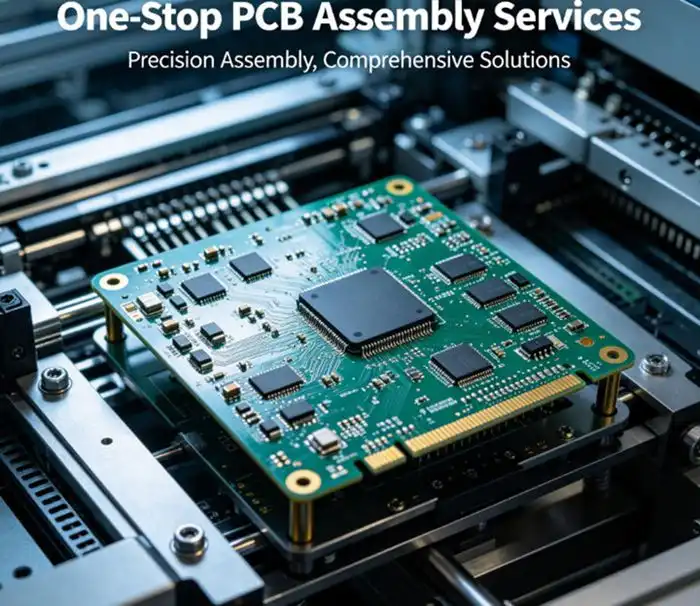
With One-Stop PCBA services, every step of putting together a printed circuit board is done in one place. In standard models, OEMs have to deal with different sources for fabrication, buying parts, putting the car together, and testing. This consolidated method makes the whole production process easier. From the first sketch design to the final functional testing, all activities are coordinated by a single provider. This makes sure that everything fits together smoothly and that everyone is responsible.
What Makes One-Stop PCBA Different?
In traditional PCB assembly, processes are often broken up. OEMs buy raw boards from one supplier, parts from dealers, hire another center to put them together, and set up testing by a third party. With each handoff, there are delays, communication problems, and quality risks. One-Stop PCBA gets rid of these problems by taking care of the whole process itself. Design experts, procurement specialists, assembly workers, and quality testers all work for the same company. This means that they can work together in real time and solve problems quickly.
Streamlined Workflow from Design to Delivery
The process starts with working together on the concept. Schematics and layouts are looked over by experienced engineering teams, who give comments on Design for Manufacturability (DFM) to help improve ideas before they are built. By being cautious, you can avoid having to make expensive changes later. Once the designs are approved, the service provider makes PCBs using high-tech tools like laser direct imaging for accuracy, automatic optical inspection to find flaws, and impedance-controlled lamination to keep the signals strong.
Sources for components happen at the same time. Having established connections with approved distributors makes sure that original parts come on time, preventing the risk of fakes and problems in the supply chain. After that come surface-mount technology (SMT) and through-hole assembly. Automated placement tools and skilled techs take care of layouts that are very complicated. Before being sent out, every board is tested thoroughly using methods like flying probe tests, X-ray inspection, and functional validation to make sure it meets all the requirements.
Key Benefits Driving OEM Adoption
Savings on costs stand out right away. Buying in bulk lowers the cost of individual parts, and cutting out middlemen lowers costs overall. By combining orders in larger amounts, companies can get better deals on raw materials and pass the savings on to their customers. When one team is in charge of the whole process, quality control gets a lot better. Centralized control finds problems early, which lowers the number of rework jobs and raises the returns on the first pass. OEMs say that failure rates are less than 0.2% when they work with skilled One-Stop PCBA providers, but they are close to 1% when they work with multiple sources.
When markets are competitive, speed is important. Integrated processes shorten the time it takes to make something, which lets you make prototypes and move quickly to mass production. Engineers, buyers, and assemblers can talk to each other much more easily when they all use the same tool. Questions are answered in hours instead of days, which speeds up the decision-making process and cuts down on delays. It also gets easier to keep track of inventory. Providers can store finished goods, keep track of stock of parts, and fill orders on flexible dates, which makes the OEM's storage work easier.
With single-source responsibility, dependability goes to a whole new level. OEMs only have to deal with one partner when problems appear, rather than several sellers blaming each other. As a result, problems are solved faster, and trust grows. Long-term relationships form easily as service providers learn about their customers' likes and dislikes and start to guess what they will need. This makes service even better over time.
Comparing One-Stop PCBA with Traditional Manufacturing Methods
Traditional contract manufacturing has a lot of problems that modern OEMs are finding harder and harder to accept. Fragmented supply lines make it hard to coordinate because tasks are spread out among many sellers. Purchasing managers spend a lot of time making sure that plans are met, following up on orders, and settling disagreements between providers. When different companies use different standards, quality control isn't uniform. When delays at one seller affect the whole production chain, lead times get longer than expected.
Single-Point Responsibility Transforms Operations
One-Stop PCBA companies completely flip this model on its head. With single-point authority, OEMs talk to a single account manager who is in charge of all internal tasks. Every request—for changes to the design, replacement parts, or the schedule—goes through a single route, so nothing gets lost in translation. It becomes very clear who is responsible. There's no doubt about who fixes the problem if the requirements aren't met. This openness builds trust and speeds up the solving of problems.
When teams share the same methods and goals, communication works much better. Questions from engineers get to the production floors in minutes, not hours through email chains that go through several companies. DFM input comes in during the design phase, which stops problems with manufacturability that would come up during assembly. Shorter development processes and faster entry into the market are directly linked to faster information flow.
Cost and Lead Time Advantages
When you compare prices, One-Stop PCBA services save you a lot of money. Traditional models have secret costs like extra shipping costs, administrative fees that are paid twice, and inefficient ways of keeping track of goods. Different sellers add their own markups, which makes the total cost go up. One-Stop PCBA companies get rid of these extra steps and offer clear price that reflects the real costs of production. Buying in bulk can get you extra discounts on parts and supplies, which you can't get from a bunch of different sources.
Lead-time savings are also very amazing. In traditional manufacturing, jobs are done in a straight line: when the design is finished, fabrication begins, which is followed by buying parts and then organizing the assembly. One-Stop PCBA providers do several things at the same time. In the meantime, parts are being bought while PCBs are being made. Based on approved plans, assembly lines make tools. The testing gear is set up ahead of time. When compared to standard ways, this simultaneous processing cuts lead times by 30 to 50 percent, which is a huge amount.
Flexibility Meets Scalability
One-Stop PCBA methods work best for small-batch and test orders. Traditional sellers often have minimum order numbers that make it too expensive to make small amounts. One-Stop PCBA companies can handle both small and large orders, from 10 units for trials to 10,000 units for production runs. It's very helpful for companies to see if their products are a good fit for the market and for established OEMs to start selling new lines of products.
High-volume output also makes things more efficient. Proven methods work well at making a lot of units, and the quality stays the same whether they are made in hundreds or thousands. Reliable automated systems do repetitive jobs, while skilled techs take care of more complicated needs. OEMs don't have to deal with the hassle and risk of moving providers as volume grows. This way, they can keep quality standards and institutional knowledge throughout the lifespan of the product.
Core Factors Driving OEMs to Choose One-Stop PCBA Providers
Quality control is the most important thing for every OEM, and certifications are an important way to prove it. ISO 9001 proves strong quality control systems, ISO 14001 proves environmental responsibility, and IATF 16949 proves compliance in the car business. Medical device makers need to be certified with ISO 13485 to make sure they follow strict healthcare standards. UL certification gives goods even more respect, especially when they come into North American markets. OEMs carefully check these credentials because they know that qualified One-Stop PCBA providers follow strict procedures and promote a culture of constant growth.
Rigorous Testing Protocols Build Confidence
In addition to certificates, testing procedures show how committed a provider is to doing a great job. Automated Optical Inspection (AOI) finds flaws on the surface that people can't see. Ball Grid Array (BGA) components and secret links are checked for quality solder joints using X-ray inspection. Flying probe testing checks for electrical continuity without having to make expensive custom fixtures. It's great for testing samples and small amounts. Functional testing mimics how things work in the real world, making sure that finished boards work as planned.
Metrics for reducing defects are very important. Defect rates for top One-Stop PCBA providers are less than 0.2%. They do this by systematically analyzing root causes and improving processes all the time. Statistical Process Control (SPC) keeps an eye on important parameters all the time and sends out alerts when readings stray too far from what is considered normal. This proactive tracking stops flaws from happening instead of just finding them. This keeps OEMs from having to deal with expensive failures in the field and warranty claims.
Scalability Helps a Business Grow.
OEMs will work with One-Stop PCBA providers who can grow with them. The needs for prototyping are very different from those for mass production, and it's important that the changes between these stages go smoothly. One-Stop PCBA companies are great at this kind of scalability because they can keep the quality high whether they're making five test units or five thousand production boards. Investing in tools during development can be used in production, saving money on setup costs and keeping process knowledge.
Customization options meet the needs of a wide range of OEMs. Biocompatible materials and small structures are needed for medical equipment. Electronics used in cars need to be made in a way that they can withstand high heat and vibrations. When used in tough conditions, industrial tools need conformal coating. High-frequency data integrity is a top priority for communication tools. One-Stop PCBA providers with a lot of experience know how to change their processes to meet the needs of each industry, so they can offer custom solutions instead of goods that fit all needs.
Reputation and Trust in Choosing a Partner
A supplier's image has a big impact on what people buy. Verified customer reviews and comments offer more than just marketing claims; they offer peer proof. OEMs look for providers with a track record in their business, and they value relevant knowledge over general skills. Case studies that show successful projects, especially ones that overcame technology problems, give people more faith in a provider's ability to solve problems.
Sustainability approvals are becoming a bigger factor in choosing a partner. RoHS compliance makes sure that dangerous substances are not used, which addresses regulation and environmental concerns. Chemical safety management is shown by REACH compliance. OEMs are under pressure from customers and regulators to reduce their environmental effect, so green manufacturing efforts like energy-efficient equipment, programs to cut down on waste, and recycling processes make sense. Forward-thinking providers use the circular economy to guide their work, creating methods that cut down on waste and allow materials to be reused.
Transactional price is less important than the chance of a long-term relationship. OEMs like suppliers who take the time to learn about their business, guess what their customers will need in the future, and suggest ways to make things better before they happen. Clear communication, consistent delivery, and quick technical support all help build the trust that is needed for smart relationships. These partnerships have benefits that build over time: providers learn the ins and outs of the product, processes become more efficient, and overall value rises.
Practical Tips for OEMs to Optimize Their One-Stop PCBA Experience
One-Stop PCBA projects that go well are built on Design for Manufacturability (DFM) principles. Getting providers involved in the planning step unlocks a lot of value. When changes aren't expensive, experienced engineers find possible manufacturing problems early on, like problems with component spacing, heat management, or testability. Dealing with these problems after the design or production process has begun greatly increases costs.
Collaborate Early and Often
Results are measurably better when people work together closely during the planning phase. By sharing rough schematics, providers can suggest different parts that meet performance requirements while also making them more available or lowering their prices. Before manufacturing, layout studies find problems with signal integrity, power distribution, and mechanical fit. Iterative feedback loops make designs better over time until they find the best mix of cost, usefulness, and ease of manufacture.
How people talk to each other has a big effect on the success of a project. Setting up clear points of contact keeps information from getting lost in a lot of different routes. Status updates on a regular basis keep everyone on the same page and bring up problems quickly, before they get worse. Specifications that are written down clear up any confusion and give you points of reference when you have questions. Video chats are a good way to connect people from far away, letting them have face-to-face conversations that can solve complicated problems faster than emails.
Selecting the Right Provider
To find the right person, you need to look at them fairly from a number of different angles. Even though price is important, the lowest price isn't always the best deal. Look at the total cost of ownership, which includes costs related to quality like repairs, field fails, and unhappy customers. Lead time promises must match what the market needs. Too short of a lead time can hurt quality, and too long of a lead time can give faster competitors an edge.
Quality signs aren't just badges. When you can, visit factories and look at how clean they are, how advanced the equipment is, and how engaged the workers are. Ask for process capability reports that show statistical control. Look over quality measures from recent projects, such as the number of defects, the percentage of on-time deliveries, and the customer happiness scores. Strong providers are honest about sharing this information because they are sure of their track record.
Actions show how trustworthy someone is. Respondent providers answer questions quickly and completely. They are honest about their limits instead of making false claims about their skills. Customers who have already bought from you can give you great advice. Talking to current clients shows strengths and flaws of a provider that aren't clear from marketing materials. This helps people make more confident choices.
Managing Common Challenges
Urgent changes to orders can make even the best-planned projects hard to complete. Quick changes are needed because of missing parts, changes to the design, or changing market needs. Effective workers are flexible and can adapt to changes without throwing off plans. Clear change management methods keep track of changes, figure out their effects, and make adjustments to timelines that are reasonable. Proactive communication keeps everyone in the loop, manages expectations, and stops shocks from happening.
There will always be technical problems with complicated systems. Specialized parts may need special ways to be handled. For boards made of unusual materials, the processing settings may need to be changed. One-Stop PCBA providers with a lot of experience can handle these cases easily because they have learned a lot over the years. When OEM product knowledge is combined with provider production knowledge, creative solutions are found that would not have been possible if the two worked alone.
It's even more important to keep conversation clear when problems arise. Procedures for escalating problems make sure that they get the right attention quickly. Regular meetings of the project give people a chance to talk about problems before they get in the way of performance. Talking openly about risks and ways to reduce them helps everyone understand each other and work together to achieve success.
Future Trends and Innovations in One-Stop PCBA Services
Artificial intelligence and automation are completely changing how One-Stop PCBA are made. Smart factories use technology that is interconnected and can talk to each other without any problems. This makes production lines more efficient in real time. Machine learning systems constantly look at sensor data to find small trends that can tell when equipment will break down before they do. With predictive maintenance, fixes are planned to happen during planned breaks, so there are no surprises that cause orders to be held up. These tools make things a lot more efficient and consistent in terms of quality.
Industry 4.0 Transforms Production Capabilities
The ideas behind Industry 4.0 combine cyber-physical systems all the way through the production process. Digital twins, which are virtual copies of real production lines, let changes be simulated and optimized before they are made to the real equipment. Every step of the building process is tracked in real time, so you can follow the materials from the beginning to the end. Immediate feedback loops find problems right away and take appropriate action within seconds. As systems stop mistakes before they happen instead of just finding them after the fact, defects go down by a large amount.
Advanced analytics take output data and turn it into information that can be used. Process optimization programs find ways to make things more efficient and suggest changes to parameters that boost output without lowering quality. Quality forecast models mark boards that might be problematic so that they can be inspected more closely. This focuses resources where they are most useful. These smart systems add to human knowledge, allowing constant growth at speeds that could not be reached by analysis done by hand alone.
Sustainability Becomes Competitive Imperative
Environmental factors are becoming more and more important in choosing a provider. Regulatory pressures are growing around the world, with laws that require the removal of dangerous substances, gains in energy economy, and less electronic trash. Customers expect OEMs to use environmentally friendly methods in all parts of the supply chain. Leading One-Stop PCBA providers react by putting in place all-encompassing green manufacturing programs that deal with these issues in a planned way.
Equipment that is energy-efficient uses a lot less electricity. As compared to older models, modern placement machines, reflow ovens, and testing systems work just as well while using a lot less power. Renewable energy sources, like solar screens and wind power, can be used in addition to or instead of grid electricity. This greatly reduces carbon emissions. Through exact process control and recycling efforts, programs that cut down on waste keep material loses to a minimum. Solder paste recycling systems collect material that isn't being used, water treatment plants make it possible to reuse process water, and improving packing cuts down on shipping waste.
Product lifetime thought is based on the ideas of the circular economy. When designing something, it's important to think about how it can be recycled at the end of its life. Choose materials and building methods that make it easy to take apart and reuse the parts. One-Stop PCBA providers work with licensed recycling centers to make sure that old gadgets are properly recycled instead of being dumped in the ground. These methods are liked by OEMs that care about the environment and meet stricter rules set by regulators.
Adapting Procurement Strategies for Long-Term Value
Because of changes in technology, OEMs need to change how they buy things. When you judge providers based only on their current powers, you miss the paths of progress. When you look at how much money companies are investing in new technologies like robotics, AI, and sustainability, you can see which ones will stay ahead of the competition as industry standards change. Partners who think ahead help OEMs stay ahead instead of just staying up.
Transactional vendor management is being replaced by strategic relationships. When companies work together to make a product, they can come up with new ideas together. This is called a collaborative relationship. Shared roadmaps match up skills with what will be needed for new products, making sure that everyone is ready when new products come out. Deep relationships give OEMs a competitive edge that transactional methods can't match. This sets them up for long-term success in markets that are always changing.
Conclusion
One-Stop PCBA services have strong benefits that make them more and more popular with OEMs. When processes are consolidated, they get rid of the planning problems that come with supply chains that are broken up. Cost savings build up over time when you buy in bulk, cut down on costs, and avoid loss as much as possible. Quality goes up when there is unified control and strict testing rules. Parallel processing shortens the time between production processes, which speeds things up. Flexibility lets you meet a wide range of number needs, from small samples to large batches. All of these benefits work together to shorten the time it takes to get a product to market and make it more reliable. This gives companies that make electronics, where innovation and efficiency are key to success, clear competitive advantages.
FAQ
Q1: What distinguishes One-Stop PCBA from turnkey assembly?
A: The terms have a lot in common and are often used to refer to the same thing. Both describe full services that include designing, making, buying parts, putting them together, and testing them. One-Stop PCBA focuses on combining different services under one provider, while turnkey assembly focuses on sending final goods that are ready to be used. In practice, experienced providers of either service offer similar benefits: fewer problems with cooperation, shorter timelines, and better quality control through shared responsibility.
Q2: How can small or medium-sized OEMs benefit from comprehensive PCBA services?
A: One-Stop PCBA services help smaller OEMs more than they help larger OEMs. Because of limited internal resources, managing various providers is especially hard. One-Stop PCBA companies take care of all of this complexity, so OEM staff can focus on what they do best, like designing products and growing markets. Small production amounts can be made cheaply with flexible minimum order quantities. Having access to enterprise-level features like high-tech tools, specialized knowledge, and strict quality control systems levels the playing field against bigger rivals. Cost savings from buying in bulk and streamlining processes help businesses with limited resources do better financially.
Q3: Which certifications verify provider credibility and compliance?
A: One important qualification is ISO 9001 for quality management, which shows that you are committed to using systematic methods and always making things better. IATF 16949 for car applications, ISO 13485 for medical products, and AS9100 for aircraft are some of the industry-specific certifications that add important proof. Environmental standards like ISO 14001, RoHS compliance, and REACH compliance show that resources are managed responsibly. UL certification proves that a product is safe, which is especially important in North American markets. Check credentials with the organizations that issued them instead of blindly believing what they say. Make sure that credentials are up-to-date and that the scope of the license includes all related activities.
Partner with Ring PCB for Superior One-Stop PCBA Solutions
As of 2008, Ring PCB Technology has been providing excellent One-Stop PCBA production to OEMs in the fields of medical devices, car systems, consumer electronics, and telecoms. Our 10,000-square-meter building is always open. With 24/7 production plans and technical support, your projects will move forward without any delays, much faster than usual delivery times. We make complex boards with anywhere from 2 to 48 layers, 3 to 3 mil trace/spacing accuracy, and ±7% impedance control. These boards are perfect for 5G, medical, and car uses that need to be very precise. Our all-in-one services include making PCBs, getting parts from approved wholesalers, expert SMT and through-hole assembly, full testing, and full box-build solutions.
With ISO 9001, IATF 16949, ISO 13485, and UL certifications to back it up, strict quality control promises defect rates below 0.2%. DFM optimization lowers design risks and BOM costs, and our vertical integration gives us full control over the supply chain with three levels of quality assurance. Because we can rush orders and offer competitive prices, Ring PCB is the best One-Stop PCBA manufacturer for projects where value, speed, and quality are all important. Get in touch with us right away at [email protected] to talk about how our proven skills can help you get your next product to market faster.
References
1. Coombs, Clyde F. "Printed Circuits Handbook." McGraw-Hill Education, 2016.
2. Judd, Michael and Keith Brindley. "Soldering in Electronics Assembly." Newnes, 2014.
3. Prasad, Ray. "Surface Mount Technology: Principles and Practice." Springer, 2013.
4. Blackwell, Glenn R. "The Electronic Packaging Handbook." CRC Press, 2000.
5. Gilleo, Ken. "AREA ARRAY PACKAGING HANDBOOK: Manufacturing and Assembly." McGraw-Hill, 2002.
6. Harper, Charles A. "Electronic Packaging and Interconnection Handbook." McGraw-Hill, 2004.

Welcome to Ring PCB! Share your inquiry, and receive a tailored quotation!

Ring PCB, your trusted partner for PCB & PCBA Full Turnkey Solutions