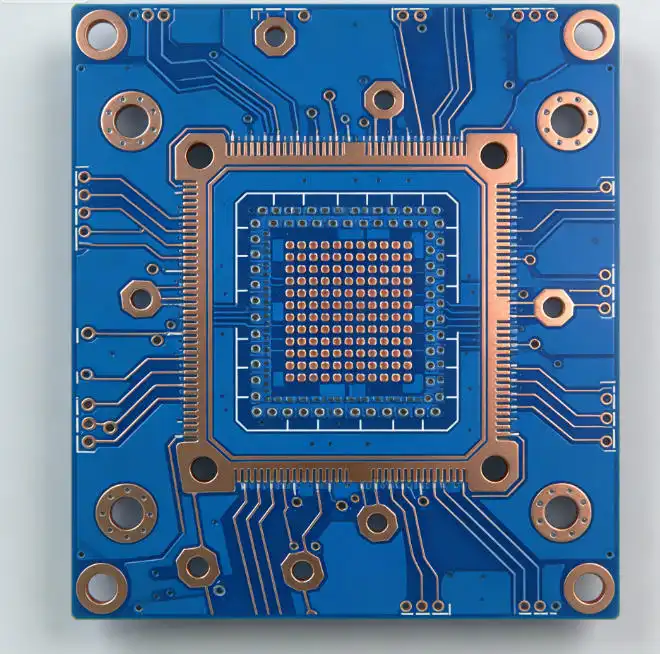
Avoiding Cost Overruns in PCB Assembly Projects
In PCB assembly projects, cost overruns have the potential to ruin profit margins and throw production timelines off. Inadequate planning, inefficient designs, and supplier mismatches are usually the causes of these budget overrun. These financial traps may be avoided, however, with careful process management and astute procurement tactics. Businesses may keep costs under control while meeting quality standards by comprehending the assembly process, recognising typical cost triggers, and collaborating with capable manufacturers. With the help of this guidance, procurement managers, engineers, and OEM customers may maximise their PCB assembly investments and save unforeseen costs.

Introducing the PCB Assembly Process to Control Costs
Controlling project costs requires a thorough understanding of the PCB assembly process. When correctly managed, there are potential for cost optimisation at every level of production.
The Five Critical Assembly Steps
Cost effectiveness is directly impacted by the organised sequence of the current PCB manufacturing process. Knowing each stage makes it easier to find quality control areas and possible savings.
Applying solder paste is the cornerstone of a good assembly. In this step, specific quantities of solder paste are applied to assigned component pads using specialised stencils. Rework expenses are avoided later in the process when paste volume is consistent. Next comes the pick-and-place process, in which automated devices precisely put parts at the nano level. Compared to human techniques, this automation improves placement accuracy while lowering labour expenses.
Reflow soldering uses regulated temperature profiles to heat the assembly and form long-lasting connections. Costly rework is avoided and component damage is avoided with proper heat control during this stage. Through-hole components are handled via wave soldering, which produces dependable mechanical and electrical connections. Automated optical inspection (AOI) and X-ray methods are used in the final inspection step to confirm assembly quality prior to export.
Surface Mount Technology vs Through-Hole Assembly
Cost and manufacturing complexity are greatly influenced by component mounting method. Because of its small component packaging and automated placement capabilities, surface mount technology (SMT) provides excellent cost effectiveness for high-volume manufacturing. SMT assemblies save total material costs by enabling greater component density and using less board space.
For applications needing strong connections, through-hole assembly offers higher mechanical strength while being more labour-intensive. Careful process planning is necessary for mixed-technology boards that include SMT and through-hole components in order to maximise assembly sequences and reduce handling expenses.
Design for Manufacturing (DFM) Principles
Costly assembly problems are avoided by early design optimization. Before manufacturing starts, DFM analysis looks at pad size, component location, and thermal factors. Conflicts over placement are avoided and assembly complexity is decreased with proper component spacing. Pick-and-place programming is streamlined and setup time is decreased by standardizing component orientations, all contributing to more efficient PCB Assembly processes.
Warpage and soldering flaws that need costly rework are avoided by taking thermal design into account. Efficient in-circuit testing is made possible by carefully placing test points without increasing assembly complexity. During volume production, these design expenditures made during the development stage result in significant cost reductions.
Common Causes of Cost Overruns in PCB Assembly Projects
Proactive preventative measures are made possible by identifying the causes of cost overruns. The majority of budget overruns are caused by predicted problems that may be avoided with adequate preparation.
Bill of Materials (BOM) Management Issues
BOMs that are inaccurate or lacking cause costs to rise right away. While sourcing the right parts, production delays are caused by component specification problems. Listings for obsolete components need last-minute replacements, which might raise material prices or call for changes to the design.
Procurement teams are left in the dark regarding needs when component specifications are missing, which often leads to over-specification and needless costs. Errors in quantity lead to either extra inventory expenses or shortage delays. These expensive shocks are avoided by routine component lifetime monitoring and BOM audits.
Quality Control Failures and Rework Costs
Inadequate quality controls lead to costly cycles of rework. Shipments are delayed and labour hours are used to fix soldering flaws by hand. Replacement parts and more assembly time are required when dealing damages components.
Defective assemblies may make it to final inspection due to inadequate testing procedures, which increases the cost of repairs. Inadequate environmental controls during assembly may result in contamination problems that need thorough board cleaning or scrapping. These rising expenses may be avoided by putting strong quality controls in place at every stage of the procedure.
Communication Breakdowns Between Teams
Costly delays are caused by misaligned communication between the production, procurement, and design departments. Assembly technicians get confused and make placement mistakes when engineering modifications are made without adequate documentation. Components that enhance assembly complexity may be specified by procurement choices made without consulting production.
Teams that miscommunicate about schedules end up paying more for extra labour and expedited shipment. These coordination errors are avoided by frequent cross-functional meetings and clear communication standards.
Lead Time and Volume Considerations
The timing of orders has a big influence on assembly costs. Project costs are significantly increased by rush orders, which need accelerated component procurement and extra labour. Inadequate volume planning might lead to many smaller manufacturing runs rather than more economical bigger batches.
Variations in component availability may need costly alternative sourcing or design changes. Early procurement agreements that lock up operating capital are necessary for long-lead-time components. Partnerships with suppliers and strategic inventory planning aid in the management of these scheduling difficulties.
Effective Strategies to Avoid Cost Overruns
Proactive Planning and Team Coordination
Thorough project planning creates reasonable spending plans and schedules. Before production starts, cross-functional planning workshops bring all stakeholders together to discuss needs and limitations. Frequent milestone assessments make it possible to identify any cost problems early, ensuring smooth execution of PCB Assembly throughout the project lifecycle.
Ambiguity during manufacturing is eliminated by thorough assembly documentation. Errors in interpretation that result in rework are avoided with clear specifications. Standardised procedures save quality expenses and variability. The production cycle benefits from these planned expenditures.
Industry Standards and Certification Compliance
Costly quality problems are avoided when industry standards are followed. IPC certification guarantees that assembly procedures adhere to industry standards for uniformity and dependability. Subjective quality judgements that may lead to disagreements and delays are eliminated when IPC-A-610 acceptance standards are followed.
Compatibility problems during assembly are avoided when components are qualified in accordance with industry standards. Sensitive components are protected from harm by appropriate electrostatic discharge (ESD) methods. These standard procedures guarantee quality while keeping expenses under control.
Automation and Technology Investment
Long-term assembly costs are decreased by strategic automation expenditures. Automated optical inspection methods identify flaws early on, when repairs are less expensive. Before they result in field failures, concealed solder joint problems are discovered via X-ray examination.
Pick-and-place automation boosts productivity by removing human placement mistakes. All assemblies are soldered consistently thanks to reflow profiling equipment. Even though these technologies demand a one-time financial outlay, their increased effectiveness and quality result in continuous cost savings.
How to Choose the Right PCB Assembly Supplier to Minimize Costs?
Supplier selection critically impacts both immediate costs and long-term project success. Thorough evaluation prevents costly partnerships with inadequate manufacturers.
Essential Supplier Evaluation Criteria
Qualified vendors exhibit extensive technical expertise and quality certifications. Established quality management systems are indicated by ISO 9001 accreditation. Specialised expertise is ensured by industry-specific certifications such as IATF 16949 for automotive applications.
Production capacity needs to match project volume specifications. Suppliers should show that they are adaptable enough to manage both volume manufacturing and prototype volumes. The equipment should be able to handle high-density designs and fine-pitch components, among other assembly complexity requirements.
Suppliers that are financially stable are able to sustain long-term relationships without interruption. References from comparable clients provide light on real performance potential. Being close by may save logistical expenses and boost communication effectiveness.
Technology Capabilities and Quality Assurance
High-quality, reliable outputs are made possible by advanced production technology. For intricate patterns, laser-direct imaging (LDI) techniques provide better trace resolution. Automated assembly lines increase throughput uniformity while lowering human error, ensuring the precision and consistency required in PCB Assembly.
Thorough testing capabilities detect any problems prior to shipping. While boundary scan testing examines digital circuit connections, in-circuit testing confirms electrical operation. For small-batch and prototype manufacturing, flying probe testing provides flexible verification.
Systems for statistical process control monitor quality indicators and spot patterns before they become issues. When deviations occur, real-time quality monitoring allows for prompt remedial action. Costly field failures and warranty claims are avoided by these high-quality expenditures.
Cost-Benefit Analysis of Local vs Offshore Manufacturing
Beyond basic assembly price, the manufacturing site has a considerable influence on the whole project expenses. Local vendors provide lower shipping costs, quicker lead times, and better communication. Project cooperation runs more smoothly when time zones and cultures are compatible.
Although labour costs may be reduced via offshore production, the overall cost effects must be carefully considered. Long lead times restrict engineering change flexibility and raise the cost of holding inventory. More monitoring and inspection resources could be needed for quality control.
Each area has different needs for protecting intellectual property and adhering to regulations. For sensitive applications, several businesses need local manufacture. Making educated choices about suppliers is made possible by a thorough examination of all cost variables.
Ring PCB Technology: Your Trusted PCB Assembly Partner
Since 2008, Ring PCB Technology Co., Limited has been a reliable turnkey PCB assembly supplier to a wide range of foreign customers. We enable variable volume requirements that are customised to meet customer demands with our extensive solutions, which include prototype, quick-turn, and mass production services.
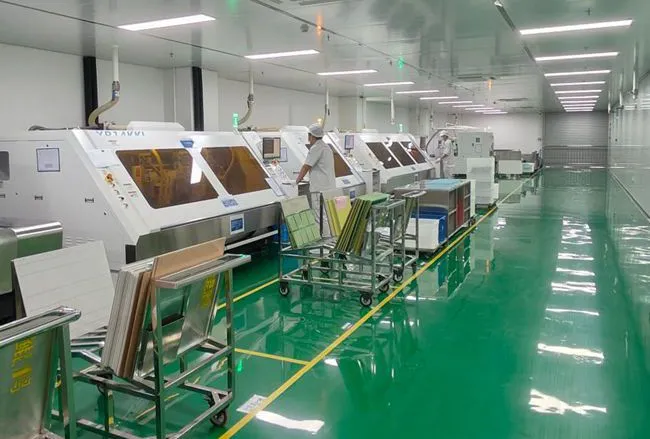
Our 10,000 square metre facility makes use of vacuum lamination, automated assembly systems, and LDI laser exposure, among other cutting-edge production technology. Our speciality is high-density designs with blind/buried vias and 3/3 mil trace spacing, ranging from 2 to 48 layers. In order to lower design risks and BOM expenses, our engineering team offers DFM optimisation.
Consistent outcomes with failure rates less than 0.2% are guaranteed by strict quality assurance methods. Our dedication to quality excellence is shown by the several certifications we have, including ISO 9001, ISO 14001, ISO 13485, and IATF 16949. Our international support staff and 24/7 production capacity allow us to work seamlessly with customers all around the globe.
Purchasing raw materials, manufacturing, and testing are all handled internally as part of our integrated supply chain management. Competitive pricing is made possible by this vertical integration while maintaining quality control all along the way. For essential applications, zero-defect delivery is ensured by triple quality assurance, which includes AOI, impedance testing, and thermal cycling.
Conclusion
Process optimisation, supplier partnerships, and methodical planning are necessary to prevent cost overruns in PCB assembly projects. Making educated judgements on technology selections and quality investments is made possible by having a thorough understanding of the assembly process. The most frequent causes of cost inflation are avoided via proactive BOM management, quality assurance, and team communication. Long-term project success is ensured by carefully choosing suppliers based on their qualifications and competencies. Businesses that use these all-encompassing cost management techniques meet budgetary requirements while maintaining quality standards, giving them a competitive edge in cutthroat marketplaces.
FAQ
Q1: What factors most significantly influence PCB assembly costs?
A: Component complexity, assembly technology choice, and production volume represent the primary cost drivers. High-pin-count components require precision placement equipment that increases processing time. Mixed-technology boards combining SMT and through-hole assembly require multiple process steps. Volume economies of scale significantly reduce per-unit costs for larger production runs.
Q2: How can design decisions impact assembly costs?
A: Thoughtful design choices directly affect manufacturing efficiency and cost. Component standardization reduces placement programming complexity and inventory requirements. Proper thermal design prevents warpage issues that require expensive rework. Strategic test point placement enables efficient quality verification without assembly complications.
Q3: What advantages does automated assembly offer over manual processes?
A: Automated assembly provides superior consistency and efficiency compared to manual methods. Machine placement eliminates human error while achieving micron-level accuracy. Automated systems operate continuously without fatigue, improving throughput and quality consistency. Although initial setup costs are higher, automation reduces long-term labor expenses and quality issues.
Q4: How do lead times affect overall project costs?
A: Extended lead times increase inventory carrying costs and reduce scheduling flexibility. Rush orders require expedited shipping and overtime labor that substantially increase expenses. Poor lead time planning may necessitate expensive alternative component sourcing or design modifications. Strategic procurement timing and supplier partnerships help manage these cost impacts.
Partner with Ring PCB for Cost-Effective Assembly Solutions
Ring PCB delivers competitively priced PCB assembly solutions with 24/7 support and continuous production capabilities that significantly outperform standard delivery times. Our advanced manufacturing supports up to 48-layer multilayer circuit boards with international ISO certifications ensuring quality excellence. As an experienced PCB assembly manufacturer, we provide comprehensive turnkey services including fabrication, component sourcing, and assembly testing. Contact our engineering team at [email protected] to discuss your project requirements and discover cost optimization opportunities. Our 18 years of industry expertise and vertical integration capabilities enable us to deliver reliable, high-quality solutions that meet your budget and timeline objectives.
References
1. Smith, J.R. "Cost Control Strategies in Electronic Manufacturing," Journal of Production Management, Vol. 34, No. 2, 2023, pp. 145-162.
2. Anderson, M.L. and Chen, K.W. "Quality Management in PCB Assembly: Reducing Defects and Costs," International Electronics Manufacturing Review, Vol. 28, No. 4, 2023, pp. 78-94.
3. Thompson, D.A. "Supply Chain Optimization for Electronic Component Procurement," Manufacturing Strategy Quarterly, Vol. 19, No. 3, 2023, pp. 201-218.
4. Rodriguez, C.M. "Design for Manufacturing in Modern PCB Development," Electronic Design Engineering, Vol. 41, No. 1, 2024, pp. 33-47.
5. Wilson, P.K. "Automation Technologies in PCB Assembly: Cost-Benefit Analysis," Advanced Manufacturing Systems, Vol. 15, No. 2, 2023, pp. 112-128.
6. Lee, S.H. "Global Trends in PCB Assembly Cost Management," International Manufacturing Economics, Vol. 22, No. 4, 2023, pp. 89-105.

Welcome to Ring PCB! Share your inquiry, and receive a tailored quotation!

Ring PCB, your trusted partner for PCB & PCBA Full Turnkey Solutions