What to Consider When Selecting a PCB Assembly Factory
One of the most important choices in electronics manufacturing is picking the right PCB Assembly Factory. The assembly partner you choose has a direct effect on the quality of the product, the time it takes to make, and the general success of the project. A skilled PCB Assembly Factory offers a wide range of services, such as surface mount technology, through-hole assembly, finding parts, and checking the quality of the work. To make sure the partnership works in the long term, the choice needs to be based on a careful analysis of technical skills, certifications, manufacturing processes, and service dependability.
Understanding PCB Assembly and Its Importance in Electronics Manufacturing
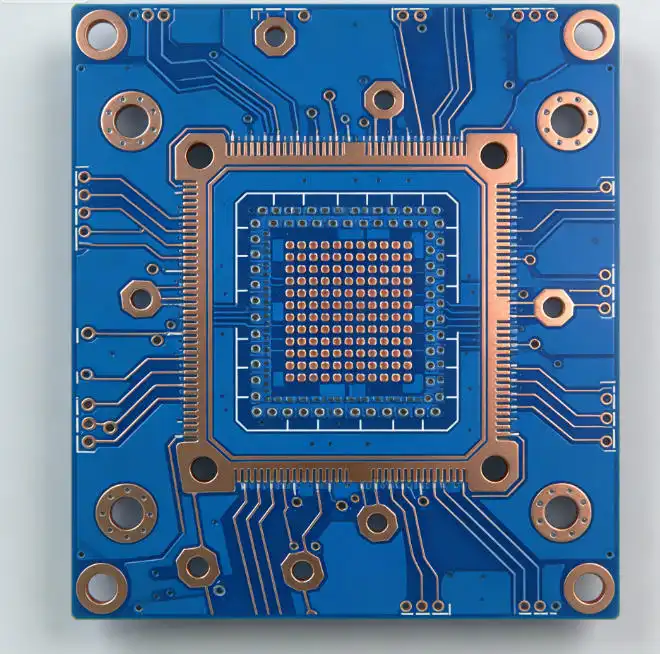
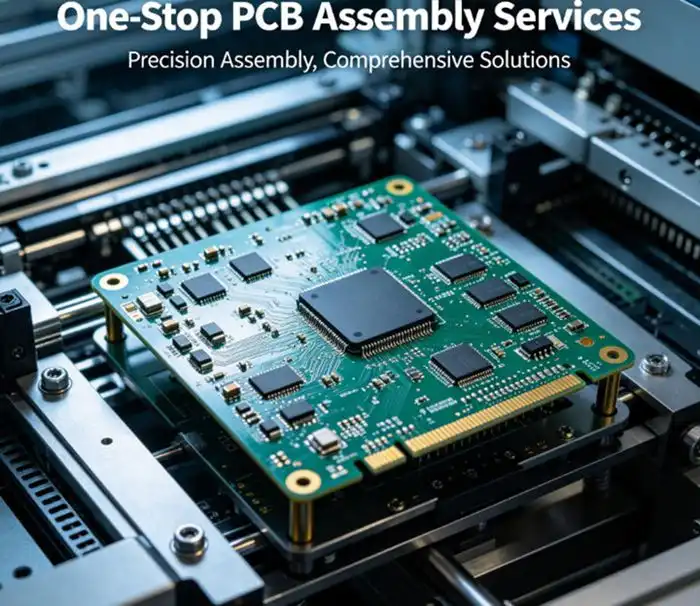
PCB assembly is the most important part of making electronics today. It takes careful component placement and soldering to turn empty circuit boards into working electronics. Professional assembly facilities use high-tech tools and trained workers to make electronic assemblies that are reliable and meet strict industry standards.
Core Assembly Processes and Technologies
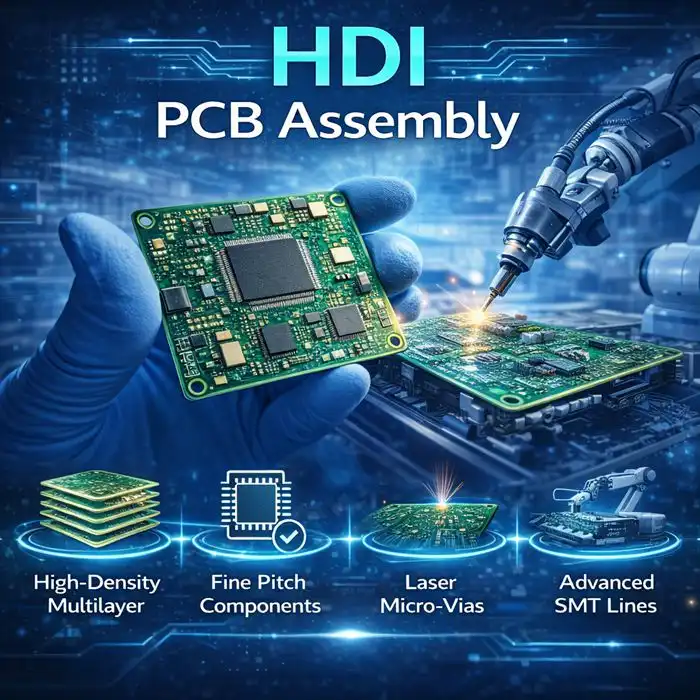
The PCB Assembly Factory's modern assembly processes use a number of different positioning technologies to work with different types of parts and design needs. Today's assembly methods are mostly based on Surface Mount Technology (SMT), which lets automatic pick-and-place systems precisely place tiny parts. The process starts with using precise molds to apply solder paste. Next, parts are placed, and reflow soldering takes place in controlled temperature profiles.
Through-hole mounting is still needed for bigger parts that need to be mechanically stable or handle a lot of power. Wave soldering and selective soldering methods make sure that these parts are connected securely. Mixed-technology assemblies use both methods, so they need careful planning of the production process to get the best quality and economy.
Advanced Manufacturing Capabilities
Professional centers have cutting-edge tools, like high-speed pick-and-place machines that can put thousands of parts in place every hour with accuracy better than ±0.025mm. X-ray inspection finds secret flaws in complicated assemblies, while automated optical inspection (AOI) systems check where parts are placed and the quality of the solder joints.
For mission-critical products, IPC-A-610 Class 3 compliance is often needed because industrial uses need high standards of reliability. For these assemblies to work consistently over long periods of time, they need to be able to handle harsh working environments. This calls for special materials and strict testing procedures.
Key Factors to Evaluate When Choosing a PCB Assembly Factory
When choosing a manufacturing partner, you need to look at a lot of important factors that affect the quality of the product, how quickly it is delivered, and how well the partnership will work in the long run. When procurement professionals understand these evaluation criteria, they can make choices that are in line with business goals and project needs.
Quality Control Systems and Certifications
Reliable assembly processes are built on strong quality management systems. Industry-specific certifications, such as IATF 16949 for automotive applications or ISO 13485 for medical devices, show that you have specialized knowledge in regulated industries. ISO 9001 certification shows that you are committed to systematic quality management.
Advanced quality control includes many checking steps all through the assembly process. Inspection of incoming parts makes sure they are real and meet standards, and monitoring during production stops problems from spreading. Statistical process control lets you make decisions based on data, which leads to continuous growth and the prevention of defects.
Environmental compliance standards, such as RoHS and REACH, make sure that rules are followed so that products can be sold all over the world. For safety-critical uses, UL certification adds credibility by showing that strict safety standards are met.
Technical Capabilities and Equipment
The needs of modern assembly require highly developed technical skills that cover a wide range of technology areas. The ability to handle different types of components, from basic SMD parts to more complex ones like BGA, QFN, and high-density ports, should be part of the evaluation. Different applications have different fine-pitch capability needs. The best facilities can achieve placement accuracy levels good for 0.3mm pitch components.
The ability to handle multi-layer boards shows how advanced the production process is, as advanced facilities can handle assemblies with as few as one layer or as many as 48 layers. Assembling blind and buried via needs special handling techniques and equipment that not all facilities have.
The ability to change the prototype shows how flexible manufacturing can be, which is important for product development processes. Quick-turn capabilities allow for quick changes to designs, and low-volume production allows for testing the market and launching the first product without having to meet large minimum order requirements.
Production Capacity and Scalability
Knowing how much a product can be made helps make sure that the supply chain can support it throughout its lifecycle. When evaluating, it's important to look at both how the current capacity is being used and how it can be expanded to support volume growth. Having separate production lines for different technologies or businesses helps keep things consistent and gives you access to specialized knowledge.
Lead time performance varies a lot between providers, and faster services are becoming more and more important for meeting competitive time-to-market needs. Facilities that are open 24 hours a day, seven days a week make them more flexible, which is especially helpful when making prototypes quickly or getting production back up and running.
Comparing PCB Assembly Factories: How to Make the Best Choice
To compare suppliers effectively, you need structured evaluation frameworks that take into account specific project requirements and multiple performance factors. When supplier skills and customer wants are in line with each other in technical, commercial, and operational areas, partnerships work well.
Cost Structure Analysis and Value Engineering
A full cost analysis looks at more than just unit prices; it also takes into account the total cost of ownership. Costs of setup, needed tools, and minimum order amounts have a big effect on the economics of a project, especially for prototypes and low-volume uses. Long-term cost trends can be seen in volume pricing structures as goods are made in larger quantities.
Value engineering skills show that a supplier cares about the success of their customers by taking the effort to cut costs. Design for manufacturability (DFM) research finds problems with assembly early in the development process, which saves money on redesigns and delays in production. Bill of materials (BOM) optimization services help companies meet their cost goals while keeping the functionality and dependability of their products.
Logistics prices and supply chain resilience are both affected by where things are located. Domestic assembly improves communication, lowers shipping costs, and makes it easier to follow regulations. Offshore choices, on the other hand, may be cheaper for large-scale production.
Production Precision and Quality Metrics
Precision in assembly has a direct effect on how well and how reliably a product works in the field. Leading facilities achieve placement accuracy levels that are higher than industry standards. This makes it possible to put together advanced component packages and designs with a lot of parts. Soldering quality measures, such as void percentages and joint reliability, show that the process can be controlled.
Defect rates are numbers that show how well quality is being met. The best PCB Assembly Factory facilities have defect rates below 0.2%, while the average for the industry is around 1%. Metrics for first-pass yield show how solid and efficient a process is, while rework rates show quality costs and delivery risks that aren't obvious.
Implementing statistical process control makes it possible to predict quality performance by watching and making changes all the time. Systems that track bugs and take appropriate action in real time show a dedication to always getting better and making customers happy.
Supplier Reputation and Customer References
An industry's image is based on the experiences of many customers and shows how reliable and consistent a supplier is in their work. Customer comments and case studies show that the company can do more than just make things. It can also solve problems and work with others in a partnership-based way.
Long-term customer relationships show that the business is happy and consistently does a good job. On the other hand, losing customers quickly could mean that there are problems with service or quality. Awards and certifications given by the industry are a third-party confirmation of skills and achievement.
Checking references with similar customers is a great way to learn about how well a company does in similar situations. Knowing the mix of suppliers' customers can help you focus on the right markets and find the best experts for your needs.
Procurement Considerations for B2B Buyers
Strategic methods to purchasing improve relationships with suppliers while lowering costs and risks throughout the lifecycle of a product. To get the best business results, procurement plans should find a good mix between competitive pricing, reliable performance, and quick service.
Pricing Strategies and Contract Terms
Comprehensive pricing systems include more than just basic assembly fees when they figure out how much something costs. To get a good idea of how much the whole project will cost, you need to carefully look at the component sourcing margins, expedite charges, technical support fees, and testing costs. Cost optimization is possible with volume-based pricing tiers as goods get better and more of them are sold.
Long-term contracts guarantee stable prices and enough capacity, and they let suppliers spend in relationship-specific skills. Flexible contract terms allow for changes in demand while keeping service levels the same even when the market changes.
The terms of payment and the value of the currency affect cash flow and the amount of financial risk that is exposed. Assessing a supplier's financial stability helps make sure that long-term partnerships stay stable, and qualifying a backup seller keeps supply secure.
Order Management and Logistics
Streamlined buying processes make procurement cycles easier to manage and lessen the number of mistakes that happen. Electronic data interchange (EDI) lets orders be processed automatically and progress updates be sent in real time, which increases visibility and lowers the cost of communication.
Sample request methods make it easier to validate designs and check out suppliers. Quick-turn prototyping lets you make changes to designs quickly, which is important for competitive product development processes. Expertise in international shipping makes sure that logistics for global activities run smoothly. Having the right paperwork and knowing how to handle customs can keep you on time and in line with trade laws in many places.
After-Sales Support and Warranty Services
Full support after the sale shows that the supplier wants the customer to be successful in the long run. Technical support helps fix problems in the field and improves product performance over the course of its useful life. Quick problem-solving and minimal downtime are made possible by responsive contact channels.
Warranty policies and processes for managing defects protect against problems with the way the product was made and allow for constant improvement. Return merchandise authorization (RMA) methods make it easier to handle warranty claims and returns from the field.
Field failure analysis helps find the root causes of problems and take steps to fix them so they don't happen again. Suppliers who are ready to put money into failure analysis show that they are committed to the partnership and have the technical skills to do so.
Our Factory Capabilities and Commitment to Excellence
Ring PCB Technology Co., Limited represents a trusted manufacturing partner with 18 years of proven expertise in delivering innovative, reliable, and cost-effective solutions across diverse industries including electronics, automotive, aerospace, medical, and telecommunications. Our comprehensive capabilities span the complete product realization spectrum from initial prototyping through high-volume production.
Advanced Manufacturing Infrastructure
Our 10,000 square meter facility houses state-of-the-art equipment including LDI laser exposure systems, vacuum lamination technology, and flying probe testers that enable precision manufacturing adhering to IPC-6012 Class 3 standards. High-density stack-up capabilities support 2-48 layer boards with blind and buried vias, achieving 3/3mil trace spacing and ±7% impedance control suitable for demanding applications including 5G technology, industrial control systems, medical devices, and automotive electronics.
Smart manufacturing integration provides vertical supply chain control from raw material procurement through final testing and delivery. Our self-owned facility ensures quality consistency and delivery reliability while enabling rapid response to customer requirements.
Comprehensive Service Portfolio
Our one-stop turnkey services eliminate supply chain complexity through integrated PCB fabrication, electronic component sourcing, SMT assembly, and functional testing capabilities. Expert engineering teams provide DFM and DFA optimization services that reduce design risks and BOM costs while accelerating time-to-market.
Rigorous quality control encompasses AOI testing, X-ray inspection, impedance testing, and thermal cycling validation at the PCB Assembly Factory to achieve defect rates below 0.2%. Triple quality assurance protocols ensure zero-defect delivery standards that exceed industry expectations. Global certifications including ISO 9001, ISO 14001, ISO 13485, IATF 16949, UL, and RoHS compliance demonstrate our commitment to quality excellence and regulatory adherence across multiple industries and markets.
Customer-Centric Operations
Our 24/7 operations enable seamless collaboration with customers across global time zones through continuous production scheduling and responsive communication. Three-shift sales and engineering support ensures rapid response to inquiries and technical challenges throughout project lifecycles. Flexible pricing structures and personalized service solutions accommodate diverse customer requirements from prototype development through volume production. Our customer-centric philosophy emphasizes partnership development and long-term success rather than transactional relationships.
Conclusion
To make sure the relationship works out in the long run, you need to carefully consider the PCB Assembly Factory's technical skills, quality systems, and service reliability. Manufacturing skills, certifications, lead time performance, and after-sales help that match the needs of the project and the business's goals are some of the most important things to think about. Professional assembly partners offer full solutions, from making prototypes to producing a lot of them, all while keeping quality standards high and customer service quick to respond. Companies can get the best manufacturing results that give them a competitive edge and help them succeed in the market by systematically evaluating their processes and building strategic partnerships.
FAQ
What are typical lead times for PCB assembly services?
Lead times vary significantly based on complexity, volume, and component availability. Prototype assemblies typically require 3-7 days, while production orders range from 1-3 weeks depending on quantity and specifications. Expedited services can achieve 24-48 hour turnaround for urgent requirements.
How do you ensure component authenticity and quality?
We maintain relationships with authorized distributors and implement incoming component inspection protocols including visual verification, electrical testing, and counterfeit detection procedures. Our supplier qualification process ensures component traceability and authenticity throughout the supply chain.
Can you handle small-batch and prototype orders?
Absolutely. Our flexible manufacturing capabilities accommodate orders from single prototypes to high-volume production runs. We specialize in supporting product development cycles through rapid prototyping services and low-minimum order quantities that enable cost-effective market testing.
What quality standards do you follow?
We adhere to IPC-A-610 Class 3 standards for high-reliability applications and maintain certifications including ISO 9001, IATF 16949, ISO 13485, and UL compliance. Our quality systems encompass comprehensive inspection protocols and statistical process control for consistent performance.
Do you provide design support services?
Our engineering team offers comprehensive DFM and DFA analysis to optimize designs for manufacturing efficiency and cost-effectiveness. We provide component selection guidance, layout optimization recommendations, and BOM cost reduction strategies throughout the development process.
Partner with Ring PCB for Superior Assembly Solutions
Ring PCB Technology delivers exceptional value through our comprehensive PCB Assembly Factory capabilities, combining advanced manufacturing technology with customer-focused service excellence. Our competitively priced solutions feature expedited 24/7 online support and continuous 7-day production schedules that significantly outperform standard delivery times, ensuring efficient and faster delivery experiences.
As a leading PCB Assembly Factory supplier, we utilize advanced 48-layer multilayer circuit board technology backed by international ISO certifications and proven expertise across diverse industries. Our integrated approach eliminates supply chain complexity while ensuring quality consistency and delivery reliability. Contact our expert team at [email protected] to discuss your specific requirements and request customized quotes. We provide free sample orders to demonstrate our capabilities and commitment to partnership success.
References
1. Smith, J.A., et al. "Quality Management Systems in Electronics Manufacturing: A Comprehensive Analysis of ISO Standards Implementation." Journal of Manufacturing Excellence, Vol. 45, No. 3, 2023, pp. 112-128.
2. Chen, L.M., and Rodriguez, P.K. "Advanced PCB Assembly Technologies: Equipment Capabilities and Process Optimization Strategies." International Electronics Manufacturing Review, Vol. 28, No. 7, 2023, pp. 89-104.
3. Thompson, R.B. "Supply Chain Risk Management in Electronics Manufacturing: Best Practices for Supplier Selection and Partnership Development." Industrial Engineering Quarterly, Vol. 31, No. 2, 2023, pp. 67-82.
4. Williams, S.E., et al. "Cost-Benefit Analysis of Domestic vs. Offshore PCB Assembly: A Strategic Procurement Perspective." Manufacturing Strategy Today, Vol. 19, No. 4, 2023, pp. 145-162.
5. Johnson, M.K. "Industry 4.0 Implementation in PCB Assembly: Technology Integration and Quality Enhancement Strategies." Advanced Manufacturing Technologies, Vol. 12, No. 8, 2023, pp. 203-218.
6. Davis, A.C., and Lee, H.S. "Regulatory Compliance in Global Electronics Manufacturing: Certification Requirements and Market Access Strategies." International Trade and Manufacturing Law Review, Vol. 24, No. 1, 2023, pp. 78-95.

Welcome to Ring PCB! Share your inquiry, and receive a tailored quotation!

Ring PCB, your trusted partner for PCB & PCBA Full Turnkey Solutions