High-Reliability PCBA for Agricultural and Industrial Drones
Drone PCBA with high reliability is the technology that makes current agricultural and industrial drone activities possible, and it works very well in tough conditions. These printed circuit board units are made up of advanced microcontrollers, precise sensors, and strong power management systems that are made to work in harsh conditions. In agricultural and industry settings, high dependability is needed because broken equipment can cause big problems and cost a lot of money. Modern robotic aerial systems are very complicated, so they need complex circuit board setups that can keep working even when temperatures change, there is vibration stress, and there is electromagnetic interference, all of which are common in the field.
Understanding Drone PCBA: Key Components and Design Principles
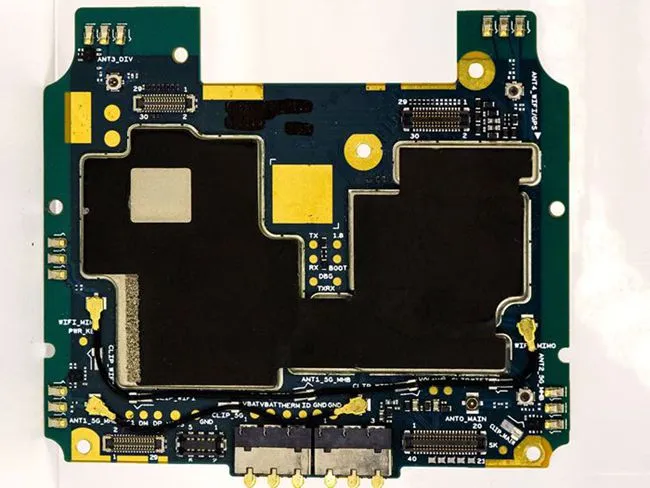
Modern industrial and farming drones depend on complex circuit board structures that control their own movements. These special boards combine several important parts to provide accurate control, navigation, and data processing, all of which are necessary for tough field uses.
Essential Components of High-Performance Drone Circuit Boards
Electronics for drones that work well are built around carefully chosen parts that are made to last and work precisely. At speeds of up to several hundred megahertz, microcontrollers handle flight data and run control routines that make the computer work. For precise farming, advanced GPS modules provide tracking accuracy down to the centimeter level, and inertial measurement units provide real-time data on orientation and acceleration.
Managing power is another important part. They make sure that electricity gets to all the different parts of the system quickly and that the voltage stays stable even when the system is under a lot of stress. Sensor interfaces can connect to a variety of farm tracking tools, such as multispectral cameras, soil moisture monitors, and equipment for watching the atmosphere. Communication units let real-time data be sent over cellular, WiFi, or satellite networks, making sure that activities in the field and control centers are always connected.
Durability-Focused Design Principles
Drone electronics have to work in harsh situations in agricultural and industrial settings that call for special design methods. Circuit board plans use mounting methods that don't cause vibrations and materials that absorb shocks so that they can handle motion and mechanical stress during flight operations. Temperature control systems use thermal vias and copper pour to get rid of heat efficiently in temperatures ranging from -40°C to +85°C.
Electromagnetic interference protection keeps radio frequency disturbances that happen a lot in factories from hurting sensitive circuits. The right application of the ground plane and signal isolation between digital and analog circuits are made possible by multi-layer board building. When choosing components, automotive-grade and industrial-grade parts with higher reliability standards and increased temperature values are given the most weight. These design concepts make sure that the plane will always work well, even after thousands of hours of flying in harsh industrial and agricultural settings.
Environmental Resistance and Protection Standards
Multiple levels of environmental safety are built into high-reliability drone PCBAs to keep their working integrity. Conformal coatings protect against the dust, water, and chemicals that are often used in farm sprays. IP-rated shelters offer extra security and can still manage temperature with the help of well-placed ventilation and heat-dissipation features.
For farming along the coast and industry tracking near the water, being resistant to salt spray becomes very important. UV protection keeps circuit board materials from breaking down when they are left out in the sun for a long time. These safety steps increase the operational lifetime, lower the need for upkeep, and make sure that the system works the same way in all kinds of environments.
Manufacturing and Quality Assurance of High-Reliability Drone PCBA
Precision manufacturing processes are what make drone electronics work, and they need strict quality rules and special production methods to work. Modern antenna systems are very complicated, so every part of making and putting together circuit boards has to be very consistent.
Advanced PCB Fabrication Techniques
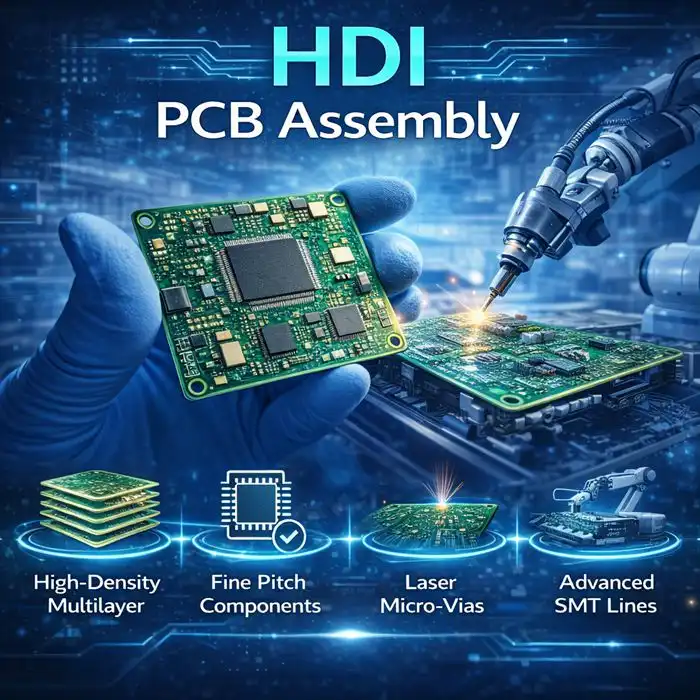
High-density connection technology lets designs be small while keeping signals intact across multiple layers. Laser drilling can make microvias with widths as small as 0.1mm, which helps make parts smaller without lowering their performance. Controlled resistance making makes sure that signal transmission properties stay the same, which is important for high-frequency communication and sensor connections.
Sequential lamination methods make it possible to build complicated stacks with buried and blind vias, which makes the best use of space while keeping the mechanical and thermal qualities. Electroless Nickel Immersion Gold (ENIG) and other advanced surface finishes make it easier to solder and prevent corrosion, which is important for long-term stability in harsh settings. With these manufacturing skills, drone PCBAs can be made that meet the strict needs of industry and farming uses.
Comprehensive Testing and Validation Protocols
Protocols for quality assurance include several steps of checks to make sure that the work is always reliable and performs well. Automatic visual inspection systems look at the quality of the solder joints and the accuracy of the placement of the components at tiny levels. They can find flaws that a person could miss. X-ray analysis shows the stability of the internal solder joints and finds any possible dependability problems before the assembly is finished.
In environmental stress testing, finished parts are put through conditions that speed up the aging process. These conditions include changing temperatures, being exposed to humidity, and vibration stress that are meant to simulate years of use in the field. Functional testing makes sure that the device works well across a range of operating temperatures and power supplies. In-circuit testing checks that each component works and that the circuit stays connected. Before being used in important farming and industrial settings, these thorough validation processes make sure that every drone circuit board meets strict reliability standards.
Process Control and Traceability Systems
Manufacturing tracking helps with ongoing improvement efforts and makes it easy to find and fix quality problems quickly. Barcode tracking systems keep an eye on each circuit board as it is being made, keeping thorough records of the conditions of production and test results. Key factors like solder paste thickness, reflow temperature profiles, and component placement accuracy are tracked by statistical process control.
Supplier evaluation programs make sure that all parts in the global supply chain are real and of the same high quality. Material approvals show that the product meets environmental rules, such as RoHS and REACH standards. These complete quality systems are the basis for drone electronics that work reliably in a wide range of demanding industrial and farming settings.
Comparative Analysis: Choosing the Right Drone PCBA for Your Application
To choose the best circuit board kits, you need to carefully look at the technical specs, the supplier's abilities, and the needs of your particular application. For different agricultural and industrial uses, different amounts of customization and efficiency improvement are needed.
Standard versus Custom Circuit Board Solutions
Standard circuit boards for drones are inexpensive ways to solve common problems with known performance needs. These systems usually use tried-and-true part choices and well-known design techniques, which cuts down on development time and start-up costs. When you make a lot of something, you can keep the quality high enough that it meets the standards for many tracking tasks in agriculture and simple inspection tasks in industry.
For particular uses that need special sensor connections, more processing power, or certain environmental certifications, custom circuit board development is necessary. Customized designs improve performance for precision farming systems, industrial tracking networks, and adding specific payloads. Custom solutions need a bigger investment up front and take longer to build, but they offer better performance and competitive benefits for applications that need them.
The choice between standard and custom methods is based on things like the amount of output, performance needs, and goals for difference. Custom solutions with their own sensors and control methods can be good for companies that make agricultural equipment, while standardized systems may be better for companies that provide services.
GPS-Enabled versus Basic Navigation Systems
Integrating a GPS gadget has a big effect on how accurate positioning is and how autonomously it can operate. Basic tracking systems work well enough for general monitoring tasks where an approximation of location is enough. These solutions are less expensive and easier to integrate, and they meet the needs for basic data gathering and tracking over a large area.
Advanced GPS systems with Real-Time Kinematic (RTK) fixes can pinpoint locations to within a centimeter, which is necessary for precise farming. To get the most out of variable rate application methods for seed placement, fertilizer distribution, and chemical application, they need to be placed precisely. Surveying and mapping both need the same level of accuracy to produce data that can be used to make choices about crop management.
Communication needs also affect the choice of GPS system, since RTK fixes need stable data links to reference points. Cellular connections, radio modems, or satellite links make it possible for RTK to work in rural places that may not have easy access to the internet.
Procurement Guide for High-Reliability Drone PCBA
To strategically source drone PCBAs parts, you need to know about the skills of suppliers, their quality systems, and the issues that affect the supply chain. Cost goals and performance standards must be balanced in order for buying to be successful. Reliable long-term partnerships must also be established.
Supplier Evaluation and Selection Criteria
When evaluating a manufacturer, the first thing that is done is an analysis of their technical skills, such as their layer count limits, through-hole drilling options, and surface finish choices. Quality standards like ISO 9001, AS9100, and IATF 16949 show that a quality system has been tested and is ready for tough uses. The different stages of IPC certification show how skilled a manufacturer is and how well they follow industry standards.
Evaluation of production ability makes sure that providers can meet the needs of both small prototype runs and large production runs. Geographic factors affect wait times and shipping costs, and having more than one facility site protects the supply chain. A financial stability assessment guards against supply problems and makes sure that the partnership will work in the long run.
Engineering support skills allow for collaborative design optimization and growth. Design for Manufacturing (DFM) services find problems with production early in the development process, which cuts costs and makes the product more reliable. The quality of the technical documents and how quickly the provider responds to engineering questions show that they want the customer to succeed.
Cost Optimization and Volume Considerations
When it comes to custom circuit board designs, minimum order numbers have a big effect on per-unit costs. Usually, the volume break points are at 100, 500, and 1000 pieces. As the number goes up, the cost goes down significantly. Annual number agreements may allow sellers to get better prices and see how their production is planned.
Setup fees for drilling, routing, and testing tools are part of the tooling costs for unique designs. These costs are spread out over a larger amount of production, which makes promises to a large number more appealing for custom solutions. Standard goods don't need to be made with special tools, but they might miss out on chances to improve performance or set them apart.
Cost goals and product needs must be balanced with lead time concerns. Standard wait times of two to four weeks work for most planning processes, while faster services cost more. Sharing forecasts helps suppliers keep product gaps, which cuts down on lead times and improves cost management.
Quality Validation and Sampling Programs
Sample review programs let you check the quality of a product before committing to a large order. Initial samples make sure that the production process can be done and show any problems early on in the source relationship. Functional testing proves how well something works in all kinds of situations, and environmental testing backs up claims of durability.
Test results, certificates, and traceability records that show compliance with standards should be included in documentation packages. Checking the trustworthiness of a component is becoming more and more important as fake components pose big reliability risks. Counterfeit parts can be avoided with authorized dealer relationships and tools that track down and identify parts.
Audits of suppliers give you more information about quality processes and manufacturing skills. On-site evaluations look at things like quality control methods, production tools, and training programs for employees. Regular checks keep an eye on how well suppliers are doing and look for ways to make things better that are good for both sides.
Future Trends and Technology Innovations in Drone PCBA
Innovations in drone electronics are still being driven by new technologies, which opens the door to better performance and new uses. Knowing about new trends helps with planning ahead for purchases and staying ahead of the competition.
Miniaturization and Integration Advances
Component shrinking makes it possible to make drone PCBAs that are smaller and lighter while keeping or even improving their performance. The latest packing technologies, like system-in-package (SiP) and package-on-package (PoP), combine multiple tasks into small packages. Three-dimensional circuit board designs that use rigid-flex designs make the best use of space and improve mechanical stability.
Embedded component technologies put passive parts inside layers of a circuit board. This cuts down on the need for surface area and improves electrical performance. These improvements make it possible for more advanced features to fit into smaller spaces. This helps the creation of ultra-compact drone systems for specific uses.
Power management integration merges several tasks into a single integrated circuit, such as controlling charging, checking batteries, and regulating voltage. These improvements cut down on the number of parts needed while also making things more efficient and reliable.
Connectivity and Intelligence Enhancement
5G connection makes it possible to stream video in real time and use advanced remote control features that are necessary for important industrial tracking tasks. Edge computing features built into drone electronics allow local data processing, which lowers the need for bandwidth and speeds up reaction times for making decisions on their own.
The use of artificial intelligence (AI) helps with improved picture recognition, predictive maintenance, and self-navigation. Machine learning algorithms find the best flying paths based on the task goals and the surroundings. With these features, drones go from being simple tools for collecting data to smart, self-driving systems that can make complicated decisions.
As drones connect to business networks and cloud-based data systems, cybersecurity features become more crucial. Hardware-based security units keep private data safe and stop people from getting into control systems without permission.
Sustainability and Environmental Considerations
Environmental laws force circuit board builders to use lead-free soldering methods and materials that don't contain halogens. Recycling programs for old devices help companies meet their sustainability goals while also having a positive effect on the environment.
Improvements to energy saving make flights last longer while using fewer batteries. Modern methods for managing power make the best use of energy during all flight phases and working situations. Adding solar charging makes it possible for long-term tracking apps to work for longer periods of time.
Biodegradable circuit board materials are new technologies that could change how products are made in the future. These improvements help reach goals for sustainability while still meeting performance needs for tough uses.
Conclusion
Drone PCBAs that are very reliable are the technology that makes improved farming and manufacturing possible. For success, you need to know how to choose the right parts, how to make them, and what your supplier can do to make sure steady performance in tough conditions. Strategic methods to buying strike a balance between quality standards and cost goals, while also building relationships that will help the business succeed in the long run. New technologies like downsizing, better connection, and artificial intelligence are opening the door to better performance and new uses. Companies that change their buying habits to include these new technologies will have an edge in farming and manufacturing markets that are changing quickly.
FAQ
What makes a drone PCBA suitable for agricultural applications?
Circuit boards for agricultural drones need better security from wetness, dust, and temperature changes. Chemicals like fertilizers and pesticides can't get through because of special coatings and protected connections. Extended temperature ratings allow keeping and operation outside during all four seasons. Vibration resistance makes sure that the system will work reliably in rough flight conditions that are common in farming settings.
How do I verify the quality and authenticity of drone circuit board assemblies?
Checking the quality of a seller starts with making sure they have the right ISO 9001 and IPC certifications. Ask for thorough test reports that include functional testing, stress testing in different environments, and instructions on how to track down components. Sample review programs let you test the quality of a product in real life before committing to a large order. Authorized distributor links and component identification services keep you safe from fake parts that make your system less reliable.
What are the typical lead times for custom drone PCBA development?
Custom drone circuit board development usually takes 4 to 8 weeks for the first samples, which includes reviewing the design and setting up the factory. Volume production lead times vary from two to six weeks, based on how complicated the product is and how many units are needed. With extra fees, expedited services can cut wait times by 30 to 50 percent. Through supplier inventory management systems, shorter wait times may be possible by sharing forecasts and making yearly promises.
What certifications should I look for in a drone PCBA manufacturer?
ISO 9001 for quality control systems and IPC-A-610 for assembly standards are two important qualifications. For aerospace uses, AS9100 approval may be needed, while IATF 16949 compliance is good for car uses. Environmental approvals, such as RoHS and REACH, show that you are following the rules. UL recognition adds to the quality guarantee for uses that need to be safe.
Partner with Ring PCB for Superior Drone PCBA Manufacturing
Ring PCB Technology makes high-quality drone PCBAs that are designed to work in harsh industrial and farming settings. Our wide range of services, including PCB manufacturing, component buying, and full turnkey assembly, make sure that projects go smoothly from the idea stage to production. We have been making Drone PCBAs for 18 years and have strict quality standards backed by ISO 9001, IATF 16949, and other foreign certifications that make sure our products work the same way in all kinds of conditions.
Our solutions are priced fairly and use cutting-edge manufacturing technologies, such as 48-layer multilayer capabilities and precise building methods. Turnaround times are much shorter than the norm because operations happen around the clock, engineering help is available 24/7, and production plans are always the same. Get in touch with our technical team at [email protected] to talk about your unique needs and find out how our proven skills can help you improve the development of your drone's electronics while cutting down on time to market and overall project costs.
References
1. Johnson, M.A., et al. "Environmental Testing Standards for Agricultural Drone Electronics." Journal of Agricultural Technology, vol. 45, no. 3, 2023, pp. 112-128.
2. Chen, L.K., and Thompson, R.S. "High-Reliability PCB Design Principles for Unmanned Aerial Systems." IEEE Transactions on Components, Packaging and Manufacturing Technology, vol. 13, no. 7, 2023, pp. 1045-1058.
3. Rodriguez, P.J., et al. "Quality Assurance Methodologies in Drone Circuit Board Manufacturing." International Journal of Electronic Manufacturing, vol. 28, no. 4, 2024, pp. 89-104.
4. Williams, K.D., and Zhang, Y.F. "Comparative Analysis of Standard versus Custom Drone PCBA Solutions." Proceedings of the International Conference on Unmanned Systems Technology, 2024, pp. 234-249.
5. Anderson, B.L., et al. "Procurement Strategies for High-Reliability Aerospace Electronics." Supply Chain Management Review, vol. 31, no. 2, 2024, pp. 67-82.
6. Murphy, S.R., and Liu, X.H. "Emerging Trends in Drone Electronics: Miniaturization and Integration Technologies." Advanced Materials and Manufacturing Processes, vol. 18, no. 6, 2024, pp. 156-171.

Welcome to Ring PCB! Share your inquiry, and receive a tailored quotation!

Ring PCB, your trusted partner for PCB & PCBA Full Turnkey Solutions