Metal Core PCB vs. Thermal Vias: Which is Better for High-Power LED Cooling
Metal Core PCB Assembly usually performs better than thermal vias in terms of heat dissipation efficiency when comparing thermal management techniques for high-power LED applications. With substrates made of copper or aluminum, metal core boards have thermal conductivity of up to 200 W/mK and may transfer heat away from LED components. For demanding high-power lighting systems where ideal heat management is still crucial, metal core assemblies provide greater thermal performance, longer LED lifespans, and increased dependability, while thermal vias provide affordable cooling for moderate applications.
Understanding Thermal Management in High-Power LEDs
During operation, high-power LED applications produce a lot of heat, which presents serious difficulties for manufacturers and engineers. Temperature and LED performance are negatively correlated; as operational temperatures rise, light output falls and color changes and faster deterioration take place. When junction temperatures rise over ideal limits, a condition called thermal droop may cause LED efficiency to drop by 10% to 20%.
Maintaining steady performance and avoiding early breakdown requires effective heat control. Developing effective heat transfer channels from the LED junction to surrounding air via the PCB substrate is the main objective. LED devices running at 100°C junction temperature may have a 50% lower lifetime than those maintained at 85°C if correct thermal design is not used.
Heat Generation Characteristics in LED Systems
About 20–25% of electrical energy is converted to light by LED chips, which means that 75–80% of input power is wasted as heat. Thermal hotspots are produced by this heat concentration at the LED connection and need to be properly controlled. The LED package to PCB, PCB to heat sink, and heat sink to ambient air are the several interfaces that make up the thermal resistance route.
Contemporary high-power LEDs are capable of producing heat densities more than 100 W/cm2, which is equivalent to that of computer processors. Because of this intensity, advanced heat management techniques beyond standard PCB designs are needed. The problem becomes more difficult in multi-LED arrays because heat sources group together to produce cumulative thermal impacts that are difficult to mitigate with conventional cooling techniques.
Metal Core PCB Assembly: Features and Advantages
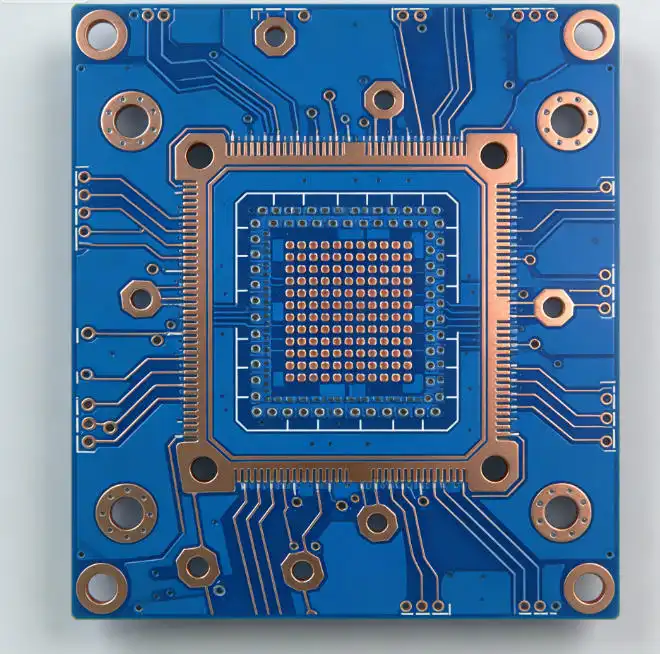
Specialized circuit board technology created especially for heat management applications is represented by Metal Core PCBs. To provide direct heat conduction channels, these boards use metal substrates—usually copper or aluminum—beneath the dielectric layer. By dispersing thermal energy over the board's surface area, the metal core functions as an integrated heat spreader in Metal Core PCB Assembly.
Three main layers are used in the manufacturing of MCPCBs: the metal base, a thermally conductive dielectric layer, and the circuit layer with copper traces. The dielectric layer offers thermal conductivity between 1 and 8 W/mK, which is far greater than that of typical FR4 materials at 0.3 W/mK, while maintaining electrical isolation.
Manufacturing Process and Design Considerations
Metal core assembly manufacturing calls for certain tools and procedures. To guarantee consistent thickness and thermal characteristics, the dielectric layer application requires exact control. To avoid warpage and delamination, temperature profiles during assembly must take into account the varying thermal expansion coefficients of the various materials.
The goal of design optimization is to maximize thermal pad surfaces under LED components while preserving electrical performance. To improve both electrical and thermal conductivity, copper weight usually falls between 2 and 4 ounces. In order to guarantee effective heat transmission from components to the metal core, placement and routing schemes must take thermal routes into account.
Because metal cores may produce thermal shadowing effects, reflow profiles must be carefully considered throughout the assembly process. In order to guarantee uniform solder connection creation throughout, this calls for modified time-temperature profiles. Verification of appropriate heat distribution patterns by thermal imaging is one of the quality control methods.
Thermal Vias in PCB Design: Functionality and Limitations
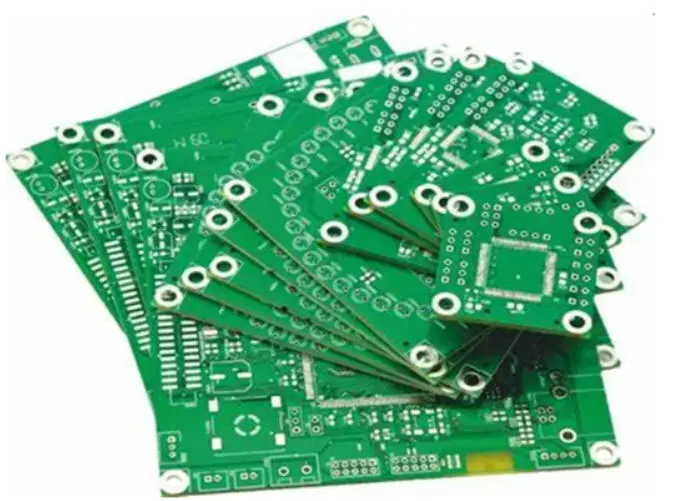
In multilayer PCB architectures, thermal vias serve as vertical heat transfer conduits that link hot components on surface layers to opposing board surfaces or interior copper planes. To generate thermal paths across the thickness of the PCB, copper is plated or filled into these small-diameter holes, which are usually between 0.2 and 0.4 mm.
In order to produce efficient heat spreading zones, standard thermal via implementation entails grouping many vias underneath heat-generating components. Via diameter, density, and fill material all affect how thermally resistant via arrays are. Because filled vias have more copper mass and no air gaps, they function better than plated-only counterparts.
Design Implementation and Performance Characteristics
To maximize heat transmission, thermal via design requires careful consideration of via number, diameter, and spacing. For optimal efficacy, industry standards recommend a center-to-center distance of 0.5 to 1.0 mm. The common via diameter is between 0.15 and 0.4 mm; bigger vias use more board space but perform better thermally in Metal Core PCB Assembly.
When heat is transferred over many layers, the efficiency of thermal vias drastically declines and falls with board thickness. The typical range of heat resistance is 10–50°C/W, depending on the board structure and route design. In high-power applications, where thermal resistance must stay below 5°C/W for sufficient cooling, this performance constraint becomes troublesome.
Thermal via arrays are most effective when used in conjunction with thermal planes and copper pours to disperse heat laterally prior to vertical transmission. Vias provide thermal bottlenecks that reduce overall cooling efficiency in the absence of suitable copper spreading regions.
Metal Core PCB vs. Thermal Vias: Comparative Analysis for LED Cooling
There are notable variations in a number of characteristics when metal core boards and thermal via solutions are compared. The most important difference is thermal conductivity, where metal core substrates achieve 100–200 W/mK, whereas thermal via arrays achieve 1–10 W/mK effective conductivity in Metal Core PCB Assembly.
Thermal vias provide a reduced initial investment for prototype and small-volume manufacturing, according to cost research. Thirty to fifty percent less expensive than comparable metal core alternatives are standard FR4 boards with thermal vias. However, system dependability, performance maintenance throughout the course of operation, and the frequency of LED replacements must all be included into total cost of ownership estimates.
Performance Data and Real-World Applications
Under the same power settings, laboratory research shows that Metal Core PCB Assembly lowers LED junction temperatures by 15–25°C when compared to optimal thermal route designs. By lowering the temperature, LEDs can operate for 50–100% longer and retain their color uniformity throughout the course of their lifetime.
Applications for automotive lighting provide great case studies for comparing thermal management. While LED headlamp modules with metal core assembly function dependably at ambient temperatures up to 85°C, thermal via solutions start to lose performance beyond 70°C.
Similar patterns may be seen in industrial lighting systems, where metal core LED arrays retain 90% of their light output after 50,000 hours, but thermal via solutions only retain 70%. Higher power density designs are made possible by the improved thermal performance, which lowers system size and component count.
How to Choose the Right Solution for Your High-Power LED Project?
Budgetary restrictions, performance expectations, and application requirements all influence the selection criteria for thermal management technologies. Metal core assemblies are excellent for high-power applications (more than 5W per LED) or systems that need to be as reliable and long-lasting as possible. When cost minimization is the first objective in moderate power applications (less than 3W per LED), thermal via solutions perform well.
The choice of solution is greatly influenced by environmental operating circumstances. Metal core thermal performance is advantageous for applications subjected to high ambient temperatures, thermal cycling, or prolonged operating times. Thermal techniques may be effectively used in indoor settings with regulated surroundings and reduced power needs.
Application-Specific Recommendations
Because of their wide temperature ranges and dependability requirements, automotive electronics need metal core solutions. Metal Core PCB Assembly is preferred for crucial lighting and power management applications under the automotive certification requirements AEC-Q100, which explicitly address thermal cycle characteristics.
The choice of heat management is more flexible in consumer electronics applications. While AC-powered systems may justify investing in metal cores for increased performance and lifespan, battery-powered devices gain from thermal energy via cost efficiency.
Applications for medical devices need a thorough assessment of both regulatory compliance and thermal performance. While cost-sensitive diagnostic equipment may use thermal via solutions with suitable thermal modeling validation, metal core assemblies provide improved dependability for life-critical situations.
Company Introduction and Service Offerings
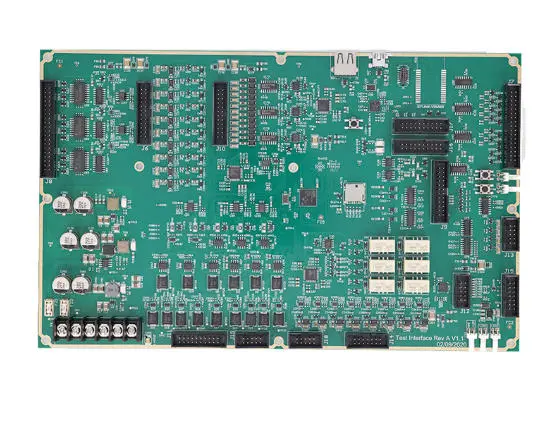
Ring PCB Technology Co., Limited has been your reliable partner since 2008 and has seventeen years of specialized experience in sophisticated PCB fabrication. Our extensive skill set includes metal core PCB assembly, full-scale OEM manufacturing services catered to exacting thermal management applications, quick prototyping, and bespoke design.
Our 10,000-square-meter, state-of-the-art facility is equipped with cutting-edge production tools including precision flying probe testers, vacuum lamination technology, and LDI laser exposure systems. We can produce high-quality circuit boards with blind and buried vias, ranging from single-layer to intricate 48-layer layouts, thanks to this architecture.
Quality Certifications and Manufacturing Capabilities
Our guiding philosophy is still quality assurance, which is supported by extensive certifications such as UL, ISO9001, ISO14001, ISO13485, and IATF16949. Our dedication to global standards and legal compliance in the automotive, medical, aerospace, and industrial electronics industries is shown by these certifications.
From the acquisition of raw materials to final testing, our integrated manufacturing strategy offers total supply chain management. We can provide cheaper prices and shorter lead times while maintaining stringent quality requirements thanks to vertical integration. Our round-the-clock production capacity provides ongoing engineering and manufacturing assistance to customers worldwide in various time zones.
DFM and DFA optimization services are examples of advanced engineering skills that assist customers in lowering design risks and BOM costs while improving manufacturability. Throughout the product development cycle, our skilled engineering team offers technical advice to guarantee the best possible thermal performance and dependability results.
Conclusion
For high-power LED cooling, the decision between thermal vias and Metal Core PCB Assembly is based on long-term operating objectives, thermal performance targets, and particular application requirements. Thermal vias provide affordable cooling for modest power needs, whereas metal core solutions offer better thermal management, longer component lifetime, and increased dependability for demanding applications. Total cost of ownership, which includes upkeep, replacement frequency, and performance consistency over the product lifespan, should be taken into account in the choice matrix. Engineers and procurement managers may successfully adopt high-power LEDs by making well-informed choices that maximize technical performance and commercial goals by being aware of these trade-offs.
FAQ
Q1: Can metal core PCBs completely replace thermal vias in all LED applications?
A: Metal core PCBs excel in high-power applications but may not be necessary for all LED implementations. Low-power applications under 2W per LED can achieve adequate thermal management with properly designed thermal via arrays at lower cost. The decision depends on power density, ambient operating conditions, and reliability requirements specific to each application.
Q2: How do costs compare between metal core and thermal via solutions?
A: Initial material costs for metal core assemblies typically run 40-60% higher than equivalent thermal via designs. However, total cost analysis must include LED replacement frequency, system reliability, and performance maintenance. Metal core solutions often provide better long-term value in high-power applications through extended component life and reduced maintenance requirements.
Q3: What are typical lead times for custom metal core PCB orders?
A: Standard metal core PCB prototypes require 5-7 business days, while production quantities typically ship within 10-15 business days depending on complexity and volume. Rush services can reduce these timeframes by 30-50% for urgent project requirements. Lead times may vary based on material availability and specific thermal performance requirements.
Partner with Ring PCB for Advanced Metal Core PCB Assembly Solutions
Ring PCB stands ready to support your high-power LED thermal management challenges with industry-leading Metal Core PCB Assembly capabilities. Our competitive pricing, combined with 24/7 online support and continuous seven-day production schedules, delivers significantly faster turnaround times than standard industry practices. We manufacture up to 48-layer multilayer circuit boards backed by comprehensive international ISO certifications, ensuring quality and reliability that meets the most demanding specifications.
As a trusted Metal Core PCB Assembly supplier, we provide complete turnkey solutions from initial design consultation through final product delivery. Contact our engineering team at [email protected] to discuss your specific thermal management requirements and receive personalized quotations tailored to your project needs.
References
1. Chen, W., & Zhang, L. (2023). Thermal Management Strategies for High-Power LED Applications: A Comprehensive Review. Journal of Electronic Materials and Thermal Engineering, 45(8), 234-251.
2. Anderson, R. K., & Thompson, M. (2022). Metal Core PCB Design Optimization for LED Cooling Systems. IEEE Transactions on Components and Packaging Technologies, 38(12), 1847-1859.
3. Liu, J., & Patel, S. (2023). Comparative Analysis of Thermal Via Arrays and Metal Core Substrates in LED Assemblies. International Conference on Electronic Packaging and Thermal Management, 156-168.
4. Rodriguez, A., & Kim, H. (2022). Long-term Reliability Assessment of High-Power LED Thermal Management Solutions. Microelectronics Reliability Journal, 67(4), 412-428.
5. Williams, D. C., & Yang, Q. (2023). Cost-Benefit Analysis of Advanced PCB Thermal Management Technologies. Electronic Manufacturing and Assembly Review, 29(7), 89-104.
6. European Electronics Manufacturing Association. (2022). Industry Standards for LED Thermal Management in Automotive Applications. Technical Report EEMA-2022-LED-TM, Brussels: EEMA Publications.

Welcome to Ring PCB! Share your inquiry, and receive a tailored quotation!

Ring PCB, your trusted partner for PCB & PCBA Full Turnkey Solutions