Multilayer PCB vs HDI PCB: Which Fits Your PCBA
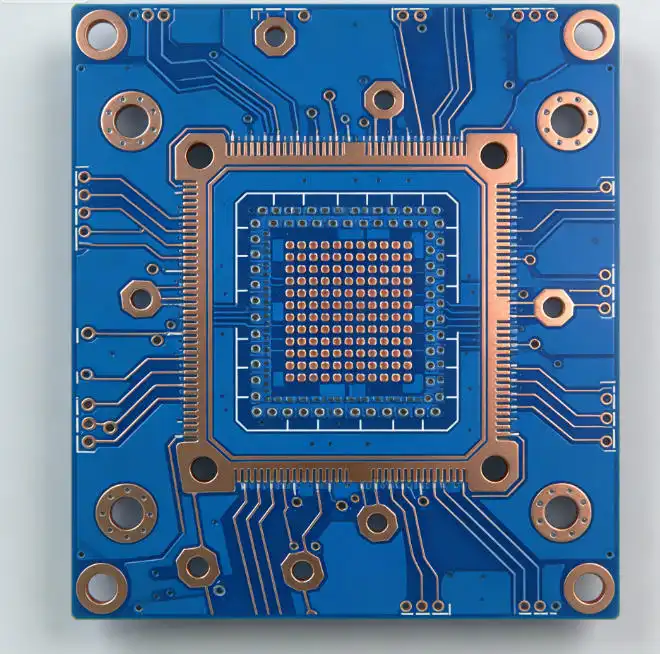
It is essential to have a solid awareness of the key distinctions between multilayer PCB and HDI PCB technologies in order to make educated judgements about procurement when you are deciding between these two technologies for your PCBA projects. Multilayer printed circuit boards (PCBs) provide dependable performance for common applications since they consist of numerous circuit layers that are layered vertically with conventional through-hole vias. Microvias, blind vias, and buried vias are all included on HDI printed circuit boards (PCBs), which allow for increased circuit density while maintaining small footprints. Which option you choose with is determined by the precise application needs, financial factors, and performance goals you have specified.
Comprehending the Basics of Multilayer PCB and HDI PCB
The foundation of successful PCBA procurement lies in comprehending the structural differences between these two prominent circuit board technologies. This knowledge empowers purchasing managers and engineering teams to align their technical specifications with manufacturing capabilities.
Multilayer PCB Architecture and Characteristics
With anything from four to forty-eight layers of copper traces separated by insulating materials, multilayer PCBs are the foundation of contemporary electronics production. Traditional drilling methods are used in the production of these boards in order to construct through-hole vias that link the various layers of the circuit. As part of the production process, prepreg materials are laminated with copper foil under circumstances of temperature and pressure that are under control.
When it comes to controlling electromagnetic interference and maintaining signal integrity, the layer stack-up arrangement is an extremely important factor. In addition to providing protection for delicate signal traces, power and ground planes are responsible for the effective distribution of electrical energy. Considering that standard multilayer boards can accept trace widths as small as three millimetres and have spacing tolerances of three millimetres, they are ideal for the majority of electronic applications that need dependable interconnections.
HDI PCB Technology and Advanced Features
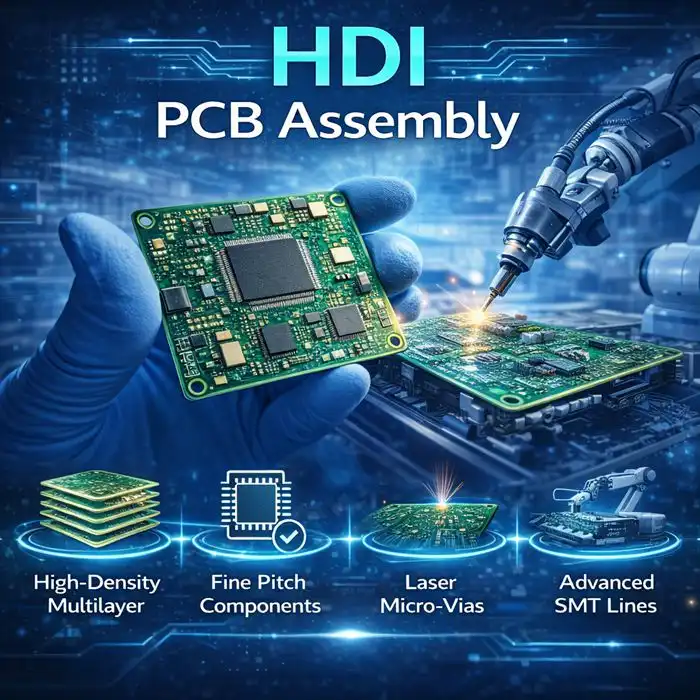
Because of their revolutionary via designs, HDI printed circuit boards (PCBs) revolutionise circuit density. These via structures include microvias with dimensions ranging from 50 to 150 micrometres. Through the use of blind vias that connect the outside layers to the inner layers and buried vias that link the internal layers, these boards are able to connect the layers without entering the whole thickness of the board. Through the use of laser drilling technology, accurate microvia creation is made possible, which permits the installation of components on both sides of the board while using a small amount of space.
In order to properly manufacture HDI boards, the sophisticated manufacturing techniques need successive lamination cycles as well as specialised equipment for the generation of microvia. The addition of build-up layers that include microvias is done in stages, which results in the creation of intricate interconnection networks that are capable of supporting high-performance applications. This technique allows for the mounting of components with a fine pitch, which in turn minimises the overall size of the board while preserving the integrity of the signal.
Essential Factors to Consider for Your PCBA Needs
When choosing the best printed circuit board (PCB) technology for their assembly needs, procurement experts are required to consider a comprehensive range of technical and commercial variables. The performance of the product, the expenses of production, and the timeliness of the project are all directly impacted by these issues.
Performance Requirements and Signal Integrity
Multilayer PCBs excel in applications requiring robust impedance control and effective thermal management. The larger via structures provide excellent current-carrying capacity and heat dissipation pathways. These boards maintain consistent electrical characteristics across temperature variations, making them ideal for automotive and industrial applications.
Using shorter connector routes and decreased parasitic effects, HDI technology provides greater signal integrity for high-speed digital circuits. This is accomplished using this technique. In order to enable operation at higher frequencies, the narrower via architectures reduce the amount of signal reflections and crosstalk that happens. Ball grid arrays and chip-scale packages are two examples of sophisticated packaging technologies that are supported by these boards. These technologies need precise routing capabilities.
Cost Analysis and Budget Considerations
As a result of well-established production procedures and extensive availability of suppliers, the prices of manufacturing multilayer printed circuit boards (PCBs) continue to be reasonably predictable. A common piece of equipment may be found in the majority of fabrication plants, and it is required for the normal drilling and plating procedures. As a result of economies of scale, multilayer boards are capable of providing cost-effective solutions for large-quantity orders when volume manufacturing is involved.
When compared to normal multilayer boards, HDI printed circuit boards (PCBs) are more expensive to manufacture since they need more specialised production equipment and include greater material expenses. The manufacturing cycles are lengthened by the successive lamination procedures and laser drilling operations, which also need technical expertise from the specialists. The decreased board size and enhanced functionality, on the other hand, have the potential to compensate for the increased costs via system-level savings.
Lead Time and Manufacturing Complexity
Standard printed circuit boards (PCBs) sometimes have shorter lead times than other types of PCBs since their production methods are more efficient and materials are frequently accessible. A significant number of fabrication facilities keep an inventory of core materials and common prepreg, which enables them to begin production more quickly. The drilling and plating activities that are considered conventional adhere to well-established techniques and have cycle durations that are predictable.
In order to accommodate the intricate sequential build-up procedures and specialised via formation methods, HDI boards need the use of prolonged production schedules. Additional time is added to the manufacturing sequence as a result of the laser drilling operations and the several lamination cycles. There are extra inspection processes that are required for quality control procedures for microvia production and layer registration. These steps have an effect on the total lead times.
Multilayer PCB Design Guide for B2B Procurement
Effective procurement strategies for multilayer PCBs require understanding design principles that influence manufacturability, cost, and reliability. These guidelines help procurement teams specify requirements that balance performance needs with production constraints.
Stack-Up Configuration and Layer Management
Starting with the identification of signal, power, and ground layer needs based on the complexity of the circuit and the performance parameters is the first step in the optimal stack-up design process. For the purpose of preventing board warpage during thermal cycling, symmetric stack-ups ensure that copper distribution is evenly distributed over the board thickness. In order to support routing density while yet ensuring regulated impedance for vital signals, the number of layers being used should be sufficient.
The successful control of voltage in power distribution networks necessitates the placement of specialised planes in close proximity to high-current components. When correctly linked by stitching, ground planes provide return current routes and electromagnetic shielding to the surrounding area. The layer structure has an effect on the production yields, and standard fabrication capabilities should be taken into consideration in order to keep costs to a minimum.
Material Selection and Thermal Management
Substrate materials significantly impact electrical performance and thermal behavior of multilayer PCBs. Standard FR-4 materials provide adequate performance for most applications while maintaining cost-effectiveness for volume production. High-frequency applications may require low-loss dielectrics with stable dielectric constants across temperature ranges.
Thermal management considerations include copper weight selection and thermal via placement for heat dissipation. Heavier copper weights improve current-carrying capacity but increase manufacturing complexity and costs. The placement of thermal vias beneath high-power components creates heat conduction paths to internal ground planes or heat spreaders.
Design for Manufacturing Optimization
The criteria for manufacturability aim to minimise production costs and enhance yield rates while simultaneously preserving the integrity of the design system. In order to provide dependable plating coverage, the dimensions of the vias should be in accordance with the aspect ratio constraints that are determined by the thickness of the board. Trace widths and spacing should be kept to a minimum in order to provide appropriate manufacturing tolerances while also satisfying electrical requirements.
Among the factors that go into component placement are the maintenance of proper clearances surrounding drilled holes and the avoidance of placement over via fields, which might have an impact on the quality of soldering. For the purpose of making automated assembly and testing procedures easier to carry out, the design need to integrate test points and fiducial markers. Utilising materials in an effective manner may help lower the costs of manufacturing. Standard panel sizes and tooling hole designs can help accomplish this.
Comparing Multilayer PCB and HDI PCB for Specific Applications
Application-specific requirements drive the selection process between multilayer and HDI technologies. Understanding how each technology addresses particular industry needs helps procurement teams make informed decisions that optimize product performance and cost-effectiveness.
Industrial and Automotive Applications
Due to their demonstrated dependability under extreme environmental conditions, multilayer PCBs dominate industrial control systems and automobile electronics. Because these applications place a higher priority on long-term stability than they do on miniaturisation, the advantages of the sturdy design of multilayer boards are significant. The bigger via architectures provide superior mechanical strength and thermal cycling resistance, both of which are very important for meeting the requirements of automotive certification standards.
The current-carrying capability of typical multilayer designs is advantageous for power management circuits that are used in industrial applications. While simultaneously supplying switching currents with low-impedance routes, the dedicated power planes are responsible for the effective distribution of electrical energy. For the purpose of improving mechanical dependability, these boards are designed to support through-hole components, which are often used in industrial designs.
Consumer Electronics and Mobile Devices
When it comes to smartphones, tablets, and wearable devices, where space restrictions are the primary factor in design choices, HDI technology makes it possible to miniaturise the relevant components. Complex system-on-chip designs that have hundreds of input/output connections may be supported by the high interconnect density, which allows for compact configurations. Through the use of accurate microvia placement and routing capabilities, the mounting of components with fine-pitch becomes conceivable.
Applications that are powered by batteries are able to reap the benefits of HDI technology's ability to minimise board size, which enables higher battery capacities to be included within the same device footprint. In order to accommodate high-speed processors and wireless communication circuits that need low electromagnetic interference, the signal integrity has been increased. The capabilities of HDI routing are essential to the development of advanced packaging technologies such as package-on-package arrangements.
Medical and Aerospace Systems
Medical device applications often require a balance between reliability and miniaturization, making both technologies viable depending on specific requirements. Implantable devices favor HDI technology for size reduction, while diagnostic equipment may utilize multilayer PCB boards for robust performance. Biocompatibility requirements influence material selection and surface finish specifications.
Aerospace applications demand exceptional reliability under extreme environmental conditions, often favoring multilayer designs with proven track records. The redundant routing capabilities of multilayer boards provide fault tolerance essential for critical systems. However, weight-sensitive applications may justify HDI technology despite higher costs for size and weight reduction benefits.
Procurement Insights: Selecting and Ordering Your PCB
Strategic procurement requires evaluating supplier capabilities, quality systems, and manufacturing competencies to ensure successful project outcomes. The selection process should consider both technical capabilities and business factors that impact supply chain reliability.
Supplier Evaluation and Certification Requirements
Reputable PCB manufacturers maintain certifications including ISO9001, IATF16949, and UL recognition that demonstrate quality system compliance. Medical device applications require ISO13485 certification, while aerospace projects may demand AS9100 compliance. These certifications indicate systematic approaches to quality control and continuous improvement processes.
Manufacturing capabilities assessment should include equipment specifications, process controls, and quality inspection procedures. Advanced manufacturing facilities utilize automated optical inspection, X-ray testing, and flying probe testing to ensure product conformance. The supplier's design for manufacturing support capabilities can significantly impact project success through early identification of potential issues.
Pricing Models and Order Quantity Considerations
Multilayer PCB pricing typically follows volume-based models with significant cost reductions at higher quantities due to setup cost amortization. Minimum order quantities for prototypes may range from single pieces to small batches, while production orders often require hundreds or thousands of units for optimal pricing. Setup costs for tooling and programming represent fixed expenses distributed across order quantities.
HDI PCB pricing reflects the complex manufacturing processes and specialized equipment requirements. The sequential lamination processes and laser drilling operations contribute to higher unit costs regardless of volume. Prototype quantities may be limited due to minimum panel utilization requirements and setup complexity. Long-term pricing agreements can provide cost stability for products with extended lifecycles.
Lead Time Management and Quick-Turn Options
Standard multilayer PCBs offer flexibility for expedited manufacturing when supply chain demands require rapid response. Quick-turn options typically add premium pricing but can reduce lead times to as little as 24-48 hours for simple designs. Material availability and production scheduling determine feasibility for expedited delivery.
HDI boards require longer manufacturing cycles due to process complexity, making quick-turn options more challenging and expensive. The sequential build-up processes cannot be significantly compressed without compromising quality. Planning for adequate lead times becomes essential for projects utilizing HDI technology, particularly during peak demand periods.
Conclusion
The decision between multilayer PCB and HDI PCB technologies ultimately depends on balancing performance requirements, cost constraints, and application-specific needs. Multilayer PCBs provide proven reliability and cost-effectiveness for industrial, automotive, and high-power applications where robust construction outweighs miniaturization concerns. HDI technology offers superior density and signal integrity for consumer electronics, mobile devices, and space-constrained applications justifying premium costs through enhanced functionality. Successful procurement requires partnering with certified manufacturers possessing appropriate technical capabilities, quality systems, and supply chain reliability to ensure project success.
FAQ
Q1: What are the main cost differences between multilayer and HDI PCBs?
A: Multilayer PCBs typically cost 20-40% less than equivalent HDI boards due to simpler manufacturing processes and standard equipment requirements. HDI fabrication involves sequential lamination, laser drilling, and specialized inspection procedures that increase production costs. However, system-level savings from reduced board size and improved functionality may offset the higher HDI costs in compact applications.
Q2: How do lead times compare between multilayer and HDI PCB production?
A: Standard multilayer PCBs generally offer shorter lead times ranging from 5-15 days depending on complexity and supplier capacity. HDI boards require 10-25 days due to sequential build-up processes and additional quality control steps. Quick-turn options exist for both technologies but are more readily available and cost-effective for multilayer designs.
Q3: Which technology provides better signal integrity for high-speed applications?
A: HDI PCBs deliver superior signal integrity through shorter interconnection paths, smaller via structures, and reduced parasitic effects. The microvia technology minimizes signal reflections and crosstalk while supporting higher operating frequencies. Multilayer boards can achieve adequate signal integrity for moderate-speed applications through proper impedance control and layer stack-up design.
Partner with Ring PCB for Your Multilayer PCB Manufacturing Needs
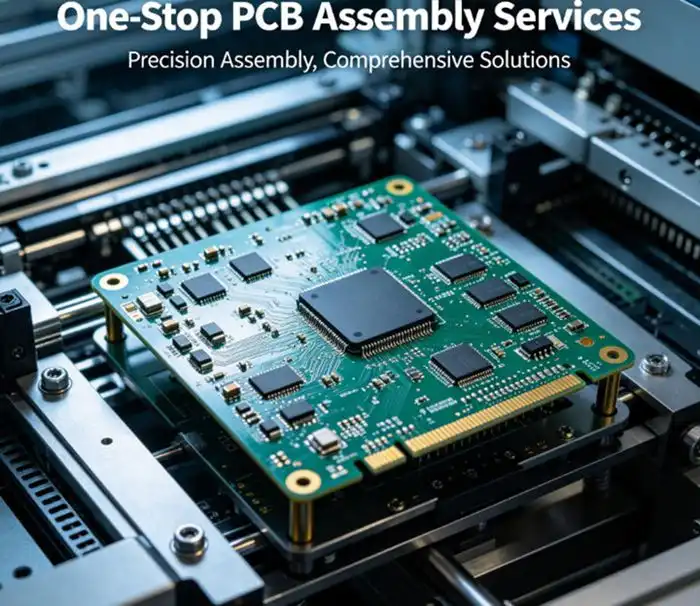
Ring PCB Technology Co., Limited stands as your trusted multilayer PCB manufacturer, delivering exceptional solutions since 2008 through comprehensive one-stop PCBA services. Our state-of-the-art facility spanning 10,000 square meters houses advanced manufacturing capabilities supporting 2-48 layer circuit boards with precision tolerances and impedance control.
Our vertically integrated approach encompasses PCB fabrication, electronic component sourcing, SMT assembly, and full turnkey services, ensuring seamless project execution from design to delivery. The rigorous quality assurance program includes AOI testing, X-ray inspection, and functional validation, maintaining defect rates below 0.2% while adhering to IPC-6012 Class 3 standards. International certifications including ISO9001, IATF16949, and RoHS compliance demonstrate our commitment to excellence.
Ring PCB's 24/7 production capabilities and global support enable rapid response to urgent requirements while maintaining competitive pricing structures. Our experienced engineering team provides comprehensive DFM/DFA optimization services, reducing design risks and component costs throughout the development process. Contact [email protected] to discover how our advanced multilayer PCB supplier capabilities can accelerate your next project with unmatched quality and reliability.
References
1. Institute for Printed Circuits. "IPC-2221A: Generic Standard on Printed Board Design." IPC International Standards, 2018.
2. Coombs, Clyde F. "Printed Circuits Handbook, Seventh Edition." McGraw-Hill Education Professional, 2016.
3. Blackwell, Glenn R. "The Electronic Packaging Handbook." CRC Press Engineering References, 2019.
4. Happy Holden. "HDI Handbook: High Density Interconnect Circuit Boards." BR Publishing, 2017.
5. Martin, Todd. "Advanced PCB Design and Layout for EMC." Society of Automotive Engineers International, 2020.
6. Williams, Tim. "EMC for Product Designers: Meeting the European EMC Directive." Newnes Technical Publications, 2019.

Welcome to Ring PCB! Share your inquiry, and receive a tailored quotation!

Ring PCB, your trusted partner for PCB & PCBA Full Turnkey Solutions