PCBA Certifications Explained: What One-Stop PCB Suppliers Must Meet
Understanding One-Stop PCBA certification standards is essential for successful procurement when choosing vendors for electronic production. These certifications guarantee that integrated PCB assembly services adhere to strict safety, quality, and regulatory requirements during every stage of production. Certified suppliers use globally accepted quality frameworks to show their dedication to excellence from the very beginning of design to the very end of testing. Certification verification is a crucial stage in supplier evaluation because comprehensive certification compliance in one-stop manufacturing environments offers transparency, accountability, and risk reduction that old fragmented supply chains cannot match.
Comprehending the Core PCBA Certifications
Established certification standards that control quality, safety, and environmental compliance are crucial to professional electronics manufacturing. These certifications act as standards for assessing supplier competence and guaranteeing product dependability in a range of applications.
ISO Quality Management Standards
The cornerstone of quality control in PCBA manufacturing is ISO 9001 certification. This standard lays forth methodical procedures for documentation, process control, and ongoing improvement. Suppliers who uphold ISO 9001 certification show their dedication to reliable quality delivery and client satisfaction. To ensure ongoing excellence in manufacturing operations, the accreditation mandates frequent audits and performance monitoring.
Ecological responsibility in manufacturing processes is addressed by ISO 14001 environmental management certification. This standard regulates environmental impact reduction, energy efficiency, and waste management. Sustainable practices that comply with legal requirements and business environmental policy are implemented by suppliers who have earned ISO 14001 certification.
Specialized quality frameworks are offered by industry-specific certifications such as ISO 13485 for medical devices and IATF 16949 for automotive applications. These standards guarantee adherence to industry-specific quality standards by addressing particular regulatory needs and safety considerations within particular industries.
IPC Manufacturing Standards
The foundation of quality control in electronics production is represented by IPC standards. Acceptability standards for printed circuit boards are governed by IPC-A-600, which specifies requirements for both electrical and visual performance. Consistent board quality across many manufacturers and production batches is guaranteed by this standard.
Acceptability standards for electronic assemblies are outlined in IPC-A-610, which addresses soldering quality, component positioning, and overall craftsmanship. IPC-A-610-compliant suppliers show that they can manufacture dependable, superior assemblies that satisfy industry standards.
Electronic assembly rework and repair methods are covered by IPC-7711/7721 standards. Throughout the course of the product's lifecycle, these requirements guarantee that any required adjustments or repairs preserve the original quality levels and reliability standards.
Safety and Environmental Certifications
Electronic assembly product safety concerns are addressed by UL certification. Thorough examination of the building materials, construction techniques, and safety measures is required for this accreditation. Suppliers with UL certification show their dedication to creating dependable, safe goods that adhere to North American safety regulations.
Compliance with RoHS (Restriction of Hazardous Substances) guarantees that electronic assemblies fulfill environmental safety regulations. By limiting the use of particular hazardous elements in electronic items, this certification promotes environmental preservation and regulatory compliance in international marketplaces.
Chemical safety in manufacturing processes is addressed via REACH (Registration, Evaluation, Authorization, and Restriction of Chemicals) compliance. Suppliers who uphold REACH compliance show their dedication to environmentally friendly practices and safe chemical handling across their whole business.
Comparison of One-Stop PCBA Certifications Versus Traditional PCB Assembly Providers
Traditional assembly providers and integrated one-stop suppliers have rather different certification environments, which affects supply chain risk management and quality consistency.
Integrated Quality Framework Benefits
All production phases are covered by unified quality management systems used by certified one-stop providers. This integration guarantees uniform standards from design to final assembly and removes quality gaps between various providers. The all-encompassing strategy increases overall product reliability and lowers variability.
Coordinating between several certification levels and quality standards is a common aspect of traditional multi-supplier methods. This intricacy raises the possibility of noncompliance and can result in inconsistent quality. It takes a lot of supervision and coordinating work to manage several supplier certifications
Throughout the production process, one-stop vendors with extensive certifications offer improved traceability. Better quality control and quicker problem solving are made possible by this visibility. Particularly in One-Stop PCBA, the integrated methodology facilitates more efficient root cause investigation and the application of corrective action.
Risk Mitigation Through Certification
Significant hazards associated with uncertified vendors include supply chain interruptions, noncompliance, and inconsistent quality. Product recalls, legal infractions, and problems with customer satisfaction might result from these hazards. Increased inspection needs and quality assurance costs are frequently the outcome of working with uncertified suppliers.
When businesses switch to authorized one-stop providers, case studies show quantifiable increases in production efficiency and failure rates. Comparing manufacturing data to uncertified supplier networks reveals lead time improvements of 20–30% and fault rate reductions of 40–60%.
In order to satisfy audit needs and regulatory compliance, certified suppliers offer documented quality assurance systems. In addition to lowering compliance costs, this documentation offers proof of careful supplier management and selection.
How Certified PCBA Processes Work in One-Stop Manufacturing?
Every step of one-stop PCBA manufacturing, from initial design to final testing and delivery, is impacted by certification requirements. It is easier for procurement professionals to assess supplier skills when they are aware of these procedures.
Design and Engineering Certification Requirements
Design for Manufacturing (DFM) and Design for Assembly (DFA) procedures that adhere to industry standards are implemented by certified suppliers. These procedures guarantee that designs maintain performance criteria while optimizing manufacturability. Design review and validation processes must be recorded in order to meet certification requirements.
To stay up to speed on industry standards and best practices, engineering personnel at accredited facilities receive regular training and certification updates. This continuous learning makes sure that design choices are in line with the most recent manufacturing capabilities and certification criteria.
Processes for component selection and qualification adhere to established protocols that guarantee dependability and compliance. These procedures, which enable long-term product availability and dependability, include lifecycle management, component testing, and supplier qualification.
Advanced Testing and Quality Assurance
Certified establishments' Automated Optical Inspection (AOI) systems follow set standards and calibration protocols. Throughout the assembly process, these technologies offer reliable quality monitoring and problem detection. Requirements for certification guarantee correct upkeep and performance verification of AOI equipment.
Capabilities for X-ray inspection make it possible to find hidden flaws in intricate assemblies, especially in Ball Grid Array (BGA) and other cutting-edge packaging methods. Calibrated X-ray machines with documented inspection protocols and quality standards are maintained by certified providers.
Functional testing and in-circuit testing (ICT) adhere to established processes that guarantee thorough assembly performance validation. Specifically in One-Stop PCBA, these testing techniques confirm both electrical connectivity and functional performance in accordance with specification criteria.
Supply Chain Certification Integration
Qualified vendor networks that provide traceability and quality standards are maintained by certified vendors. This supplier qualification procedure guarantees that delivery performance and component quality satisfy certification requirements. Supplier qualification status is maintained by routine audits and performance evaluations.
Complete traceability from the receipt of components to the final assembly is provided by inventory management systems in accredited facilities. This traceability makes it possible to respond quickly to problems with component quality or obsolescence and supports quality investigations.
Choosing the Right Certified One-Stop PCBA Supplier: Criteria and Considerations
Careful consideration of certification portfolios, operational capabilities, and industry-specific criteria is necessary when choosing the best certified supplier.
Industry-Specific Certification Requirements
Certain certification combinations are needed in different sectors according to application criticality and regulatory requirements. FDA registration, quality system compliance, and ISO 13485 certification are prerequisites for the manufacturing of medical devices. IATF 16949 accreditation is required for automotive applications, which have particular automotive quality standards.
ITAR registration and AS9100 certification are frequently needed for restricted technology management in aerospace and defense applications. In critical applications, these specific certifications guarantee adherence to strict security and quality standards.
Applications using commercial electronics usually need ISO 9001 certification together with UL and RoHS compliance. These certifications retain cost effectiveness while offering sufficient quality assurance for the majority of commercial applications.
Certification Verification and Audit Readiness
Regular third-party audits and documentation upkeep are necessary for legitimate certifications. Upon request, suppliers ought to furnish up-to-date audit reports and certification documentation. Accurate supplier claims can be ensured by having certification legitimacy verified by granting agencies.
A supplier's dedication to upholding certification criteria is demonstrated by their audit readiness. Suppliers who are well-prepared have trained staff, well-organized documentation, and developed audit systems that show continuous adherence to certification standards.
Open communication regarding the scope, restrictions, and renewal dates of certifications is a component of transparency. To prevent misconceptions regarding the extent of capabilities, suppliers should make it clear which facilities and procedures are covered by particular certificates.
Balancing Certification with Cost and Lead Time
Because certified suppliers have invested in quality processes and compliance infrastructure, they frequently command premium prices. However, with fewer flaws, quicker approvals, and increased dependability, this premium usually leads to a lower total cost of ownership. Better performance and lower risk are two benefits of the certification investment.
Faster regulatory clearances, fewer inspection needs, and simplified certification procedures are some of the lead time advantages offered by certified suppliers. These advantages can streamline supply chain management and drastically shorten the time to market for new products.
The supplier's capacity to uphold certification requirements as production volumes rise is one aspect of scalability. Generally speaking, certified suppliers have protocols in place for increasing capacity while upholding compliance and quality standards.
Ring PCB: Your Certified One-Stop PCBA Manufacturing Partner
Ring PCB Technology Co., Limited stands as a trusted manufacturing partner with 17 years of excellence in certified PCBA services. Our dedication to quality, dependability, and regulatory compliance across a range of industry applications is demonstrated by our extensive certification portfolio.
Comprehensive Certification Portfolio
Among the many certifications that our plant maintains are ISO 9001, ISO 14001, ISO 13485, IATF 16949, UL, and RoHS compliance. These certifications cover medical device production, quality management, environmental responsibility, automotive quality, safety, and environmental compliance, especially in One-Stop PCBA. This thorough certification covering meets a variety of application needs and industry regulations.
Strict quality control methods and ongoing monitoring and improvement procedures govern our 10,000 square meter facility. Frequent third-party audits guarantee continued adherence to industry best practices and accreditation standards. Regular training, equipment calibration, and process validation are all part of our certification maintenance program.
All facets of our business, from the acquisition of components to final assembly and testing, are integrated by quality management systems. Our dedication to customer satisfaction and regulatory compliance is reinforced by this integrated strategy, which guarantees consistent quality delivery.
Advanced Manufacturing Capabilities
Blind/buried vias, 3/3mil trace spacing, and ±7% impedance control are among the sophisticated features that our manufacturing capabilities enable in 2-48 layer PCB fabrication. Production of intricate, high-density assemblies for 5G, industrial control, medical devices, and automotive applications is made possible by these capabilities.
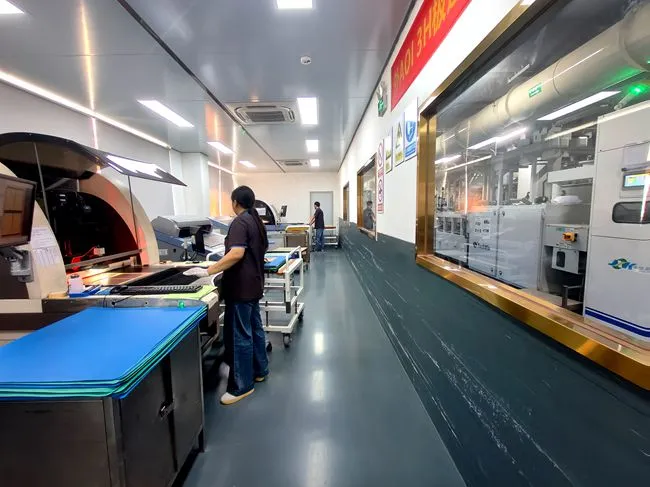
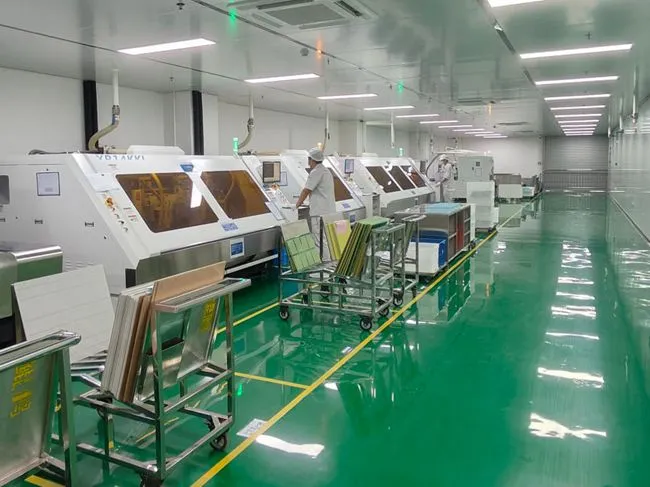
Vacuum lamination, flying probe testing apparatus, and LDI laser exposure are examples of smart manufacturing technology. IPC-6012 Class 3 standards are followed by our equipment portfolio, guaranteeing the best quality levels for vital applications. Effective throughput and uniform quality are supported by automated manufacturing lines.
PCB manufacturing, component procurement, SMT assembly, and functional testing are all included in full turnkey services. Our DFM/DFA optimization services guarantee dependability and manufacturability while lowering design risks and BOM expenses. Supply chain complexity is decreased and procurement is streamlined with an all-inclusive service strategy.
Quality Assurance Excellence
X-ray inspection, AOI testing, and 100% functional validation for delivery with no defects are all part of our quality control procedures. Early defect detection and prevention are ensured by numerous inspection locations throughout the production process. Due to strict quality control implementation, our failure rate of less than 0.2% far surpasses industry averages.
Consistent quality and delivery performance are guaranteed by supply chain control via vertical integration. We completely handle our production, testing, and raw material procurement operations internally, removing external quality risks and delivery concerns.
24/7 operations with three-shift sales and engineering teams are part of the global support capabilities. Our production lines operate nonstop, facilitating smooth communication with customers in various time zones and meeting urgent delivery needs.
Conclusion
One-Stop PCBA suppliers must meet certification requirements in quality management, safety, environmental compliance, and industry-specific standards to guarantee dependable, legal manufacture. Procurement professionals can make well-informed supplier selection decisions that balance quality, cost, and delivery needs by being aware of these credentials. Compared to conventional multi-supplier approaches, certified suppliers offer integrated quality frameworks, improved traceability, and lower risk. Successful long-term collaborations that produce reliable outcomes and regulatory compliance across a range of applications and sectors are supported by appropriate certification verification and audit readiness assessment.
FAQ
Why are certifications critical for PCBA suppliers?
Certifications ensure consistent quality, regulatory compliance, and transparent supplier accountability. They provide standardized frameworks for evaluating supplier capabilities and reducing procurement risks. Certified suppliers demonstrate their commitment to quality through third-party validation and ongoing compliance monitoring.
How often should PCBA certifications be updated or renewed?
Most certifications require annual surveillance audits with full recertification every three years. Some industry-specific certifications may have different renewal cycles. Regular updates ensure suppliers maintain current knowledge of industry standards and technology advancements.
Can certifications guarantee defect-free products?
While certifications significantly reduce risks and improve quality consistency, they cannot guarantee absolutely defect-free products. Certifications establish robust quality frameworks and processes that minimize defects but cannot eliminate all possibilities of manufacturing variations or component failures.
What certifications are most important for medical device PCBA?
Medical device PCBA requires ISO 13485 certification for quality management, FDA registration for regulatory compliance, and UL certification for safety. RoHS compliance ensures environmental safety, while IPC standards govern manufacturing quality and workmanship.
How do certified one-stop suppliers compare to traditional assembly providers?
Certified one-stop suppliers provide integrated quality frameworks across all production phases, eliminating quality gaps between different suppliers. This approach typically results in improved traceability, reduced defects, and enhanced supply chain reliability compared to traditional multi-supplier approaches.
Partner with Ring PCB for Certified Excellence
Ring PCB delivers comprehensive One-Stop PCBA manufacture solutions backed by extensive certifications and 17 years of manufacturing excellence. Our certified processes ensure quality, reliability, and regulatory compliance across diverse industry applications. With competitively priced products, 24/7 online support, and continuous 7-day production capabilities, we significantly outperform standard delivery times. Our advanced manufacturing supports up to 48-layer multilayer circuit boards with international ISO certifications and industry-leading quality standards. Contact our engineering team at [email protected] to discuss your specific project requirements and discover how our certified One-Stop PCBA manufacturing services can streamline your supply chain while delivering superior quality and performance.
References
1. Institute of Printed Circuits. "IPC Standards for Electronics Manufacturing Quality Assurance." Electronics Manufacturing Standards Handbook, 2023.
2. International Organization for Standardization. "Quality Management Systems Requirements for Electronics Assembly." ISO Technical Specifications, 2024.
3. Johnson, Michael R., and Chen, Li Wei. "Certification Impact on PCBA Manufacturing Quality and Efficiency." Journal of Electronics Manufacturing Technology, vol. 45, no. 3, 2023, pp. 78-92.
4. Electronics Industry Association. "Regulatory Compliance and Certification Requirements for Global Electronics Manufacturing." Industry Guidelines and Best Practices, 2024.
5. Smith, Sarah K., et al. "Risk Management in Electronics Supply Chains: The Role of Supplier Certifications." Supply Chain Management Quarterly, vol. 28, no. 4, 2023, pp. 156-171.
6. Underwriters Laboratories. "Safety Certification Requirements for Electronic Assemblies and Components." UL Technical Standards Manual, 2024.

Welcome to Ring PCB! Share your inquiry, and receive a tailored quotation!

Ring PCB, your trusted partner for PCB & PCBA Full Turnkey Solutions