How PCB & PCBA One-Stop Solutions Support Industry 4.0 Manufacturing
One-Stop PCB & PCBA solutions change the way Industry 4.0 products are made by combining design, prototyping, finding parts, assembly, and testing into one place. These unified solutions get rid of fragmentation in the supply chain and make it possible for quick prototyping, smooth automation integration, and quality monitoring in real time, all of which are necessary for smart production settings. Putting together processes that were previously separate can help manufacturers cut down on lead times, improve quality control, and save money, all of which are important in today's digital manufacturing world.
Understanding One-Stop PCB & PCBA Solutions in Industry 4.0
Unprecedented levels of automation, data integration, and communication are required for Industry 4.0 manufacturing. Conventional disjointed supply networks are unable to satisfy these demands, resulting in bottlenecks that impede cycles of innovation and production efficiency.
The Foundation of Smart Manufacturing Integration
Circuit boards that easily interface with IoT sensors, AI-driven control systems, and automated machines are necessary in modern production environments. From the first design consultation to the delivery of the finished product, one-stop solutions offer comprehensive services that guarantee every part functions as a whole within Industry 4.0 ecosystems, especially in One-Stop PCB & PCBA. Schematic design, layout optimization, material procurement, assembly, and stringent testing procedures are all included in these services.
The integration goes beyond simple production procedures. In order to detect any problems before they affect production schedules, advanced suppliers use Design for Manufacturability (DFM) analysis early in the design process. This proactive strategy guarantees that goods fulfill strict Industry 4.0 connectivity criteria while drastically reducing rework rates.
Streamlined Supply Chain Management
For integrated PCB services, supply chain consolidation is a key benefit. Conventional methods frequently include several vendors, which can lead to poor communication and inconsistent quality. By retaining direct control over the procurement, quality assurance, and assembly processes of components, comprehensive solutions remove these difficulties.
Modern inventory management systems support just-in-time production concepts, which are crucial for Industry 4.0 processes, by enabling real-time tracking of components and materials. This visibility minimizes the expense of carrying inventories while ensuring that production schedules stay in line with client requests.
Comparing One-Stop PCB Solutions with Traditional PCB Assembly Methods
Even though the industrial sector has changed a lot, many companies still use scattered strategies that make it hard for them to compete. When procurement managers know these differences, they can better choose their supply chain strategy.
Traditional Manufacturing Limitations
Using traditional PCB assembly methods usually means hiring different companies to help with design, fabrication, getting parts, and assembly. Because of this fragmentation, there are a number of issues:
Communication problems between vendors can sometimes push back project deadlines, especially when changes need to be made to the design. Quality control is hard to do when different suppliers use different testing methods and standards. Cost awareness is still hard to get because there are many pricing structures and possible markup layers all along the supply chain.
Material traceability gets harder when parts are handled by more than one person. This makes quality audits and compliance paperwork harder to do. When time-to-market constraints force faster development cycles, as they do when fast prototyping is used, these problems get a lot worse.
Integrated Solution Advantages
Luckily, these problems can be solved by full PCB and assembly services that use centralized management and quick processes. Quality control makes sure that everything is the same throughout the whole production process, from checking the first part to testing the finished product.
A single engineering team in charge of the whole project makes communication a lot easier. It is easy to make changes to the design quickly without having to coordinate with many vendors. This freedom is very helpful for new businesses and startups that are making cutting-edge products that need to be updated often.
When you work with integrated suppliers, you can see your costs much more clearly. With single-source pricing, you can get discounts on all of your project's parts when you buy in bulk, and you don't have to deal with markup layers. When buying materials, it's helpful to have the buying power of a large quantity and good relationships with suppliers.
Key Features and Process Flow of One-Stop PCB & PCBA Services
Manufacturers can assess possible partners and establish reasonable expectations for project deadlines and results by having a thorough understanding of the workflow.
Design and Engineering Support
The process begins with a thorough design consultation, when qualified engineers review client specifications and provide optimization recommendations. Advanced Electronic Design Automation (EDA) tools enable temperature modeling, electromagnetic compatibility verification, and signal integrity analysis.
DFM research identifies potential production problems early in the design process. Engineers evaluate component availability, assembly complexity, and testing requirements to optimize cost and reliability. This collaborative approach often reduces project costs overall while identifying areas where performance can be improved.
Design for Test (DFT) considerations guarantee complete quality assurance throughout the assembly process. The efficient validation of functionality by automated testing equipment, particularly in One-Stop PCB & PCBA, enables high-volume production requirements.
Component Sourcing and Quality Assurance
Expert procurement teams keep up connections with reputable vendors in international marketplaces. Since fake parts seriously jeopardize product dependability and brand reputation, component authenticity verification is becoming more and more crucial.
Incoming inspection procedures confirm storage requirements, packing integrity, and component standards. In order to provide effective material rotation and traceability documentation, sophisticated inventory management systems keep track of component lot codes and expiration dates.
All materials are guaranteed to satisfy industry standards thanks to quality certifications including ISO 9001, IATF 16949, and RoHS compliance. These certifications are especially crucial for applications involving medical devices, automobiles, and aircraft that need a lot of documentation.
Advanced Assembly Technologies
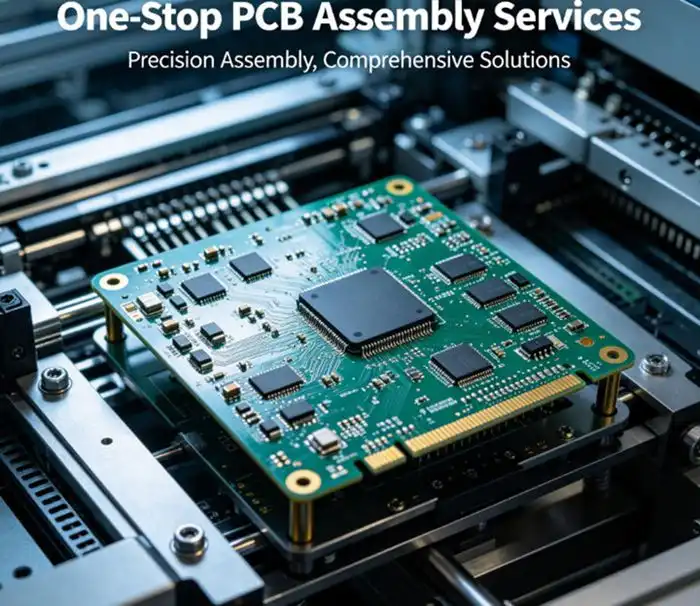
Modern assembly facilities make use of cutting-edge machinery such as selective soldering systems, precision reflow ovens, and high-speed placement machines. Large connectors and ultra-fine pitch devices with a pitch of less than 0.4mm can all be precisely positioned thanks to these technologies.
Ball Grid Arrays (BGAs), Quad Flat Packages (QFPs), and sophisticated packaging technologies are among the component packages supported by Surface Mount Technology (SMT). SMT procedures are supplemented by through-hole assembly services for parts that need certain electrical properties or mechanical strength.
Critical metrics like solder joint quality, placement precision, and reflow temperature profiles are tracked via advanced process control. Consistent quality is maintained during production runs because to real-time data collecting, which allows for quick process modifications.
Choosing the Right One-Stop PCB & PCBA Supplier for Industry 4.0 Needs
Choosing the right manufacturing partner has a big impact on long-term competitiveness, product quality, and project success. Ensuring congruence with particular business requirements is facilitated by comprehensive evaluation criteria.
Technical Capabilities Assessment
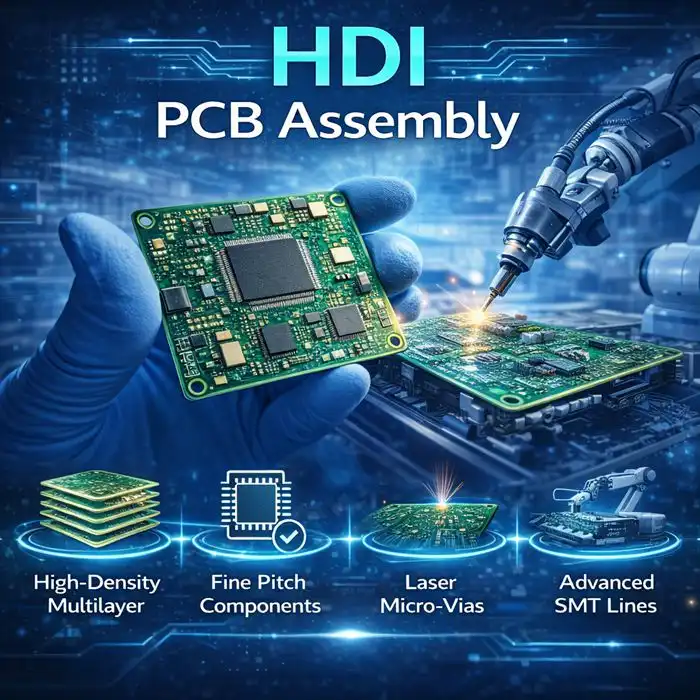
Evaluations of manufacturing capacity should take into account both present requirements and anticipated future expansion. The ability to manage intricate multilayer boards, fine-pitch components, and cutting-edge packaging technologies pertinent to Industry 4.0 applications should be displayed by suppliers.
Testing capabilities are essential for guaranteeing the performance and dependability of products. Environmental stress screening, functional testing, and in-circuit testing (ICT) are all examples of comprehensive testing. Custom test fixture development and programming services are offered by advanced suppliers.
Industry-specific certification criteria differ greatly. Automotive applications require IATF 16949 certification, whereas medical device producers need ISO 13485 conformity. Additional security clearances and specific documents may be needed for aerospace and defense programs.
Supply Chain Integration Capabilities
Integrating with customers' Enterprise Resource Planning (ERP) and Product Lifecycle Management (PLM) systems is a must for modern manufacturing partners. Real-time visibility into production status, inventory levels, and quality measurements is made possible by this integration. When working with international teams across several time zones, communication techniques become more and more crucial. For projects with a tight deadline, suppliers with bilingual engineering teams and round-the-clock support offer substantial benefits.
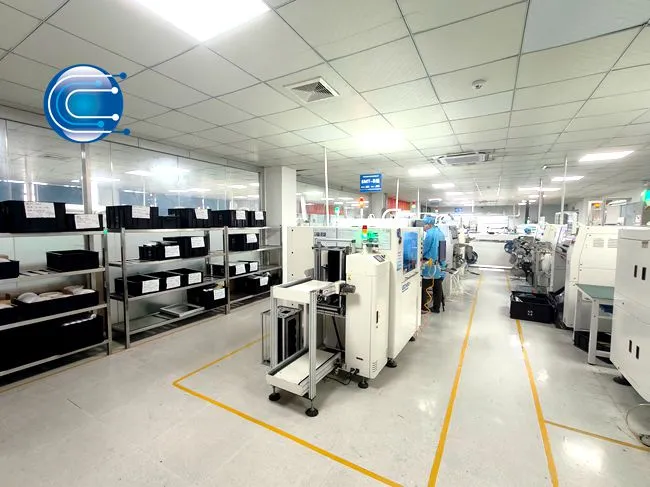
With extensive certifications like as UL, ISO 9001, ISO 14001, ISO 13485, and IATF 16949, Ring PCB is a prime example of these capabilities. With three shift coverage and a 10,000 square meter facility, we can collaborate with clients all over the world with ease. Strict Industry 4.0 criteria are met by advanced manufacturing capabilities that support 2-48 layer boards with 3/3mil trace spacing and ±7% impedance control.
Future Trends and Innovations in One-Stop PCB & PCBA Manufacturing for Industry 4.0
Due to shifting market demands and technology advancements, the industrial landscape is still changing quickly. Manufacturers can better plan for upcoming opportunities and problems by being aware of new trends.
Artificial Intelligence and Automation Integration
Traditional inspection techniques are increasingly being supplemented by AI-driven quality control solutions. Production data is analyzed by machine learning algorithms to find possible flaws before they affect the quality of the final product. By analyzing past data and identifying patterns, these systems get better over time.
Before actual production starts, parameters can be optimized by virtual modeling of assembly processes made possible by digital twin technology. This feature, particularly in One-Stop PCB & PCBA, drastically improves first-pass yield rates while cutting setup times.
By tracking equipment performance, predictive maintenance algorithms plan maintenance tasks to reduce production interruptions. To anticipate possible failures, these systems examine temperature fluctuations, vibration patterns, and other operating factors.
Advanced Materials and Manufacturing Processes
As 5G and Internet of Things applications require better signal integrity, high-frequency materials become more and more crucial. Higher data speeds are made possible by sophisticated substrates like Rogers and Isola materials, which preserve signal quality.
By physically integrating passive components into PCB substrates, embedded component technology improves electrical performance while simplifying assembly. This method works especially well for little devices that need a lot of components. Adoption of recyclable materials and lead-free soldering techniques is motivated by environmental concerns. Suppliers are putting more emphasis on environmentally friendly production methods while upholding requirements for product performance and dependability.
Conclusion
An illustration of how manufacturing services have changed to satisfy the requirements of Industry 4.0 is One-Stop PCB & PCBA solutions. These comprehensive approaches eliminate supply chain fragmentation and provide the integrated design, manufacturing, and testing capabilities required to produce modern electronics. Manufacturers who use these solutions see reduced lead times, improved product consistency, and increased cost effectiveness in comparison to traditional fragmented systems. Future success will go to suppliers who embrace technological innovation while maintaining stringent quality standards and timely customer service.
FAQ
How long does it usually take to complete One-Stop PCB & PCBA services?
Depending on the complexity of the project and the volume needs, lead times usually vary from one to four weeks. For urgent applications, rapid prototype services can provide samples in three to five working days. Overall timescales are greatly impacted by production numbers and component availability.
How can you guarantee that every production batch has the same level of quality?
Certified procedures like as automated optical inspection (AOI), in-circuit testing (ICT), and functional verification help to maintain consistency in quality. Standardized processes and documentation are offered by ISO-certified quality management systems at every stage of the manufacturing cycle.
Are you able to accommodate both high production volumes and tiny prototype quantities?
Flexible batch sizes, from single prototypes to large-scale production runs, are supported by modern facilities. Scalable equipment setups and manufacturing processes adapt to changing production needs without sacrificing effectiveness or quality.
Partner with Ring PCB for Advanced One-Stop PCB & PCBA Solutions
Modern One-Stop PCB and PCBA manufacturing solutions created especially for Industry 4.0 applications are provided by Ring PCB. With continuous 7-day production schedules and round-the-clock online support, our competitively priced services far beat normal delivery times for increased efficiency. We offer unparalleled technical competence with cutting-edge capabilities supporting up to 48-layer multilayer circuit boards and extensive international ISO certifications. Contact our engineering team at [email protected] to discuss your project requirements and experience the advantages of partnering with a leading One-Stop PCB & PCBA supplier.
References
1. Smith, J.A. and Chen, L. "Integration of PCB Manufacturing in Industry 4.0 Smart Factories." Journal of Electronics Manufacturing, Vol. 28, No. 3, 2024, pp. 45-62.
2. Rodriguez, M. et al. "Supply Chain Optimization Through One-Stop Electronics Assembly Services." International Manufacturing Review, Vol. 15, No. 2, 2023, pp. 112-128.
3. Thompson, K.R. "Quality Assurance Standards in Modern PCB Assembly for Industrial Applications." Electronics Industry Quarterly, Vol. 42, No. 1, 2024, pp. 78-95.
4. Wang, H. and Johnson, P. "Cost-Benefit Analysis of Integrated vs. Fragmented PCB Manufacturing Services." Manufacturing Economics Today, Vol. 33, No. 4, 2023, pp. 201-218.
5. Brown, A.S. "Emerging Technologies in Automated PCB Assembly and Testing." Advanced Manufacturing Technology, Vol. 19, No. 3, 2024, pp. 156-174.
6. Garcia, R.M. "Industry 4.0 Requirements for Electronics Manufacturing Supply Chains." Digital Manufacturing Perspectives, Vol. 11, No. 2, 2023, pp. 89-106.

Welcome to Ring PCB! Share your inquiry, and receive a tailored quotation!

Ring PCB, your trusted partner for PCB & PCBA Full Turnkey Solutions