Rigid PCB vs. Flex PCBA: Which is Right for You?
Which one you choose between fixed PCB and flex PCBA depends on the needs of your product. Rigid boards are great for industrial systems and car controls because they are stable and cheaper to make in large quantities. Flex PCBA offers mechanical flexibility that works well for medical tools and portable tech. When projects need complicated electronics, Multilayer PCB Assembly is necessary because it lets signals flow through many conductive layers while keeping the board's small size. When procurement managers and engineering teams understand these basic differences, they can better match PCB technology with performance goals, price limits, and application needs.
Understanding Rigid PCB and Flex PCBA Fundamentals
Core Construction Differences
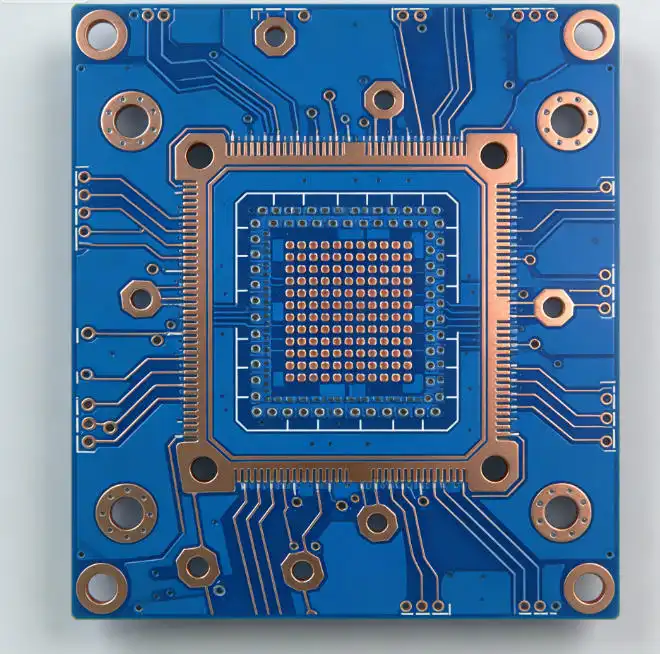
Rigid printed circuit boards are made from solid, non-flexible base materials that stay in the same geometric forms for the whole time they are in use. As the usual base material in the industry, FR4 epoxy laminate is very good at insulating against electricity and is also very strong. By building in this way, stable bases are made for mounting parts and making secure electrical links across one or more conductive layers.
Heat and pressure are used to bond copper foil to stiff surfaces during the manufacturing process. Photolithographic etching then makes conductive paths. Layer stackup setups can be as simple as a single side or as complicated as having more than 20 layers. This vertical merging of circuit lines makes it possible for complex routing designs to be used while keeping the dimensions stable under mechanical and thermal stress.
Flexible Circuit Board Characteristics
Flex PCBA uses thin polyimide films as substrates, which lets circuits bend, twist, and flex over and over again without losing their electrical integrity. Because they are changeable, these features help with design problems that fixed boards can't solve. Extreme temperature, chemical contact, and mechanical wear and tear don't affect the main polyimide material at all.
Building methods for bendable circuits are very different from those for fixed boards. Rolled-annealed copper is flexible enough to be bent over and over again. To attach conductive layers to bendable substrates, special glue systems or adhesiveless lamination methods are used. Cover layers keep uncovered electronics safe while keeping their flexible properties. During the design process, engineers must carefully think about the bend radius requirements, the flexural endurance requirements, and the difference between dynamic and static flex uses.
Multilayer Assembly Capabilities
Both stiff and bendable technologies can be used to build Multilayer PCB Assembly with multiple conductive lines stacked on top of each other on a single board. This method greatly improves route density while reducing the total footprint size. Layers are linked together by metal through-holes or advanced via structures, such as blind vias and hidden vias.
Multilayer stackups are very helpful for sending signals at high speeds because they allow controlled impedance routing with separate ground and power planes. This layer design lowers electromagnetic interference, makes signals more reliable, and speeds up the cooling process. The Multilayer PCB Assembly method meets the needs for complexity that single or double-sided designs can't, whether it's eight-layer rigid boards for industrial controls or four-layer flex systems for medical wearables. We make circuit boards at Ring PCB that range from simple two-layer designs to complex 48-layer setups. This way, we can make sure that our skills meet the technical needs of your project, no matter how complicated it is.
Key Design and Manufacturing Considerations for Rigid vs. Flex PCB Assembly
Material Selection Impact
Material choices have a big impact on how things are made, how much they cost, and how well they work. Most rigid boards are made with FR4 glass-epoxy laminates, which come in different types that meet different electrical and heat needs. For high-frequency uses, specific surfaces like Rogers materials that have better dielectric qualities and less signal loss may be needed.
Polyimide films, like Kapton or similar materials, give flexible electronics the mechanical traits they need. When compared to standard FR4, these materials are more expensive because they are made using different methods and can perform better. Adhesive systems that attach copper to substrates need to be able to stay flexible while still making sure that electrical links work well across a wide range of temperatures.
The difference in the cost of materials between stiff and flexible technologies has a big effect on the economics of a project. Rigid FR4 substrates have reasonable prices because their production infrastructure is stable and can handle large volumes. Flexible polyimide materials are used in more specialized production, which means they cost more. When looking at choices for Multilayer PCB Assembly, the cost of materials goes up with each extra layer, so cost modeling is important for planning purchases.
Design Rules and Layout Guidelines
The needs for circuit layout are very different for rigid and flexible designs. For rigid board designs, there are set rules for how far apart the traces, clearances, and via structures should be based on how the board can be made. Standard design rules allow automatic assembly processes to work while keeping the limits of reliability. Finer shapes and microvias are used in high-density interconnect methods to push these limits.
When designing flexible circuit layouts, it's important to think about how to handle mechanical stress during bending cycles. Designers need to make sure that bend radiuses are correct, that sharp corners don't go in flex areas, and that parts are placed outside of dynamic flex areas. Placement of stiffeners, strain relief features, and conductor patterns all need to be carefully planned to keep things from breaking down too soon. In rigid-flex assemblies, stress concentration control needs to be paid extra attention to the areas where stiff and flexible parts meet.
Manufacturing Process Complexity
Years of investing in process improvement and automation have made production methods for rigid boards better. Well-known steps are used for drilling, layer alignment, processing panels, and laminating processes. Automated optical checking and electrical testing are two quality control methods that make sure that the result always meets IPC standards.
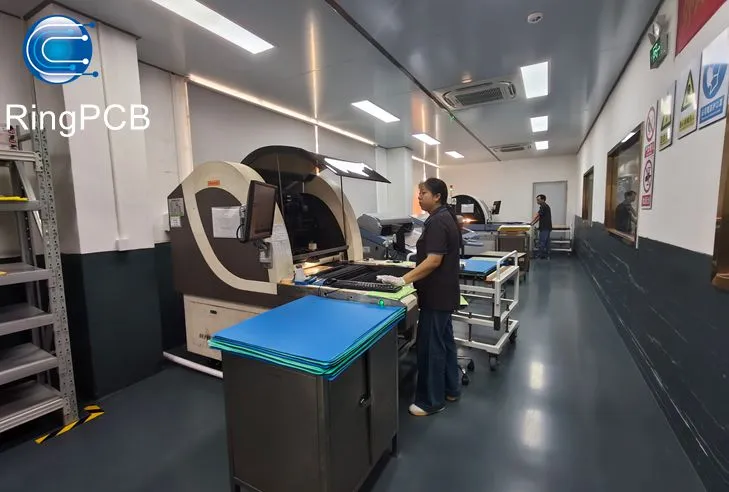
Flex circuit making is more complicated because it requires special layering methods, problems with keeping the dimensions stable during processing, and care when handling thin, fragile materials. It's more important than ever to get the registration right between layers as the material's flexibility makes matching harder. Our factory handles these complicated issues with special flex production lines that have vacuum lamination systems, laser direct imaging technology, and precise handling equipment that keeps the process under control during construction. We can now deliver both stiff and flexible multilayer structures that meet strict quality standards and keep lead times low thanks to this investment in infrastructure.
Performance and Cost Comparison: Rigid vs. Flex Multilayer PCBA
Electrical Performance Characteristics
When stable electrical performance over a wide frequency range is needed, Multilayer PCB Assembly designs work best. Controlled impedance routing is necessary for high-speed digital signals, and the solid base structure keeps the dielectric properties and physical stability stable. Dedicated ground planes can be added to layer stackup systems to cut down on electromagnetic interference and improve signal integrity. This design works really well in places where signal quality has a direct effect on usefulness, like in communication gear, data processing systems, and car electronics.
Even though they can move mechanically, flexible circuits have great electrical qualities within the limits of their design. These days, flex materials have dielectric constants and loss tangents that are close to those of solid substrates. Signals can be sent through three-dimensional space, which makes link lines shorter and may cut down on signal propagation delays and parasitic effects. When built correctly, dynamic flex uses keep the electricity flowing even after millions of bending cycles.
When comparing performances, thermal control issues come into play. Because they are heavier and better at transferring heat, rigid boards often get rid of heat faster than thin, flexible circuits. Thick copper planes can be used in multilayer rigid structures to do two things: distribute electricity and spread heat. Because they can't absorb much heat, flexible systems need careful thermal design. However, special materials that are better at conducting heat can be used for tough uses.
Cost Structure Analysis
Project economy includes things like how much the materials cost, how hard they are to make, how they are put together, and how much they will be used. Manufacturing infrastructure that is well-established and competitive supply markets are good for rigid PCB production. Standard FR4 materials are priced fairly, especially when bought in large quantities. Setup costs are spread out over a larger number of products, which makes rigid boards more cost-effective as production rates rise. At modest to high numbers, a standard eight-layer rigid board for industrial use might be a lot cheaper per unit than a similar flex construction.
Flexible circuit price takes into account the fact that they use specialized materials, make fewer units, and use more complicated manufacturing methods. Polyimide plates and products that go with them are very expensive. Processing rates may be lower than those for rigid board production because the material is harder to work with and has different properties. Because of these things, flex circuits usually have higher unit costs, especially for prototypes and small-scale production.
Assembly costs for Multilayer PCB Assembly go up with the number of layers, no matter what kind of base is used. With each extra layer, there are material prices, processing steps, and output issues to think about. Whether you use fixed or movable technologies, complex stackups with eight or more layers require a lot of money to build. However, multilayer designs often lower the overall cost of a system by getting rid of the need for connections, wires, and separate parts.
Lifecycle and Reliability Factors
Total cost of ownership is based on how long something works and how reliable it is in the real world. When planned and made correctly, rigid boards have been shown to work reliably in a wide range of settings. Their structure is stable enough to withstand mechanical pressures, and their quality is always the same because the production process is well-established. Failure causes are well known, which makes it possible to predict dependability and test for approval.
When there is shaking, shock, or repeated motion, rigid boards would need extra strain relief and interconnection systems. Flexible circuits, on the other hand, are more reliable in these situations. By getting rid of connections and using integrated flex circuits instead, frequent failure places are taken away. But when it comes to flex joints, you need to pay close attention to the bend radius requirements, the flexural fatigue limits, and the fitting stress factors. Flex circuits are very reliable, even in tough situations, as long as these factors are properly thought through during design and installation.
Resistance to the environment depends on the type of material used and any protective layers that are applied. By choosing the right materials, both methods can meet strict standards for chemical protection, exposure to high and low temperatures, and humidity. Conformal coats, encapsulation, and potting methods make both types of substrates safer. Environmental stress testing, temperature cycles, and accelerated life testing are some of the quality assurance steps we take to make sure the goods we give meet your reliability needs, no matter if you choose hard or flexible multilayer assemblies. We stay well below the industry average of 0.2% for defects by following strict checking procedures at every stage of production.
Choosing the Right PCB Assembly Service for Your Project
Capability Assessment Criteria
When choosing a manufacturing partner, you need to look at how well their professional skills match the needs of your project. The number of layers a provider can handle tells you how well they can perform your complicated plan. We can make everything from simple double-sided boards to complex 48-layer structures, so we can meet the needs of even the most demanding customers. High-density connection designs are possible with via technology support, which includes blind vias, hidden vias, and microvias.
How well specific materials are processed depends on how well they can be handled. For high-frequency materials, heavy copper constructions, and rare laminates, you need special tools and process knowledge. In order to make flexible circuits, you need specialized production lines with the right handling and lamination tools. Make sure that possible partners take care of the infrastructure that is needed instead of hiring outside companies to do specialized work that comes with quality and timing risks.
Assembly skills go beyond making bare boards. Providing full complete services that include buying parts, putting them together on a surface mount, putting them in through holes, and checking their functionality cuts down on the work that needs to be done to coordinate things. Our all-in-one service model includes making PCBs, getting parts from approved wholesalers, putting together full SMT and DIP assemblies, and testing the finished product. This all-around method makes it easier to handle vendors and more accurate to plan schedules.
Certification and Quality Standards
Certifications from the industry show that a quality system is mature and that the company can control the process. ISO9001 approval shows that a basic quality control system has been put in place. ISO13485 is a standard that especially talks about how to make medical devices. IATF16949 certification means that a quality method in the car business is being followed. UL recognition proves that a product meets safety standards. To keep these certificates, we make sure that our processes meet strict industry standards through regular audits and efforts to improve all the time.
Support for design for manufacturability tells the difference between capable partners and basic manufacturing providers. During the design review process, experienced engineering teams look for possible problems and suggest changes that will increase output, lower costs, and improve dependability. This way of working together stops redesigns that cost a lot of money and delays in production. Before committing to production, our engineering team does DFM analysis and DFA optimization to look at structure issues, choose the right components, and make sure the assembly process works with the design.
Lead Time and Service Responsiveness
Production plans have a big effect on when a product is developed and when it can be sold. Standard lead times are very different between platforms and service companies. Most of the time, prototype quantities ship faster than production amounts. Because they have different processing needs, flexible circuits often need longer manufacturing processes than rigid boards. Compared to easier designs, Multilayer PCB Assembly with higher layer counts takes longer to make.
Rush services can meet your pressing needs, but they usually come at a higher cost. Our production runs 24 hours a day, seven days a week, which lets us turn things around faster than usual. Three shifts for the sales, engineering, and manufacturing teams make it easy to communicate with clients around the world, even when their time zones are different. This working model lets development plans be shortened when market windows call for faster delivery.
Quote response and contact quality show how reliable a partner is. Quick, specific quotes that show a thorough understanding of the needs show that the company is competent. Having access to technical help throughout the lifecycle of a project boosts trust in difficult initiatives. We offer 24/7 customer service through a variety of methods, so you can be sure that your questions are answered quickly and that any technical issues you have are taken care of by trained engineers.
Practical Applications and Case Studies: When to Choose Rigid or Flex PCBA
Automotive Electronics Applications
Modern cars have hundreds of computer control units that handle everything from the engine to the entertainment systems. Multilayer PCB Assembly is mostly used in these applications because they have to work in harsh environments, be cost-effective at high production rates, and have to be mounted in small areas. Engine control modules usually have six to eight-layer hard boards with heavy copper power distribution, controlled impedance signal lines, and strong via structures that can handle going from very hot to very cold.
High-speed sensor links, processor interconnections, and communication networks make more advanced driver aid systems more difficult to understand. Rigid boards keep their shape so that connectors can be aligned precisely and keep heat under control so that processing that uses a lot of power can happen. The stiff construction of body control modules supports many connections and switches mechanically, and the modules stay cost-effective even when millions of them are made.
For some car uses, flexible circuits are better than hard boards because they are easier to install. During building and operation, the links between the instrument clusters bend many times. There are flexible jumpers between switches on the doors and wiring lines on the body that allow for articulation cycles over the life of the car. These targeted flex solutions fix certain issues while keeping rigid board use for major control modules.
Medical Device Implementations
Medical electronics come in a wide range of shapes and sizes, from big diagnostic imaging systems to tiny gadgets that can be implanted. Rigid Multilayer PCB Assembly is used for most big equipment where traditional building is best because of structural needs, component density, and cost. Most ultrasound systems, patient tracking devices, and lab equipment use rigid parts, which have a history of being reliable and are easy to qualify for regulatory purposes.
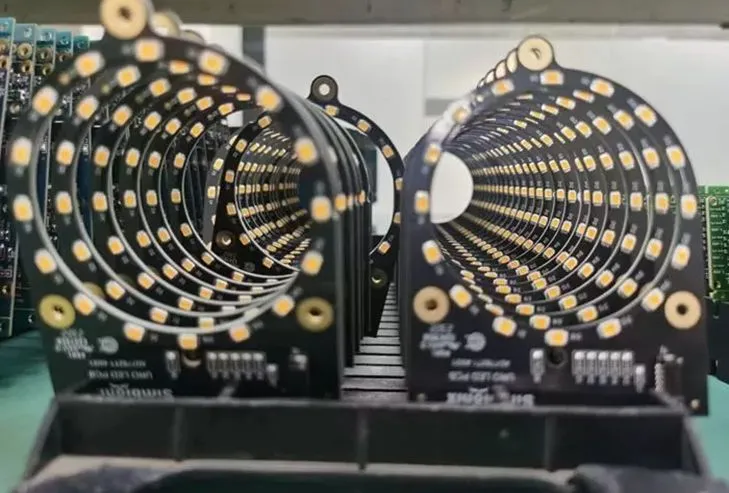
More and more portable and wearable medical gadgets use bendable circuit technology to meet size and comfort needs. Continuous glucose monitors, cardiac event recorders, and smart patches all have flex parts that can bend to fit the shape of the body, which is not possible with hard boards. Integrated flex circuits get rid of the need for joining wires, which increases durability while lowering device profiles. Surgical tools use flex circuits to send data through parts that can move, since stiff boards can't do that.
Implantable devices are the most difficult medical devices to make because they need to be made of safe materials, be very small, and be completely reliable. Heart pacemakers and neurostimulators use special flexible or rigid-flex designs that make the most of their usefulness while working within very tight space limits. These uses show how choosing the right base technology directly makes a product work in ways that would not be possible with other methods.
Industrial and Communication Equipment
Reliability, durability, and resistance to tough environments are important to industrial control systems. Multilayer PCB Assembly is used in programmable logic controls, motor drives, and process automation equipment to make strong bases for signal processing, power distribution, and communication interfaces. Six- to twelve-layer stiff boards are often used for these tasks because they balance complexity and cost while also meeting the requirements for industry temperature ranges and vibrations.
When using high-frequency transmission gear, it's important to pay close attention to signal security and electromagnetic compatibility. For better electrical performance, base station electronics, network infrastructure, and test tools use hard boards with controlled impedance routing, dedicated ground planes, and sometimes unusual substrate materials. Because rigid designs are structurally stable, they can keep the exact dimensions needed for high-frequency operation while holding large numbers of components.
Flexible circuits are useful in some business situations. Robotic systems use flex assemblies to send data through joints that can move in different ways. Flex wires connect operator buttons on the front of the panel to electronics inside the panel. Flex circuits are used in cable replacement uses to get rid of separate wire harnesses and the connections that go with them. These designs take advantage of the benefits of flex while keeping rigid boards for major control tasks where structural and cost considerations favor standard building.
Conclusion
You can choose between rigid PCB and flex PCBA by carefully weighing the pros and cons of each technology for your individual purpose. Rigid boards are stable structurally, cost-effective in large quantities, and have been shown to work reliably in most electronics uses. When you need mechanical adaptability, small form factors, or dynamic bending over the course of their operating life, flexible circuits are the only way to go. Multilayer PCB Assembly works with both technologies, so complicated designs can be made no matter which base is used.
To make good procurement choices, you need to think about technical needs, manufacturing issues, cost limitations, and expected dependability. Picking the right partner is just as important as picking the right technology. Skilled makers can help with design, make sure the quality, and provide quick service throughout the duration of a project. We support detailed documentation of requirements, testing of prototypes, and open conversation with possible suppliers to set reasonable goals before committing to production.
FAQ: Common Questions About PCB Technology Selection
What advantages do multilayer boards provide over simpler constructions?
By using multiple conductive lines in small spaces, Multilayer PCB Assembly makes it possible to have more components per square inch. Dedicated ground planes that cut down on electromagnetic clutter make this design better at protecting signals. Low-impedance plane shapes make power transfer more efficient. Layer-to-layer links solve complex route problems that can't be done with single or double-sided boards. As internal copper planes spread heat, thermal control gets better.
How do lead times compare between rigid and flex circuit production?
Standard solid PCB manufacturing usually takes between one and three weeks, but this depends on how complicated the board is and how much work the maker can do. Because of the unique processing needs and smaller output volumes, flexible circuit production usually takes two to four weeks. No matter what kind of substrate you use, Multilayer PCB Assembly builds take longer because they need more lamination processes and tests for each layer. These times are shortened by rush services, but they cost more. Most of the time, prototype quantities ship faster than production amounts.
What minimum order quantities should we expect?
MOQ requirements are very different between business types and manufacturers. Some companies have minimum order values or piece counts that you have to meet before they will accept prototypes in numbers as low as five. For efficient part purchase, turnkey assembly services may set MOQ limits. When you buy more than 100 pieces, production price usually kicks in, and volume savings get bigger as you buy more. No matter what the minimum order quantity (MOQ) is, we can work on tasks from the development of a prototype to full production numbers.
Partner with Ring PCB for Expert Multilayer PCB Assembly Solutions
If you choose the right Multilayer PCB Assembly maker, you can speed up the development of your product while still ensuring quality and dependability. With 18 years of experience, Ring PCB Technology has been providing rigid, flexible, and rigid-flex circuit solutions to businesses around the world that make electronics, medical devices, cars, and communication equipment. Our 10,000-square-meter building is open 24 hours a day, seven days a week. It has modern LDI laser exposure systems, vacuum lamination equipment, and full testing facilities. Boards with 2 to 48 layers that meet IPC Class 3 standards are made there.
We offer reasonable prices, can produce quickly because we run continuous production, and can help people all over the world with three-shift teams that work in all time zones. This makes us a reliable Multilayer PCB Assembly supplier for projects that need both quality and speed. Low defect rates (consistently less than 0.2%) show strict quality control through AOI inspection, X-ray examination, impedance testing, and making sure the product works perfectly every time. Email our team at [email protected] to talk about your unique needs and get quotes that take into account your technical specs, volume needs, and time frame goals.
References
1. Coombs, Clyde F. Printed Circuits Handbook, Seventh Edition. McGraw-Hill Education, 2016.
2. Blackwell, Glenn R. The Electronic Packaging Handbook. CRC Press, 2000.
3. Gilleo, Ken. Flexible Circuit Technology: Advanced Applications and Market Trends. BR Publishing, 2012.
4. Prasad, Ray P. Surface Mount Technology: Principles and Practice, Second Edition. Springer, 1997.
5. IPC Association Connecting Electronics Industries. IPC-6012D: Qualification and Performance Specification for Rigid Printed Boards. IPC, 2015.
6. Harper, Charles A. Electronic Materials and Processes Handbook, Third Edition. McGraw-Hill Professional, 2003.

Welcome to Ring PCB! Share your inquiry, and receive a tailored quotation!

Ring PCB, your trusted partner for PCB & PCBA Full Turnkey Solutions