Turn-Key vs. Consignment: Choosing PCBA Service Model
Picking between the turn-key and contract models can have a big effect on how quickly you can get your products to market, how much they cost, and how efficient your production is. When you use Turn-Key PCBA, your production partner takes care of everything, from finding the parts to putting the boards together and checking them before sending them to you ready to use. This plan makes things easier by putting all of the work on one provider. This cuts down on the work that needs to be done to coordinate things and takes advantage of existing supplier networks to get cheap prices on parts. When it comes to contract assembly, on the other hand, clients have to provide the materials directly, which means that inventory control is better but clients also have to take on more supply chain management duties and risks.
Understanding Turn-Key and Consignment PCBA Service Models
To make the right choice between assembly models, you need to know exactly how each one fits into your buying process. Both methods meet different business goals, and knowing the main differences between them helps match the manufacturing strategy with the skills of the business.
What Turn-Key Assembly Encompasses
With turn-key assembly, the provider takes care of the whole production process, giving you a full manufacturing option. After your engineering team sends in the design files (Gerber data, Bill of Materials, and assembly plans), the maker is in charge. This all-inclusive service includes making bare boards with multiple layers, getting parts from approved distributors around the world, putting them together using surface mount and through-hole methods, following strict testing protocols, and managing shipping.
Companies that use this model usually keep their ISO9001, IATF16949, and UL certifications up to date. This makes sure that quality standards are met throughout the whole production process. The model works especially well for businesses that don't have established ties with component suppliers or that want to combine their partner management. Production times are usually between two and four weeks, but they rely on how complicated the product is and how quickly available the parts are. Manufacturers are responsible for supply chain risks and worries about parts going out of date.
How Consignment Assembly Operates
With consignment assembly, the client is responsible for getting the materials, while the maker is in charge of making the parts and putting them together. You buy and send all the parts, like resistors, capacitors, integrated circuits, and contacts, to the assembly center. They then put the parts on the boards according to your instructions. This model gives you full control over choosing the parts, so you can use your favorite sources or use your current stock to save money.
To keep production from being held up by a lack of materials, the method calls for strong internal buying skills and accurate inventory forecasts. Since finding parts happens at the same time as making the board, lead times may be faster. However, this benefit goes away if there are problems in your supply chain. Quality control is still the manufacturer's job when it comes to building processes, but you are in charge of making sure that the parts are real and that they meet the specifications. This could be dangerous if you buy from unlicensed sellers or if fake parts get into your supply chain.
Operational Differences That Impact Your Timeline
Process processes are very different between models, which can change your project plan and how you use your resources. Turn-key providers take care of component lead times, which can make deadlines longer if special parts need longer to be ordered. Their buying power, on the other hand, often gets them faster service than individual clients can. As long as your parts come on time and pass incoming inspection, consignment assembly cuts this step out of the manufacturer's plan, which could speed up production.
This difference is most important for fast development and small-batch production, where speed gives you an edge over your competitors. Companies that are working on several projects at once may find that Turn-Key PCBA services make scheduling easier by reducing the need for internal planning. On the other hand, companies that already have established supply chains may prefer leasing because it gives them direct control over the flow of materials and quality checks before assembly starts.
Key Advantages and Limitations of Turn-Key and Consignment Models
Each service model presents distinct trade-offs that influence the total cost of ownership, the complexity of operations, and the freedom of output. Knowing about these things will help you make a choice that fits with your business's overall goals and the resources you have access to.
Strategic Benefits of Turn-Key Solutions
By bringing together multiple providers under one manufacturing partner, turn-key assembly makes your supply chain design easier to understand. This integration cuts down on routine work because there are fewer buy orders, easier ways to communicate, and one person responsible for the results of production. By buying in bulk from component sellers, manufacturers can often get better prices than individual buyers, especially for popular semiconductors and passive components.
When the provider chooses the materials and can use design-for-manufacturing suggestions early in the development cycle, quality assurance is stronger. This kind of strategic working together finds possible problems with the process before they become expensive ones that need to be fixed. It works great for businesses that are expanding into new markets, new businesses that are making their first goods, or tech teams that are more interested in coming up with new ideas than in managing the supply chain.
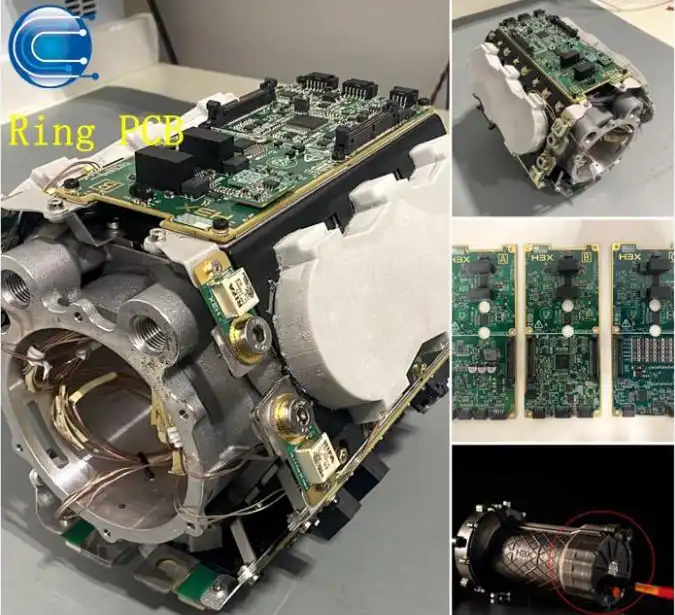
Ring PCB offers a complete Turn-Key PCBA service that includes making PCBs with 2 to 48 layers, getting electronic parts from authorized suppliers, putting them together using SMT and through-hole methods, and testing them for full functionality. We make sure that defect rates are less than 0.2 percent by using three quality assurance protocols: AOI, impedance testing, and thermal cycling validation.
However, with turn-key solutions, you give up some control over which parts are used and have to trust that the maker gets real parts that meet your needs. When costs for parts are added together to make the total price of a job, pricing clarity can be less detailed. Lead times may be longer when there aren't enough parts because makers have to prioritize giving them to all of their customers first. These problems rarely outweigh the benefits for businesses that don't have specialized buying staff or that want to make managing vendors easier.
When Consignment Assembly Makes Sense
When it comes to businesses with strict regulatory requirements, like medical products and aerospace uses, consignment models are essential for keeping track of supplies and parts. You keep close ties with approved sellers of parts, which helps you keep track of the parts' whereabouts and make sure they are real. This control is important when using proprietary or unique parts that can't be bought through normal methods. Companies that already have stock can lower their holding costs by using their stock in production instead of storing it and letting it go bad.
The model also makes price clear because you can see the real costs of the parts instead of pricing structures that include all of them. When goods need to pass strict testing processes or when a customer specifies a certain part source, engineering teams can list the exact manufacturers and date codes of each component.
This method needs a lot of internal resources, like specialized buying staff, inventory management systems, accurate demand forecasts, and the ability to coordinate logistics. When there aren't enough materials, production stops right away. This creates scheduling risks that turn-key models put on the makers. You are responsible for parts that become obsolete, which means you have to keep an eye on their lifespan and plan redesigns when they do. There are higher quality risks if internal sourcing doesn't know how to spot fakes or buys from illegal sellers who want to save money. Because of these things, barter works better for established businesses with well-developed supply chains than for new businesses or smaller organizations that don't have a lot of buying infrastructure.
Comparative Analysis for Decision Making
Cost structures are very different between models, which affects which one is the best deal at different production rates. Because maker margins are built into the prices of parts, turn-key services usually have higher per-unit costs for big production runs. Total cost of ownership, on the other hand, usually favors turn-key when internal labor, product holding costs, and the risk of supply chain disruption are taken into account. When you use current inventory or buy in bulk, consignment can lower the cost per unit of high-volume production.
However, you need to account for management costs and the chance of running out of stock. Lead time benefits change depending on the availability of parts. For example, consignment speeds up production by letting you pre-position materials, while turn-key makes scheduling easier by coordinating the supply chain more centrally. Flexibility is also different.
With a turn-key provider, you can usually make changes to the design during production by replacing parts that are the same, but with a contract provider, you're stuck with the materials they give you even if better ones come up. The biggest difference might be the level of risk that each company faces. With turn-key, supply chain risks are transferred to makers, who are in charge of managing things like obsolete parts and gaps, while with consignment, these risks are kept within your company.
Critical Factors When Choosing Between Turn-Key and Consignment PCBA
To choose the best model, you need to look at many aspects of your project needs, your organization's skills, and your strategic goals. A methodical evaluation makes sure that the service model and business goals are in line with each other.
Production Volume and Project Complexity
The size of the project has a big effect on which plan gives the best value and operating efficiency. When buying parts directly, the minimum order amounts are often higher than what the project needs. This is why Turn-Key PCBA services are often better for prototyping and small-batch production (less than 500 units). Manufacturers share their collection of parts with multiple clients, which makes small-batch production more cost-effective.
This benefit is increased for complicated systems with hundreds of different parts, because turn-key providers handle the purchase of these parts from a wide range of different categories. In the range of 500 to 5,000 units, there is a middle ground where either model may work best, based on the cost of the parts and your ability to get them. When making more than 5,000 units, direct cost savings on components often make up for consignment's management costs.
This is especially true for designs that use expensive specialized chips, where even small percentage savings add up to big total cost savings. Products that are more complicated than the number of parts they have, like mixed technology boards with SMT and through-hole assembly, fine-pitch components with spacing of less than 0.4 mm, or assemblies that need conformal coating and potting, may benefit turn-key providers who have invested in specialized process capabilities and equipment.
Budget Constraints and Cost Optimization
There are more financial factors to think about than just the cost of making one unit. These include the total cost of ownership over the whole span of a product. Turn-key models make it easier to plan and budget money by turning the variable costs of hiring internal buying staff into set costs per project. This stability helps new businesses and smaller companies that don't have a lot of money or are working on a lot of projects at once. The timing of cash flow is also different. For example, contract models need to buy parts in advance, weeks before they can be put together, which means they need working capital that turn-key models don't need until production is finished.
You should pay attention to the hidden costs. For example, trading requires spending money on systems for purchasing goods, keeping track of inventory, and inspecting quality, which are all part of turn-key services. Through regional sourcing methods and volume purchasing deals, turn-key providers can often get better prices on parts for companies that do business around the world. At Ring PCB, we can get parts at low prices because we have a long-standing supplier network and can buy in bulk. Our three-shift operation and 24/7 production lines make the most of the tools we have, and we pass those savings on to our customers through fair pricing.
Supplier Capabilities and Certification Requirements
Qualifications of manufacturers have a direct effect on excellent results, following the rules, and the stability of the supply chain. Turnkey providers should show a wide range of certificates, such as ISO9001 for quality management, ISO13485 for making medical devices, IATF16949 for use in cars, and UL recognition for goods that need to be safe. These certifications check the quality assurance methods, process controls, and tracking systems that are needed for consistent output. How components are sourced is very important.
Make sure that makers only buy from authorized sellers and not from gray market sources, where the risk of fakes is higher. Ask for written proof of the steps used to qualify suppliers and the steps taken for arriving inspections. You can tell if a maker can successfully carry out your design by looking at how advanced their equipment is. For example, look at LDI laser exposure for fine-line traces, X-ray inspection for BGA component verification, and flying probe testing for prototype validation.
Design-for-manufacturing support is what sets great partners apart from average suppliers. Look for engineering teams that look over designs ahead of time, spot possible assembly problems, and suggest improvements that lower costs without sacrificing usefulness. The 10,000-square-meter building that Ring PCB owns is home to advanced manufacturing equipment that meets IPC-6012 Class 3 standards. This equipment can handle high-density designs with 2 to 48 layers, 3/3mil trace spacing, and ±7 percent impedance control, making it suitable for demanding uses in 5G, medical devices, automotive electronics, and industrial control systems.
Strategic Alignment With Business Models
The market situation and operational plan of your business should help you choose a service model. Original Equipment Manufacturers (OEMs) that are making their own goods often choose turn-key services to protect their intellectual property by reducing the number of suppliers that can see their parts. Original Design Manufacturers who make goods for more than one client may choose consignment when buyers define exact component sources or when they want to keep current supply agreements in place.
Electronics Manufacturing Services businesses usually offer both models so they can meet the needs of a wide range of customers. Sustainability concerns are becoming more important in purchasing choices. Check to see if makers are environmentally responsible by following RoHS rules, having policies on conflict minerals, and starting projects to reduce waste. Companies that are building product lines need consistent quality and quick technical support across multiple projects, as well as the ability to adapt to changing needs over the course of a product's lifecycle, which is measured in years instead of individual production runs. This is why long-term partnership potential is more important than transactional pricing.
How to Optimize Your Procurement Strategy with Turn-Key PCBA?
To get the most out of turn-key partnerships, you need to be involved in a strategic way that uses the knowledge of the company while keeping communication open and quality standards high. These useful methods improve results in terms of cost, quality, and service.
Streamlining the Quotation and Ordering Process
For turn-key buying to work well, there needs to be a lot of information available so that quotes are correct and production goes smoothly. Give full design packages that include drill files, Gerber files in the RS-274X format, a Bill of Materials with part numbers from the maker instead of general descriptions, and assembly plans that show how parts are arranged and any special needs. If you have an IPC-356 netlist, include it to make electrical testing easier.
Make it clear what the quality standards are: IPC-A-610 Class 2 for most market goods or Class 3 for very reliable uses. Instead of taking lump-sum pricing that makes it hard to see what the real costs are, ask for quotes that break down the costs of the bare board, the parts, the assembly, and the tests. This openness makes it possible to have real conversations about cost efficiency. Talk about payment terms that work with your cash flow. For example, many makers offer net-30 or net-60 terms to long-term customers, which makes managing working capital easier.
Even for first orders, looking into big prices is a good idea. If you say you plan to place more orders in the future, you can get better pricing through framework agreements that lock rates for certain periods of time. Send out Requests for Quotations to several qualified makers to compare prices and capabilities. But don't make choices based only on cost, because that could mean sacrificing quality or service responsiveness that is important for long-term success.
Reducing Lead Times Through Collaboration
The speed of production depends a lot on how well your tech team and producer communicate and share information. Manufacturers can find possible assembly problems, such as pad sizes that are too small for effective soldering, thermal relief issues for ground planes, or component spacing violations that make automatic assembly harder by scheduling design reviews before approving layouts. When these issues are taken into account during planning, costly changes are avoided once the tooling starts.
If you can, make sure that the parts you specify are flexible. Letting manufacturers use similar parts from other sources cuts down on procurement delays when main parts are out of stock or require longer wait times. Include lists of acceptable alternative parts from the maker in your Bill of Materials. Set realistic goals for your plan. There are faster services available, but they cost more and may lower quality if you need them too quickly.
By forming smart relationships with manufacturers who know your product roadmap, you can better plan your capacity and set priorities during times of high demand. At Ring PCB, our engineering team offers full DFM and DFA optimization services that find design risks early on, cutting down on the number of times that designs need to be changed. We also have established component sourcing capabilities and 7-day continuous production cycles that deliver competitive lead times of two to three weeks for standard Turn-Key PCBA projects, with the option for faster production when project requirements call for it.
Ensuring Quality Through Specification and Verification
To get good results, you need clear instructions, the right testing methods, and checks that find mistakes in the products before they get to customers. Set clear acceptance criteria in buy orders. For example, say how many defects are acceptable, how the solder joints should look, and what electrical testing is needed. Ask for full process records that list each step of the production process and include operator signatures, test results, and inspection results.
Set up processes for inspecting delivered assemblies upon arrival, including checking the quality of the work visually, making sure the dimensions are correct, and trying the functionality of representative samples. Statistical sampling methods find the best balance between thoroughness and inspection costs. IPC standards tell you how many samples you should take based on the number of items in a lot and its quality history.
Set clear rules for how to deal with nonconforming material, including who pays for rework, what kind of correction is allowed versus throwing it away, and how to handle schedule effects. When manufacturers work together and share process data and quality metrics, they can keep improving by figuring out why problems happen and taking steps to fix them. This helps both parties over many projects and production cycles as the partnerships last longer.
Conclusion
You should carefully think about your production needs, internal capabilities, and strategy goals when deciding between Turn-Key PCBA and consignment assembly. Turn-key services make things easier by combining supply chain management into one manufacturing partner. They are especially useful for prototyping, small-batch production, and businesses that want to keep costs low without having to handle each provider individually.
Companies that already have a procurement department and want to get the best deals on parts and keep a close eye on their goods should use consignment models. This is especially true for companies that make a lot of things because the percentage savings add up quickly. There is no one method that is always better than the other. The best way to choose a service model is to make it fit your unique needs. To be successful, you need to find manufacturing partners that have the right certifications, professional skills, and a dedication to quality results that support your business goals throughout the lifespan of a product.
FAQ
Q1: How do lead times compare between turn-key and consignment assembly?
A: Lead times depend on how quickly parts can be sourced and coordinated. On average, a turn-key project takes two to four weeks to complete. This includes both buying the parts and putting them together. Manufacturers handle the shopping while the boards are being made. If parts come before the start date of assembly and pass incoming inspection, consignment can speed up production by one to two weeks. However, this benefit depends on how well your buying team works. Supply chain problems have different effects on different models.
Q2: Does turn-key assembly support component customization and specific sourcing requests?
A: Quality turn-key providers let you choose which parts you want and use their buying knowledge to your advantage. In your Bill of Materials, you can list exact maker part numbers, date code needs, and approved dealer sources. Manufacturers weigh these requirements against factors like cost and availability, offering options when parts that are wanted have long lead times or limited supply. The collaborative method takes into account both your technology needs and their understanding of the supply chain to get the best results. It's important to communicate clearly.
Partner with Ring PCB for Superior Turn-Key PCBA Solutions
Ring PCB offers full Turn-Key PCBA services and has been making high-quality products for 18 years and is certified by ISO9001, IATF16949, and ISO13485. Our self-owned 10,000-square-meter building is open 24 hours a day, seven days a week, and has three shifts of engineers to help with work. This allows people in different time zones to work together quickly and effectively, and it goes beyond the usual delivery times in the business. We make very complicated boards with anywhere from 2 to 48 layers. These boards have advanced features like 3/3mil trace spacing, blind and hidden vias, and ±7 percent impedance control, which makes them perfect for tough uses in medical devices, car electronics, and 5G communication systems.
Our all-in-one method includes making PCBs, getting approved parts, putting them together using SMT and through-hole techniques, testing them thoroughly for functionality, and putting them in boxes. We then use three levels of quality assurance to make sure that the products are ready to use and have defect rates below 0.2 percent. As your full-service PCBA provider, we offer low-cost options by using well-established networks to find parts and DFM optimization, which cuts down on both costs and time-to-market. You can talk to our team at [email protected] about your project needs, get specific quotes, or set up sample production that shows how committed we are to quality, dependability, and customer success.
References
1. Anderson, T. (2022). Strategic Procurement in Electronics Manufacturing: Service Model Selection and Supply Chain Optimization. Industrial Engineering Press.
2. Chen, L., & Martinez, R. (2023). Comparative Analysis of PCBA Service Models: Cost, Quality, and Lead Time Considerations. Journal of Electronics Manufacturing, 15(3), 178-194.
3. Electronics Manufacturing Services Association. (2023). Industry Benchmarking Report: Turn-Key vs. Consignment Assembly Performance Metrics. EMSA Publications.
4. Kim, S. (2021). Supply Chain Risk Management in PCB Assembly: Strategies for Component Sourcing and Vendor Selection. International Journal of Production Research, 59(8), 2341-2358.
5. Peterson, M., & Williams, D. (2023). Design for Manufacturing in Electronic Assembly: Best Practices for Turn-Key Production Optimization. Manufacturing Technology Institute.
6. Zhang, Y., Thompson, J., & Kumar, A. (2022). Quality Assurance in PCBA Manufacturing: Certification Requirements and Testing Protocols Across Service Models. Electronics Quality Handbook, 4th Edition. Technical Publishing Group.

Welcome to Ring PCB! Share your inquiry, and receive a tailored quotation!

Ring PCB, your trusted partner for PCB & PCBA Full Turnkey Solutions