Standard PCB vs. HDI PCBA for Performance Needs
When evaluating circuit board designs for high-performance uses, the choice between Standard PCB and HDI PCBA (High Density Interconnect Printed Circuit Board Assembly) has a big effect on how well the product works and how competitive it is in the market. Through advanced microvia structures and thick routing designs, HDI PCBA technology provides better signal integrity, greater miniaturization possibilities, and better electrical performance. This technology works really well for medical devices, car electronics, flight systems, and telecommunications gear that needs cutting edge solutions that aren't possible with regular circuit boards because of limited room and performance needs.
Understanding Standard PCB and HDI PCBA Technologies
Two main circuit board technologies are used a lot in modern electronics making. Each one meets different performance needs and application cases. Procurement workers can make better choices that meet the needs of their projects when they understand these technologies.
Standard PCB Technology Overview
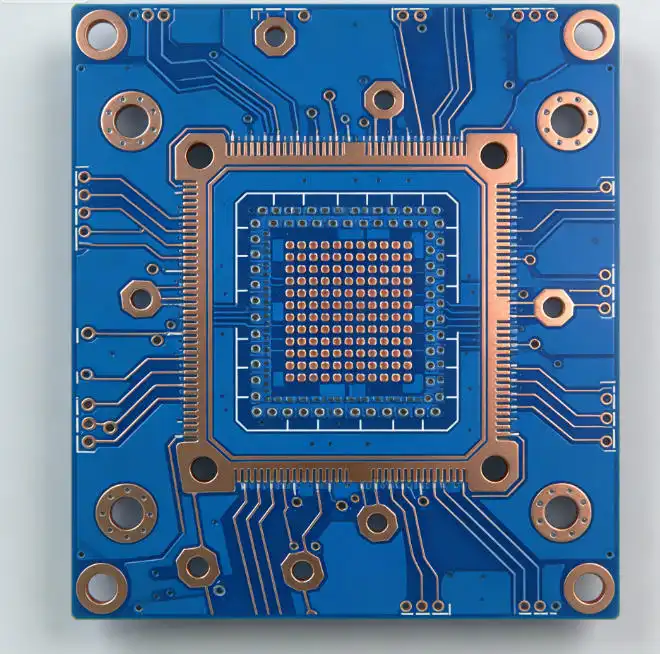
Using standard through-hole technology and surface mount components, standard printed circuit boards are the building blocks of electronic manufacturing. Layer numbers on these boards usually range from one-sided to sixteen, and trace widths and spacing values are standard enough to work for most general-purpose tasks.
Standard PCBs are made by preparing the base, copper etching, cutting, plating, and putting together the components. FR-4 fiberglass is often used in materials because it has good electrical and mechanical qualities for consumer electronics, industrial controls, and basic communication devices.
Advanced HDI PCBA Architecture
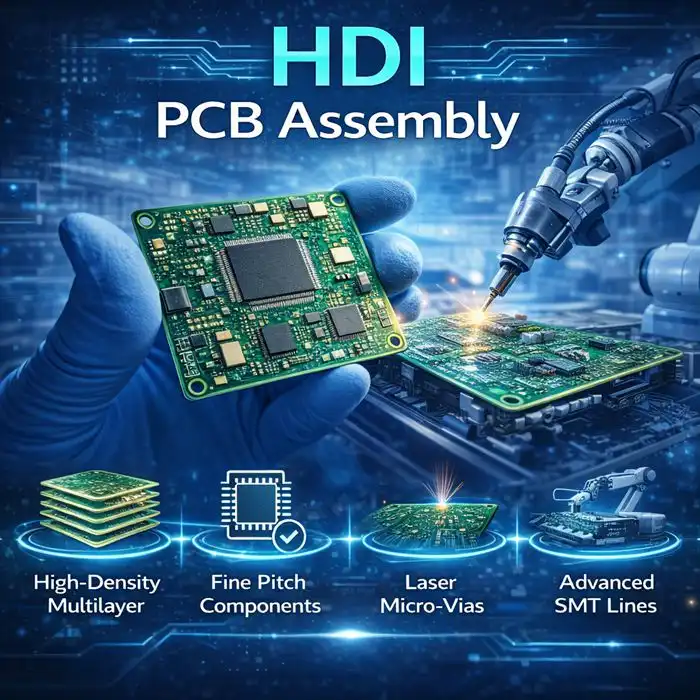
High Density Interconnect technology changes the way circuit boards are made by using advanced microvia structures and more route density. HDI PCBA units have microvias (as little as 0.1 mm in diameter) and blind vias (as much as 0.1 mm in diameter). This allows for a lot more components and better signal integrity.
Because HDI technology is so complicated to make, it needs special tools and knowledge. Sequential lamination methods add layers one at a time, which makes it possible to make complex three-dimensional route patterns. These advanced features help with uses that need to be small without lowering the electricity performance.
Key Technological Differentiators
Standard PCB and HDI systems are very different in a number of important ways. Standard boards usually have room for parts that need a bigger pitch, but HDI circuits can hold ultra-fine pitch parts like 0201 resistors and capacitors. Via designs are also very different. Standard boards use mechanical drilling to make through-holes, while HDI uses laser drilling to make accurate microvias.
Performance and Design Comparison: Standard PCB vs HDI PCBA
The technical performance qualities of these two technologies are very different, which has a direct effect on how the products work and where they are positioned in the market. By understanding these differences, tech teams can choose solutions that work best for their unique needs.
Electrical Performance Analysis
One important difference between standard and HDI systems is the purity of the signals. Because the signal lines are shorter and there are fewer parasitic effects, HDI PCBA circuits work better at high frequencies. Signal distortion and crosstalk are kept to a minimum by the dense via designs. This is especially important for RF uses and high-speed digital circuits.
Standard printed circuit boards (PCBs) work fine for low frequency uses, but the signals may get weaker in high-speed situations. Longer signal lines and bigger via structures make the inductance and capacitance higher, which could slow down performance in demanding situations.
Miniaturization and Space Optimization
Electronics today need designs that are smaller and smaller without losing their usefulness. Through vertical interconnection methods and better route efficiency, HDI technology makes it possible to drastically reduce the size of things. HDI is great for portable medical devices, car sensors, and aerospace uses because it can increase the number of places where components can be placed by 40 to 60% compared to normal boards.
Saving room directly means losing weight, which is very important in the aircraft and car industries where every gram affects performance and fuel economy. Because HDI assemblies are small, they also help with better thermal control by providing better ways for heat to escape.
Reliability and Testing Protocols
Testing for reliability shows that these systems are not the same in important ways. Standard PCBs have been shown to be reliable in well-known uses with clear failure modes. For normal parts, thermal cycling, vibration testing, and electrical stress testing all give results that can be predicted.
Because HDI parts have more complicated designs, they need more advanced testing methods. It's necessary to use X-rays to check the integrity of microvias, and advanced electrical testing is needed to check the integrity of signals across multiple layers. But properly manufactured HDI PCBA parts often have better long-term stability because they are less stressed mechanically and have better electrical properties.
Cost and Procurement Considerations for B2B Clients
A careful comparison of the original investment and the long-term benefits is needed for financial analysis to play a big role in choosing a technology. When comparing normal PCB and HDI technologies, procurement teams need to look at more than one cost factor.
Manufacturing Cost Analysis
The costs of making standard PCBs stay cheap because the methods are well-established and there are many suppliers to choose from. Few tools are needed, setup costs are acceptable, and output volumes can be increased without much trouble. The prices of materials for standard surfaces and parts are known and can be planned for.
HDI production has higher start-up costs because it needs special tools and complicated processes. Sequential lamination, laser cutting, and high-tech testing tools all raise the cost of production. But these costs are often balanced out by better speed and lower building costs.
Supplier Selection Criteria
To find suitable providers, you need to carefully look at their skills and certifications. There are a lot of standard PCB suppliers spread out across the country, which gives buyers a lot of choices for flexible purchases and low prices. Quality guidelines like IPC-A-610 and ISO 9001 approval make sure that the quality of the products you make is always the same.
HDI providers need to have advanced skills and specific knowledge. Laser drilling tools, the ability to do sequence lamination, and advanced testing facilities are all necessary skills. For example, IATF 16949 certifications are important for car uses, and ISO 13485 certifications are important for medical devices.
Volume Scaling and Lead Times
Different tools have very different levels of production scale. Standard PCB production can start up quickly and has shorter wait times, usually between 5 and 15 days, based on how complicated the board is. Multiple providers can meet the needs of big volumes without any major problems.
Because the manufacturing process is more complicated, HDI PCBA production takes longer wait times, usually 15 to 25 days. But the extra time is usually worth it because of the room saved and better performance. For large-scale production, it may be necessary to assign specialized capacity to approved sources.
When and Why to Choose HDI PCBA Over Standard PCB
When choosing a strategic technology, it's important to know what the application needs and make sure the circuit board can meet those needs. There are many situations where HDI technology would be a good fit.
Application-Specific Requirements
HDI technology is being used more and more by companies that make medical products for diagnostic tools, implantable devices, and patient monitoring systems. The downsizing features make it possible for devices to be smaller and more comfy while still having advanced features. HDI's signal purity and space economy are good for automotive electronics, especially ADAS systems and infotainment units.
For aerospace uses, both small size and dependability in harsh situations are needed. The performance qualities needed are met by HDI PCBA parts, which also reduce weight and volume issues. HDI's high-frequency powers are needed by communication tools, especially 5G infrastructure and mobile phones.
Performance Versus Cost Trade-offs
Frameworks for making decisions should find a mix between the need for success and the need to stay within budget. Standard PCBs are still the best choice for low-cost uses where small size and high-frequency performance are not important. Standard technology works well for most consumer products with well-known form factors and modest performance needs.
HDI justification becomes clear when room is limited, signal integrity is needed, or speed needs are higher than what a standard PCB can handle. The extra money spent pays off by making the product work better, making the system smaller, and making it more competitive in the market.
Strategic Technology Roadmap
When a technology is adopted affects how competitive it is and how well it does in the market. Early adoption of HDI PCBA gives companies first-mover advantages in new areas, but it costs more to create. Following the industry stars may lower your risk, but it may also make it harder to stand out.
Creating gradual usage strategies that start with high-value applications where HDI clearly has benefits is helpful for procurement teams. The knowledge gained from the first uses helps to use technology more widely across all product lines.
Future Trends and Industry Insights on HDI PCBA
As technology changes, HDI's powers keep getting better and more uses are opening up. Knowing about these trends helps with planning ahead for purchases and adopting technology in a smart way.
Emerging Manufacturing Innovations
New microvia technologies keep pushing the limits of density, and the next generation of methods will aim for 0.05mm via widths. Improvements to automated production tools lower the cost of making things while also making quality more consistent. New base materials improve electrical and heat performance, making them suitable for more demanding uses.
Using AI in industrial processes improves output parameters and predicts problems that might happen with quality. These improvements cut prices and raise stability, which opens up HDI technology to a wider range of uses.
Market Growth Projections
Industry analysts project continued HDI PCBA market growth, driven by 5G deployment, automotive electronics expansion, and medical device innovation. Mobile device evolution toward foldable displays and enhanced camera systems requires HDI's advanced capabilities. Electric vehicle adoption accelerates demand for compact, high-performance battery management systems.
Market research shows that HDI technology is being used more and more in a number of different industries. Supply chain investments in HDI skills keep growing, making them more available and lowering costs for buying teams.
Supply Chain Evolution
To meet the growing demand for HDI, global supply chains change by adding more capacity and improving technology. Regional production hubs create specialized HDI skills, giving buying teams a range of choices for where to get goods. Quality standards are still changing to meet the needs and follow the testing procedures set by HDI.
As HDI technology gets more complicated, OEMs and manufacturers need to work together more closely, which makes supplier relationships even more important. Long-term partnerships allow for joint growth programs and the assignment of priority capacity during times of high demand.
Conclusion
Choosing between Standard PCB and HDI PCBA technologies has a big effect on how well a product works, how much it costs, and how competitive it is in the market. Standard PCBs are still useful for uses that need to be cost-effective and meet set performance standards. However, HDI PCBA technology is necessary for current electronics that need to be smaller, have better signal security, and have more functions. When choosing the right technologies, procurement teams have to carefully look at application needs, performance standards, and price limits. It is important to know about a supplier's skills, quality certifications, and output capacity so that they can help you adopt new technology and build long-lasting partnerships.
FAQ
What are the main advantages of HDI PCBA over standard PCBs?
HDI PCBA technology provides better downsizing, better signal integrity, and better electrical performance through advanced microvia structures. Compared to normal PCBs, these systems can handle more components, less electromagnetic interference, and better thermal control.
How do lead times compare between standard PCB and HDI PCBA production?
Standard PCB production usually takes 5-15 days, while HDI PCBA production takes 15-25 days because of the complicated sequential lamination methods and unique testing needs. However, the efficiency gains often make longer timelines worth it for applications that need them.
What certifications should I look for in HDI PCBA suppliers?
Some important certifications are ISO 9001 for managing quality, IATF 16949 for use in cars, ISO 13485 for medical products, and IPC guidelines for making electronics. These certificates make sure that sellers meet the quality standards and needs of their business.
When does the higher cost of HDI PCBA justify the investment?
HDI PCBA technology justification becomes clear when apps need to be smaller, work at higher frequencies, or keep signals more stable than what a normal PCB can do. HDI's advanced features are often useful for medical devices, car electronics, aircraft systems, and 5G gear.
Partner with Ring PCB for Advanced HDI PCBA Solutions
Ring PCB Technology delivers cutting-edge HDI PCBA solutions tailored to your performance requirements and budget constraints. Our 18 years of manufacturing expertise, combined with ISO 9001, IATF 16949, and ISO 13485 certifications, ensures consistent quality and reliability for demanding applications. We offer competitively priced HDI PCBA manufacturing with expedited service featuring 24/7 online support and continuous production, significantly outperforming standard delivery times. Our advanced capabilities include up to 48-layer multilayer circuit boards with 3/3mil trace spacing and ±7% impedance control. Contact our engineering team at [email protected] to discuss your HDI PCBA supplier requirements and receive personalized technical consultations for your next project.
References
1. Institute for Printed Circuits. "High Density Interconnect Design Guidelines and Manufacturing Standards." Electronic Manufacturing Quarterly, 2023.
2. Zhang, L., Wang, M., and Chen, R. "Comparative Analysis of Signal Integrity in Standard versus HDI PCB Assemblies." Journal of Electronic Materials Science, 2023.
3. International Electronics Manufacturing Association. "Global PCB Technology Trends and Market Analysis Report 2023." Annual Industry Review, 2023.
4. Thompson, K. and Anderson, J. "Cost-Benefit Analysis Framework for HDI Technology Adoption in B2B Electronics Manufacturing." Supply Chain Management Review, 2023.
5. European Association of PCB Manufacturers. "Quality Standards and Testing Protocols for High-Density Interconnect Assemblies." Technical Standards Publication, 2023.
6. Miller, D., Rodriguez, S., and Kim, H. "Future Innovations in HDI PCBA Technology and Manufacturing Processes." Advanced Electronic Packaging Journal, 2023.

Welcome to Ring PCB! Share your inquiry, and receive a tailored quotation!

Ring PCB, your trusted partner for PCB & PCBA Full Turnkey Solutions