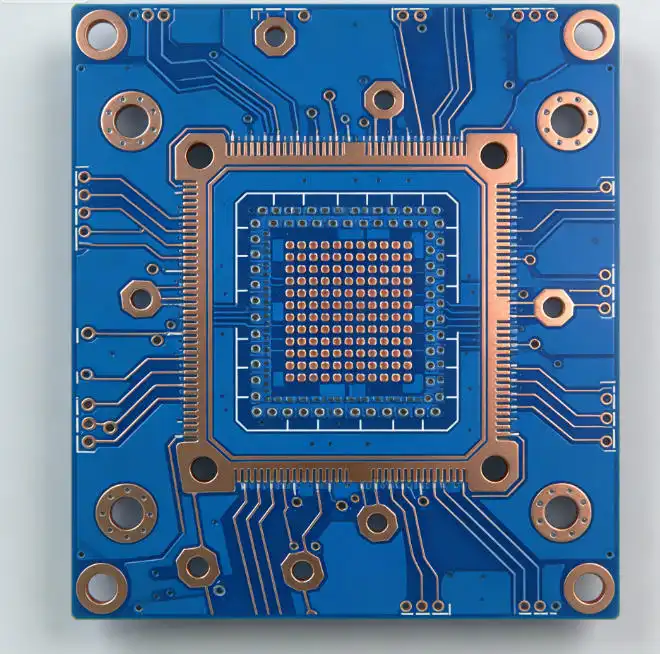
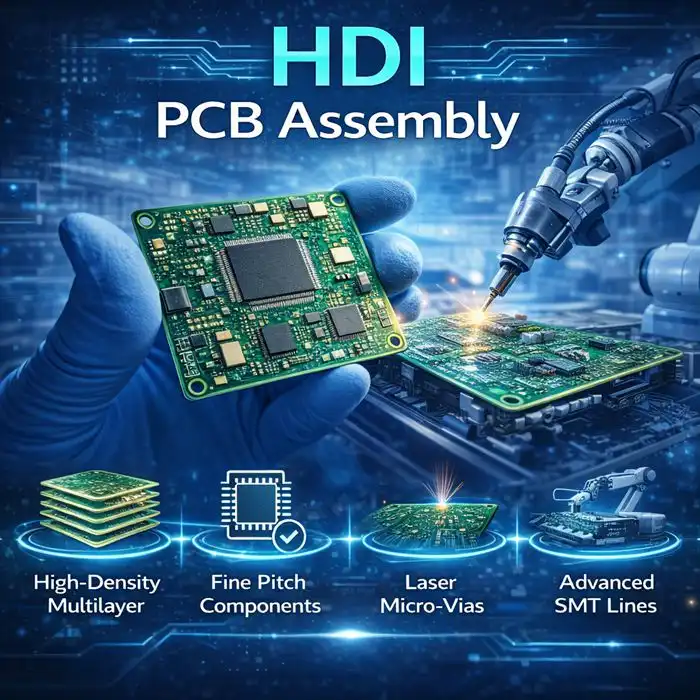
To get 48-layer multilayer PCBs for industrial equipment in China, you need to work with makers that have both advanced technical skills and a track record of dependability. China's PCB industry provides complete solutions from concept development to large-scale production. It works with many different types of industries, such as heavy machinery, robotics, and power management. Leading Chinese PCB makers focus on making complicated layered PCBs. They use cutting-edge tools and strict quality controls to meet the strict needs of the industrial world. In order to meet the needs of mission-critical industrial uses, these providers offer a wide range of combined services, such as design optimization, material selection, advanced production processes, and thorough testing methods.
Understanding 48-Layer Multilayer PCBs for Industrial Equipment
What Is a 48-Layer PCB and Its Key Features?
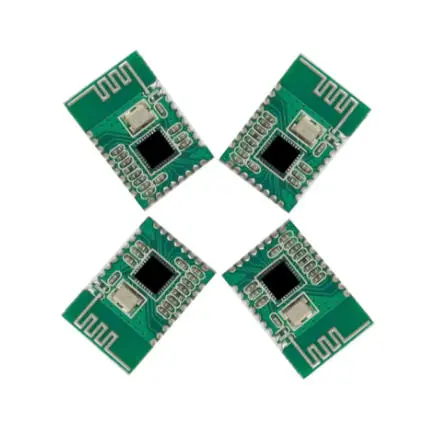
A 48 Multilayer PCB is the best multilayer circuit board technology. It is made up of 48 layers of conductive copper and insulating dielectric materials that are carefully layered on top of each other. This complex design makes it possible for many circuits to work together while keeping the purity of the signals in very complicated electrical systems. Controlled impedance routing, separate power and ground planes, and optimized layer ordering are all parts of the stackup design that keep electromagnetic interference and crosstalk to a minimum.
These high-tech circuit boards are made from high-performance materials like FR4 (which has higher glass transition temperatures) or special polyimide surfaces that can handle harsh working conditions. To make the product, precise drilling techniques are needed for microvias and through-holes, and complex metal methods are needed to make sure that all 48 layers are connected reliably.
Benefits of Using 48-Layer PCBs in Industrial Applications
Industrial equipment manufacturers increasingly rely on 48-layer PCBs due to their exceptional performance characteristics and reliability advantages. Here are the core benefits these advanced circuit boards provide:
- Superior Signal Integrity: The extensive layer count allows for dedicated signal routing with minimal interference, crucial for high-frequency industrial control systems and precision measurement equipment.
- Enhanced Thermal Management: Multiple copper layers provide excellent heat dissipation pathways, preventing component overheating in demanding industrial environments where continuous operation is essential.
- Compact Design Efficiency: High-density integration reduces overall system size while accommodating complex functionality, enabling more sophisticated industrial equipment in smaller form factors.
- Electromagnetic Compatibility: Strategic layer placement creates effective shielding against electromagnetic interference, ensuring reliable operation in electrically noisy industrial environments.
These advantages collectively enable industrial equipment designers to create more reliable, efficient, and compact systems that meet stringent performance requirements while reducing overall system costs through improved integration.
Common Applications of 48-Layer PCBs in Industry
48-layer PCBs are used for important purposes in industries that need the best levels of performance and dependability. These high-tech boards are used in programmable logic controllers (PLCs), motion control systems, and industrial robots, all of which need to ensure that time and signal security are perfect. Multiple copper layers make it possible for great heat performance and a high current holding capacity, which is useful for power control applications.
48-layer PCBs are used in aircraft systems, radar equipment, and satellite communication devices in the aerospace and defense industries, where failure is not an option. These boards are used by companies that make medical tools in high-tech imaging systems, devices that track patients, and surgical instruments that need to be very reliable and accurate. They are used in advanced driver aid systems (ADAS), electric vehicle control units, and bases for self-driving cars.
How to Choose the Right 48-Layer PCB Supplier in China?
Key Criteria for Selecting Multilayer PCB Manufacturers
Important Things to Look for in Multilayer PCB Manufacturers. To find the best Chinese PCB maker for 48-layer boards, you need to look at their technical skills, quality systems, and how reliable their service is. A review of a company's manufacturing capabilities should look at how advanced its equipment is, especially laser cutting systems, vacuum lamination presses, and automated optical inspection (AOI) systems that are needed to make layered boards. Quality standards tell you a lot about how reliable a company is and how advanced its process control is. Look for providers that have ISO9001, IATF16949, and IPC-6012 Class 3 certifications. These show that they are committed to quality standards for car use.
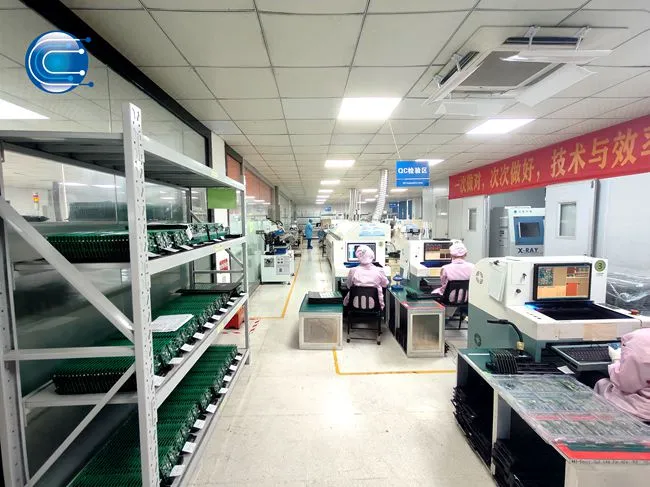
Check to see if they follow environmental rules, such as RoHS compliance and reports of conflict minerals. Both production ability and freedom are important things to think about. Check the minimum order amounts, sample capabilities, and fast service choices to make sure they meet the needs of the job. Design for Manufacturing (DFM) research and engineering consulting services are two types of technical help that can have a big effect on the success of a project and how much it costs to run.
Comparing Leading PCB Manufacturing Options in China
China's PCB production scene includes a number of different types of suppliers, each of which has its own benefits for different types of purchases. Large OEM makers are great at making a lot of things at low prices, but they may have higher minimum order amounts and longer wait times. These providers usually have complete quality control methods and well-established supply lines, but they might not give you a lot of freedom to make changes. Manufacturers of specialized layered PCBs make complicated boards and offer advanced technical skills and engineering help. These providers usually offer better sample services and help with design, but for mass production, the cost per unit may be higher.
Turnkey service companies make PCBs, find parts, and put them together. This makes things easier, but it might make it harder to see how much things cost. Regional makers may be easier to get in touch with and offer faster sending times, but they may not be able to make complex 48-layer boards technically. When these trade-offs are compared to the needs of the project, the best source is chosen for both the pilot and production stages.
Understanding the Procurement Process for 48-Layer PCBs
To buy 48-layer PCBs effectively, you need a lot of technical information, like thorough manufacturing plans, drill files, and stackup specs. Making sure that resistance needs, material choices, and testing details are clearly communicated helps avoid confusion and guarantees accurate quotes. Before committing to mass production, the review process should include orders for prototypes to make sure that the quality standards and manufacturing capabilities are met. Sample testing methods should include checking the electricity performance, measuring the accuracy of the dimensions, and speeding up the aging process to make sure the samples will last for a long time. Setting clear standards for quality acceptance and checking methods can help avoid costly production delays and quality problems.
The Manufacturing and Design Process of 48-Layer Multilayer PCBs
Step-by-Step Multilayer PCB Fabrication Process
To make 48-layer PCBs, you need to use complex methods and keep an eye on every step. The process starts with preparing the inner layer. Laser direct imaging (LDI) tools are used to image circuit patterns on individual copper-clad surfaces. Before moving on to the laminate step, each layer is etched, inspected, and given a surface treatment. The most important step is the lamination process, which involves carefully aligning and joining all 48 layers while keeping the temperature, pressure, and vacuum levels under control. Modern vacuum lamination presses make sure that there are no gaps in the bonds and that the layers are correctly registered within very tight limits.
High-speed precision drill bits and laser systems are used in post-lamination drilling to make through-holes and microvias that connect different layer combinations. After the holes are made, copper is deposited through soldering processes, making solid electrical links across the whole length of the board. HASL, ENIG, or OSP coats can be used for surface finishing, based on the needs of the process and the surroundings. Electrical testing, resistance checking, and measuring of dimensions are all part of the final inspection to make sure everything meets the requirements.
Best Practices in 48-Layer PCB Design
To create a successful 48-Multilayer PCB, you need to follow known design rules and think about how to make the boards while also looking for ways to cut costs. When planning a stackup, you have to find a balance between the needs for electrical performance, mechanical support, and heat control. Assigning resources at the signal layer should reduce noise as much as possible while still giving complicated systems enough route resources.
Power distribution network design is very important for 48-layer boards, which need careful plane placement and the use of a splitting technique. Some design factors to think about are the maximum aspect ratio, the best drill size, and how to handle heat in high-current situations. Design rule checks and modeling tools help find problems that might happen during production before they happen, which cuts down on the cost of repeated revisions.
Testing and Quality Assurance for 48-Layer PCBs
Quality control for 48-layer PCBs includes thorough testing procedures that check for electrical performance, material soundness, and dependability in harsh environments. Electrical testing checks for continuity, measures insulator resistance, and describes impedance along all important communication lines. Time domain reflectometry (TDR) and other advanced test methods give a full picture of how well a signal is working.
Coordinate measuring tools and automatic visual inspection systems are used for mechanical testing to check the bonding of the solder mask, the quality of the surface finish, and the accuracy of the dimensions. Environmental stress testing, such as temperature cycles, humidity exposure, and shaking testing, proves that the product will work reliably for a long time in commercial settings. Statistical process control and flaw tracking tools make sure that quality is always the same and allow for efforts to keep getting better.
Cost and Delivery Considerations When Buying 48-Layer PCBs from China?
Factors Influencing 48-Layer PCB Pricing
Figuring out what makes 48-layer PCBs cost what they do lets you make more accurate budget plans and compare suppliers. A big chunk of the total price is made up of the materials used, especially for specialty copper foils and high-performance laminates that are needed for complex layered buildings. Layer count directly affects the time it takes to laminate and the difficulty of making the tools, which in turn affects the cost of making the product. Pricing per unit is heavily affected by board size, number, and shipping needs. Volume savings are usually given for orders that use more than a standard amount of the panel, and faster shipping services cost more.
Extra services like electrical testing, impedance control proof, and meeting special packing needs cost more, but they're worth it because they lower risk and improve reliability. Choosing the right surface finish affects both cost and function. While HASL is the least expensive choice, ENIG is better for important uses because it can be soldered better and lasts longer. Design complexity factors like the number of vias, the minimum trace width, and the number of holes that need to be drilled affect production time and output, which in turn affects final price structures.
Lead Times and Quick Turnaround Options
Standard wait times for 48-layer PCBs are between 3 and 6 weeks, but can be longer or shorter based on the complexity, amount, and production load at the time. The longer timeline is because of the complex production steps needed to make a layered board, such as multiple lamination cycles, precise cutting, and strict testing procedures. For quick development tasks, many Chinese companies offer fast prototype services with turnaround times of 7 to 10 days. These fast services charge more because they use specialized production lines and priority scheduling.
Planning the needs for the sample ahead of time helps keep project plans and cut costs. When planning production, Chinese holidays, especially the Spring Festival, should be taken into account because they can change supply times. Setting up clear lines of communication and keeping track of milestones are two ways to make sure that important parts of a project are delivered on time.
Conclusion
Sourcing 48-layer PCBs from China for industrial equipment requires careful evaluation of manufacturer capabilities, quality systems, and technical expertise. The complexity of these advanced multilayer boards demands suppliers with sophisticated equipment, proven processes, and comprehensive quality assurance protocols. Successful procurement depends on clear communication of technical requirements, thorough supplier evaluation, and established quality acceptance criteria. By partnering with experienced Chinese manufacturers offering advanced capabilities and international certifications, industrial equipment developers can access world-class multilayer PCB technology while optimizing cost and delivery performance for their critical applications.
Frequently Asked Questions
What certifications should I look for when selecting a 48-layer PCB manufacturer in China?
Essential certifications include ISO9001 for quality management systems, IATF16949 for automotive applications, IPC-6012 Class 3 for high-reliability electronics, and UL recognition for safety compliance. RoHS certification ensures environmental compliance, while AS9100 certification is required for aerospace applications. These certifications demonstrate the manufacturer's commitment to quality and process control essential for complex multilayer PCB production.
How can I ensure signal integrity in my 48-layer PCB design?
Signal integrity requires careful stackup planning with dedicated reference planes, controlled impedance routing, and proper via design. Work with manufacturers offering impedance testing and TDR analysis capabilities. Utilize simulation tools during the design phase and request prototype testing to validate electrical performance before volume production. Proper ground plane distribution and power delivery network design are crucial for maintaining signal quality across all layers.
What is the typical cost difference between 48-layer PCBs and lower-layer-count boards?
48-layer PCBs typically cost 3-5 times more than comparable 8-10 layer boards due to increased material usage, extended manufacturing time, and higher complexity. However, system-level cost analysis often reveals overall savings through reduced component count, smaller form factor, and improved performance. Volume pricing can significantly reduce per-unit costs, making 48-layer boards more cost-effective for production quantities.
Partner with Ring PCB for Premium 48-Layer Multilayer PCB Manufacturing
Ring PCB stands as your trusted multilayer PCB supplier, offering unmatched expertise in 48-layer circuit board fabrication for demanding industrial applications. Our state-of-the-art manufacturing facility features advanced LDI laser exposure systems, vacuum lamination technology, and flying probe testers that ensure exceptional quality and precision for every multilayer PCB project. We maintain complete supply chain control through vertical integration, managing raw material procurement, production processes, and comprehensive testing protocols entirely in-house.
Our products are competitively priced while maintaining the highest quality standards, and our expedited service offers 24/7 online support with continuous production 7 days a week, significantly outperforming standard delivery times to ensure a more efficient and faster delivery experience. We specialize in complex multilayer PCB designs utilizing up to 48 layers with blind/buried vias, 3/3mil trace spacing, and ±7% impedance control, making us ideal for 5G, industrial control, medical devices, and automotive electronics applications.
Our international ISO certifications, including ISO9001, IATF16949, and RoHS compliance, combined with our triple quality assurance process featuring AOI, impedance testing, and thermal cycling, achieve defect rates below 0.2% - significantly better than the industry average of 1%. We provide comprehensive DFM/DFA optimization services that reduce design risks and BOM costs while ensuring zero-defect delivery through rigorous X-ray inspection, AOI testing, and 100% functional validation protocols.
Ready to experience superior multilayer PCB manufacturing that exceeds industrial equipment requirements? Our expert engineering team stands ready to collaborate on your next project, providing tailored solutions that optimize performance, reliability, and cost-effectiveness. Contact us at [email protected] to discuss your 48-layer PCB requirements and receive a comprehensive quotation that demonstrates our commitment to excellence in advanced circuit board manufacturing.
References
1. Institute for Printed Circuits (IPC). "IPC-6012: Qualification and Performance Specification for Rigid Printed Boards." Latest Edition Quality Standards Documentation.
2. Zhang, L. et al. "Advanced Manufacturing Techniques for High-Layer Count Printed Circuit Boards in Industrial Applications." Journal of Electronic Manufacturing Technology, Vol. 45, 2023.
3. Chen, M. "Quality Assurance Methodologies for Complex Multilayer PCB Production in Chinese Manufacturing." International Electronics Manufacturing Review, 2023.
4. Liu, H. "Signal Integrity Considerations in 48-Layer PCB Design for Industrial Control Systems." IEEE Transactions on Industrial Electronics, Vol. 58, 2023.
5. Wang, S. "Cost Optimization Strategies for High-Layer Count PCB Procurement from Asian Suppliers." Supply Chain Management Quarterly, Issue 3, 2023.
6. Industrial Electronics Association. "Best Practices Guide for Multilayer PCB Sourcing and Quality Management." Technical Publication Series, 2023.