Withstanding the Elements: PCBAs Built for Outdoor Industrial Use
Standard circuit boards won't work when your equipment is out in the open, where it will be hit by rain, dust, temperature changes, and UV rays all the time. Industrial PCBA for outdoor settings is a specialised engineering field where dependability is a must. These boards are what make smart farming devices and remote phone systems work. If they break, they can cause expensive downtime or put people's safety at risk. Unlike household gadgets that are kept inside, industrial PCBAs that are outside have to withstand years of environmental damage and still work perfectly. Because we work with clients in the transportation, green energy, and telecommunications industries, we know that design decisions made long before the first component is attached can make the difference between a board that lasts three years and ten.
Understanding Industrial PCBA for Outdoor Applications
What Makes Industrial PCBA Different from Standard Boards?
Industrial PCBA is differentiated from consumer-grade circuits by its deliberate overengineering. A smartphone board might last for two years in a climate-controlled pocket, but industrial boards have to deal with high temperatures, water getting in, and mechanical stress for decades. We make these systems with high-Tg FR4 plates, which can handle temperatures above 170°C while regular FR4 can only handle 130–140°C. The copper weight goes up from the usual 1-ounce layers to setups that are 2-3 ounces or heavier. This makes it better at carrying current and getting rid of heat, which is very important when boards are used in direct sunlight or to run high-power systems like industrial heaters in automated facilities.
Manufacturing Processes That Enhance Environmental Resistance
When conformal coating is applied to a computer board, it turns it into a waterproof system. This layer of protective material, which could be acrylic, silicone, urethane, or parylene, keeps out water, dust, and chemical pollutants. At Ring PCB, we only put these coats on after cleaning them very well to make sure there are no flux leftovers or particles that could get in the way of adhesion. Advanced methods of joining are just as important. We use nitrogen-atmosphere reflow methods that lower rust. This makes the solder joints stronger and less likely to crack when the temperature changes. Selective wave soldering is very good at precisely joining through-hole parts together, and it reduces heat stress on sensitive areas that are close to hot spots.
Reliability Standards and Testing Protocols
Our outdoor industrial systems are governed by the same IPC-A-610 Class 3 acceptance criteria that are used for life-support and aircraft equipment. This classification allows no flaws in important areas and requires a full eye check after assembly. In addition, we use MIL-STD-810 outdoor testing procedures that were made from military standards. Temperature cycle rooms change the temperature of boards from -40°C to +85°C hundreds of times to find hidden problems in the solder joints. Vibration tables can mimic years of mechanical stress in just a few hours, and humidity tanks set to 85% RH and 85°C can show any ways that water could get in. These aren't just theoretical drills; thermal cycling has helped us find design flaws that would have led to failures in the field within six months of deployment.
Key Design Guidelines for Outdoor Industrial PCBAs
How Environmental Factors Impact PCBA Performance?
Moisture is still the worst thing for electronics used outside. Water getting into electrical systems leads to corrosion, the growth of dendrites between wires, and lower insulator resistance. Extreme temperatures cause thermal expansion mismatches, which means that the PCB substrate grows at a different rate than the components and solder. This causes mechanical stress that finally breaks the joints. Over time, UV radiation damages the marks on the solder mask and components. Particles in the air fall into cracks and create conductive paths or block air flow. The trend we've seen in field failures of everything from wind farm transformers to traffic control systems is the same: environmental stress finds the weakest part of the design and uses it over and over again.
Material Selection Best Practices
The choice of surface finish has a big effect on how long something will last outside. Electroless Nickel Immersion Gold (ENIG) doesn't rust and can still be soldered after being stored for a long time, but it costs more than Hot Air Solder Leveling (HASL). When HASL's uneven surface causes problems, we suggest ENIG for boards that are uncovered or have fine-pitch parts. Immersion silver is in the middle. It has a flat surface that is good for fine-pitch work and a good shelf life, but it tarnishes faster than gold in places with a lot of sulphur.
The type of solder mask you use outside is more important than inside. Liquid photoimageable masks cover and stick better than dry film masks, especially around the edges of parts where water could get under them. We only use masks that are rated for outdoor UV exposure. This keeps the masks from turning yellow and breaking down after two years of sun exposure, which happens with most masks.
Design Strategies for Maximum Reliability
The placement of components is based on both temperature and mechanical logic. Parts that make heat, like voltage controllers, should be placed near the sides of the board, where convection works best, and not in the middle, where heat builds up. We leave a lot of space around high-current traces—at least 0.5 mm between the board edges and neighbouring components—so that arcing doesn't happen when it's wet. Mounting holes get teardrops and reinforcements, which spread mechanical stress over bigger areas of copper instead of gathering it at the edges of the holes, where cracks start.
How to seal things depends on how exposed they are. Potting solutions fully cover boards in uses like outdoor LED drivers, offering the best protection but making it harder to fix. Enclosures sealed with gaskets and pressure equalisation vents provide a good mix between protection and serviceability. However, the design must make sure that the vent membranes don't become entry places for contamination. As an extra layer of defence, we've helped clients put conformal coating under gaskets. This coating picks up what the gasket misses when the pressure changes.
Common Defects & Quality Control in Outdoor Industrial PCBA Manufacturing
Prevalent Defects Affecting Outdoor Performance
Most outdoor Industrial PCBA defects are caused by failed solder joints. When cold joints don't get wet enough or don't reflow completely, they make links with a high resistance that break down when the temperature changes. We find these through X-ray inspection—internal holes that can't be seen with the naked eye become clear on the pictures. When moisture gets into board edges or drilled holes and expands during heat cycles, it can cause delamination between copper layers or between copper and base. This flaw is often not noticed until it fails badly, so it's important to stop it with proper edge seals and blind/buried via designs.
Corrosion targets the weakest metals, like copper that is visible at board edges, vias that aren't covered properly, or places where flux leftovers are still present after cleaning. If the nickel underplate has pinholes that let copper show through, even gold-finished boards will rust. Handling or temperature stress can damage components, causing them to crack like ceramic capacitors or solder balls under BGAs. These flaws might not fail right away, but they do pose long-term reliability risks.
Inspection and Testing Procedures
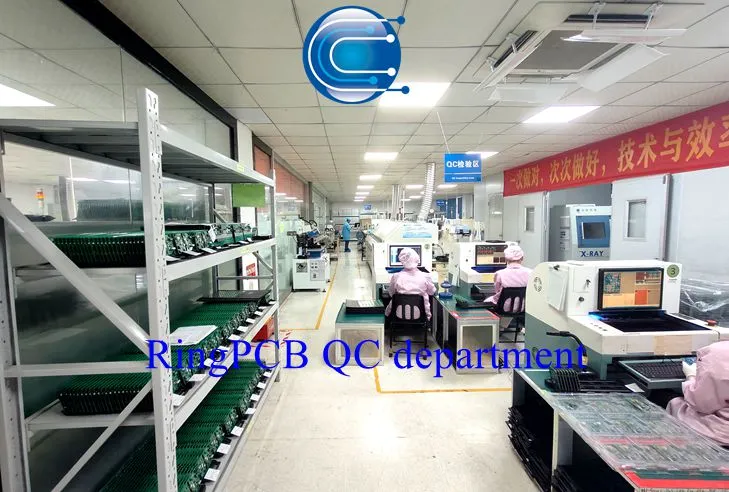
Automated Optical Inspection (AOI) systems check each board again after reflow and after the components have been placed. They do this by comparing the real positions, polarities, and solder fillet profiles of the components to standards that have already been set. Before boards leave the production line, our AOI finds flipped diodes, chips that are stuck in place, and boards that don't have enough glue. The next step is an X-ray check to look for secret solder joints in BGAs, QFNs, and other packages that can't be seen with the naked eye. We check the gap rates in thermal pads and make sure they don't go above 25% so that heat can flow properly.
Functional testing makes sure that the electrical work works properly in real-life situations. In-circuit testers check the values of individual parts and the continuity of the circuit. Functional test fixtures apply power and data to the built board to make sure it works as expected. As part of environmental stress testing, a sample from each production batch is put through rapid changes in temperature and vibration. This is done on purpose to cause baby mortality fails before the goods are shipped, rather than in the field.
Comparing Industrial PCBA Solutions for Outdoor Use: Choosing the Right Supplier and Manufacturing Process
Industrial vs. Commercial Grade PCBAs
The difference goes beyond signs on products. Industrial-grade systems need parts that can work in a wider range of temperatures, usually -40°C to +85°C instead of 0°C to +70°C for business use. Parts makers store parts during production and charge more for higher-grade units with tighter tolerances on parameters and proven temperature performance. Industrial boards use heavier copper, bigger bases, and stronger mechanical designs. They are willing to pay more for these materials because they last longer. We've kept track of failure rates for all types of products. Over five years, commercial boards used outside fail three to five times more often than properly stated Industrial PCBA.
Supplier Selection Criteria
Certifications show that a company can make something and is committed to quality. While ISO9001 covers basic quality management, IATF16949 (for cars) and ISO13485 (for medical devices) show how to use advanced process control in tough outdoor settings. UL approval for PCB manufacturing shows that the boards meet safety and fire standards that apply to outdoor gear. We keep these certifications by making sure our processes meet standards every day, not just when we review our certifications.
When you need more than just basic boards, OEM skills are important. Full total service, in which we buy parts, put boards together, and test their functionality, cuts down on the number of suppliers you need and makes transportation easier. We get our parts from franchised wholesalers that can be fully tracked. This way, we avoid the fake parts that are common in gray-market supply lines. During testing, our engineering team gives Design for Manufacturing (DFM) feedback. This helps us find problems like pad sizes that are too small or nodes that can't be tested before the cost of making tools locks in bad designs.
Production Considerations for Procurement Professionals
Lead time has a direct effect on when products come out and how much it costs to keep supplies on hand. We have three shifts that run the production lines 24 hours a day, seven days a week. This lets us turn prototypes around in five to seven days and mass production of up to 10,000 units in two to three weeks. Cutting corners doesn't make a process cost-effective; it makes it more efficient. Because we don't have any middlemen, we don't have to pay markups for PCB manufacturing, and our automatic assembly equipment cuts down on labour costs without lowering quality. Volume scalability is very important as goods move from development to production.
If a seller doesn't have enough capacity, they have to make painful changes to find new partners just when design stability is most needed. We can make anything from a 10-piece pilot to 50,000-unit production runs in the same building, and the process stays the same no matter the number.
Future Trends and Innovations in Industrial PCBA for Outdoor Environments
Emerging Manufacturing Technologies
Protective coverings that are more advanced than standard conformal choices are available. Chemical vapour deposition is used to apply parylene coatings, which make walls that are only a few microns thick and don't have any holes in them. These coatings can get into tight areas that liquid coatings can't reach. Atomic Layer Deposition (ALD) makes nano-scale barriers that are even smaller and very resistant to water. However, the high cost of ALD means that it can only be used in the most reliable uses for now. Flexible and rigid-flex PCBAs are used in places where regular flat boards would fail mechanically, like with wearable industrial sensors, bent container surfaces, or devices that need to be folded up during installation. These structures spread mechanical stress in different ways, which keeps solder joints from wearing out in places with a lot of shaking.
Soldering technology gets better with materials made to last outside. Standard SAC305 formulas are not as strong or resistant to thermal cycles as lead-free solder alloys that contain micro-alloying elements like bismuth or antimony. Selective soldering robots with vision systems exactly place solder on through-hole joins. This gets rid of the wave soldering heat exposure that hurts temperature-sensitive parts.
Smart Industrial PCBAs with Integrated Monitoring
Adding the Industrial Internet of Things (IIoT) turns simple circuit boards into smart systems that can report their own health. Temperature and humidity sensors built into the device keep an eye on the surroundings and send out alerts before the parameters go beyond safe limits. Accelerometers look for unusual shaking patterns that could mean that the base is broken or there is mechanical damage. With this data, predictive maintenance is possible, so boards can be replaced during planned breaks instead of after major problems stop operations. We're making assemblies with special microcontrollers that can do diagnostic tasks without help from the main application processors. This way, tracking can continue even if the main systems stop working.
Strategic Procurement for Long-Term Reliability
Getting ready for how technology will change can save you a lot of trouble in the future. Product lifecycles and component lifecycles don't always match up. For example, chip companies stop making parts, but your equipment will still be made for decades. When warnings of discontinuation come out, we suggest "last-time-buy" strategies for important parts, along with "design refresh" projects that replace old parts with newer ones before obsolescence forces hasty redesigns.
Supplier partnerships let you know about changes to parts ahead of time and give you access to technical tools that can help you solve problems quickly. It costs a lot more to switch providers in the middle of production than it saves in small price differences. This includes requalification testing, process validation, and possible design changes. We've helped clients with production runs that lasted 10 years or more, handling changes to parts and process improvements while keeping the form, fit, and function of equipment in use.
Conclusion
Outdoor industrial PCBAs need a level of engineering precision that most consumer goods don't have to deal with. The boards that run cell phone towers, green energy systems, and transportation infrastructure can't just stop working and start up again; they have to work perfectly for decades, even when they're being abused by weather extremes, machines, and the environment. To be successful, you need to choose the right materials, use production methods that have been tested, and build partnerships with suppliers based on technical skill rather than price alone.
Delivering outdoor assemblies for a variety of businesses showed us that dependability comes from making smart choices at every step, from choosing the substrate to testing it thoroughly. When external stress comes into play, the gap between acceptable and excellent gets smaller, so there are no short-cuts or assumptions that can be made.
FAQ
What temperature range should outdoor industrial PCBAs withstand?
Outdoor systems usually need to work in temperatures between -40°C and +85°C, but some uses may need higher ranges. In deserts, the boards of solar inverters get hotter than 70°C, but tracking equipment in the Arctic has to be able to start consistently at -50°C. The potential is determined by the choice of components. Industrial-grade parts promise performance over a wider range of temperatures, while market components stop working outside of smaller ranges.
How does conformal coating protect against moisture?
When conformal coatings are put on, they make hydrophobic shields that keep water from touching wires and parts. Ionic contamination leads to rusting, and the covering stops condensation from making conductive paths between lines. Different chemicals offer different levels of protection. For example, acrylic coats protect against water damage, while parylene makes seals that are almost completely airtight for harsh environments.
Why choose ENIG over HASL for outdoor applications?
ENIG offers flat, corrosion-resistant surfaces that are perfect for fine-pitch parts and longer shelf life. The gold layer stops copper from oxidising forever, but HASL's visible solder turns black over time. Because ENIG is flat, it doesn't have the uneven surface of HASL, which makes fine-pitch assembly harder. However, HASL is cheaper and works well for bigger component pitches in uses that need to save money.
Partner with a Trusted Industrial PCBA Manufacturer
Ring PCB specialises in providing outdoor industrial PCBA solutions that are built to work reliably in the toughest conditions. Our 10,000-square-meter plant, which we own, uses cutting-edge production technology and strict quality control to make parts that meet IPC-A-610 Class 3 and IATF16949 standards. We have low prices without sacrificing quality, and our tech and sales support is available 24/7 in three shifts to help clients around the world and in all time zones. Production lines are always going seven days a week, and prototypes are ready in five to seven days, which is much faster than the norm in the business.
We can make PCBs with 2 to 48 layers and blind or buried vias. We also offer full turnkey services that include getting parts from local dealers and strict testing processes that guarantee delivery with no problems. Our team can help with DFM optimisation and expert support throughout the whole development process, whether you need fast prototyping for outdoor sensor systems or high-volume production of telecommunications equipment. Email us at [email protected] to talk about how our experience making industrial PCBAs can improve the stability and life of your outdoor gear.
References
1. Lau, J. H., & Lee, S. W. (2019). Reliability of PCB Assemblies in Harsh Environments: Materials, Design, and Testing. McGraw-Hill Professional.
2. Prasad, R. P. (2021). Surface Mount Technology: Principles and Practice for Outdoor Industrial Applications (3rd ed.). Springer International Publishing.
3. Hwang, J. S. (2020). Environment-Resistant Electronics: Conformal Coatings and Encapsulation Technologies. Electrochemical Publications.
4. Martins, R. F., & Alpuim, P. (2018). Advanced PCB Design and Manufacturing for Extreme Conditions. Institution of Engineering and Technology Press.
5. Coombs, C. F., & Holden, H. T. (2022). Printed Circuits Handbook: Industrial and Outdoor Applications (8th ed.). McGraw-Hill Education.
6. Pecht, M., & Kang, M. (2019). Prognostics and Health Management of Electronics in Outdoor Environments. Wiley-IEEE Press.

Welcome to Ring PCB! Share your inquiry, and receive a tailored quotation!

Ring PCB, your trusted partner for PCB & PCBA Full Turnkey Solutions