Custom HDI PCB Assembly for Advanced Electronics
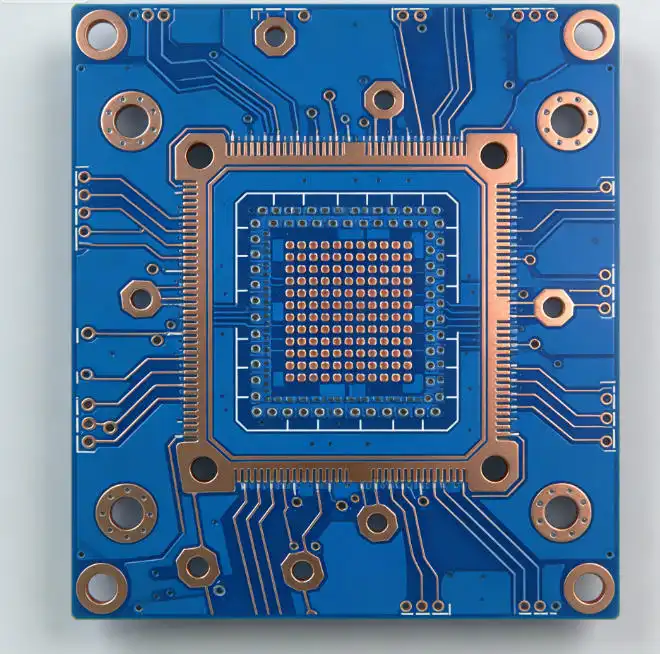
Modern electronics production has reached its peak with custom HDI PCB Assembly, which offers circuit density and reduction capabilities that are unmatched and necessary for today's high-tech electronics. With High-Density Interconnect technology, engineers can fit more features into smaller spaces while still getting better electrical performance and dependability. This advanced way of putting things together changes how electronic goods are developed and made, which is especially helpful for fields that need small, high-performance solutions. Whether you're making cutting-edge electronics for consumers, medical devices, or cars, custom HDI PCB Assembly gives you the technical base you need to meet ever-tougher performance standards while also meeting your time-to-market goals.
Understanding HDI PCB Assembly and Its Advantages
By using microvias, hidden vias, and sequential lamination methods, High-Density Interconnect technology changes the way circuit boards are usually made. With these new manufacturing methods, circuit densities that were not possible with traditional PCB building methods are now possible.
Key Technical Features of HDI Technology
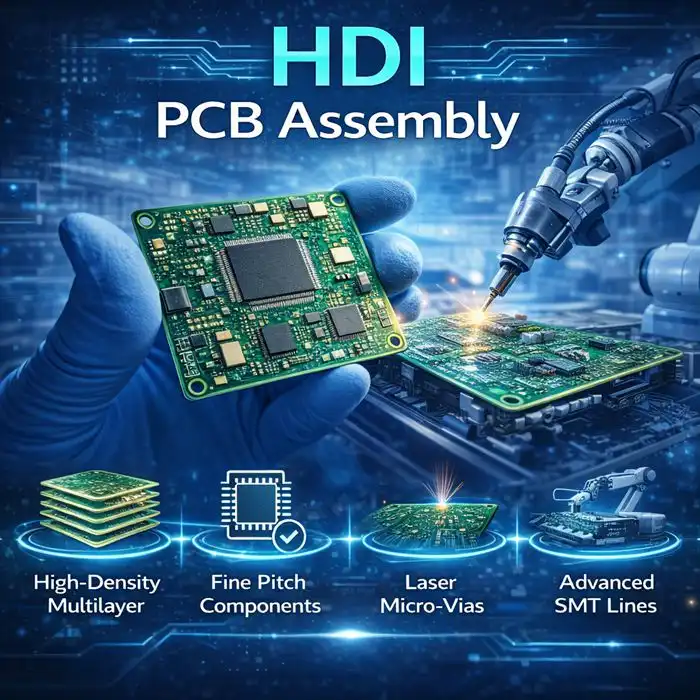
HDI PCB Assembly stands out because it has a number of important technical features that make it suitable for today's electronics problems. Microvias, which are usually 0.006 inches or smaller, connect layers electrically without taking up any useful surface space. Engineers can send more signals through small spaces while keeping the purity of the signals thanks to this miniaturization ability.
The sequential lamination method lets you add more than one layer, which makes it possible to make complicated interconnection structures that meet the needs of modern component packing. Through-hole and surface-mount technologies can work together, giving designers more options while increasing the density of the parts. Blind and buried vias get rid of the need to drill through all of the board layers, which protects the route channels and lowers electromagnetic interference.
Performance Advantages in Advanced Electronics
Modern electronics need to work at very high levels, which is hard to achieve with standard building methods. These needs are met by HDI PCB Assembly, which has better electrical qualities and features that make it more reliable. Signal delays are cut down when connecting lines are shorter. This improves high-frequency performance, which is important for 5G communications, car radar systems, and medical imaging equipment.
The ability to control temperature is greatly improved by HDI building methods. Copper-filled microvias make good heat-dissipation paths that keep parts from getting too hot during long operation times. This thermal performance is especially useful in industrial control systems and technology for cars that need to work reliably in harsh circumstances.
Material Selection and Design Considerations
For HDI projects to go well, the right materials must be chosen and design optimization methods must be used. High-temperature glass transition materials can handle the many reflow processes that are needed for sequential lamination processing. Low-loss dielectric materials keep signals intact in high-frequency settings while using as little power as possible.
As circuits get more complicated, design for manufacturability rules become more important. Consistent production results are ensured by using the right via aspect ratios, drill-to-copper clearances, and layer stackups. These things have a direct effect on production prices and delivery times, so working with manufacturing partners early on in the planning process is very important.
HDI vs Traditional PCB Assembly: Making the Right Choice
Knowing the main differences between HDI and traditional assembly methods helps purchasing professionals choose the best suppliers based on the needs of the application and the available budget.
Technical Complexity and Manufacturing Capabilities
Traditional PCB assembly relies on standard via designs and through-hole drills, which limits the number of circuits that can be put together and the ways that they can be routed. Usually, grid layouts are used to place components, which means that boards need to be bigger to fit all the functions that need to be there. These limits are fine for simple electronic uses, but they become a problem when miniaturization and speed improvement are important.
HDI PCB Assembly gets around these problems by using modern production methods that make it possible for circuit densities to be much higher. Sequential build-up processes make it possible for multiple route layers to exist between component planes, which makes it possible for networks to join in three dimensions. Laser drilling creates accurate microvias with good aspect ratios that allow for thick routing patterns and fine-pitch component mounting.
Cost Analysis and Value Proposition
The costs of making HDI assemblies are usually higher than those of standard ways because the processes are more complicated and special tools are needed. Higher unit costs are caused by things like more lamination processes, laser cutting, and better testing methods. When system-level benefits are looked at, however, HDI systems often have a lower total cost of ownership.
Smaller board sizes allow for smaller product shapes while using less material and saving money on shipping. If the electrical performance is better, you might not need as many expensive exterior parts or extra circuit boards. When reliability goes up, failures in the field happen less often, which saves money on warranties. This is especially helpful in medical and automobile settings where failures have big effects.
Application-Specific Selection Criteria
When deciding between HDI and traditional assembly methods, procurement workers should look at a number of important factors. The best building method is chosen by taking into account signal frequency needs, size limitations, component density requirements, and expected dependability.
Miniaturization skills at HDI help make consumer gadgets look better and work better by allowing for slimmer designs. Better thermal performance and dependability are important for harsh working conditions that are used in automotive applications. Advanced HDI materials and methods are needed for medical equipment because they need to be precise and biocompatible.
Custom HDI PCB Assembly Services: Procurement and Partner Selection
Choosing the right manufacturing partner is very important for the success of the project. You should carefully look at their professional skills, quality systems, and service offers.
Essential Evaluation Criteria for Manufacturing Partners
Quality marks are basic signs of how well a product is made and how well the process is controlled. The ISO9001 certification shows that a quality management system is being used, and the IATF16949 certification talks about the needs of the car business. IPC-6012 Class 3 compliance makes sure that high dependability standards are met, which is important for mission-critical uses.
When evaluating technical skills, the focus should be on layer count limits, minimum feature sizes, and flexibility with different materials. Advanced makers can make up to 48 layers with trace and spacing tolerances of 3 to 3 mm, which can meet complex design needs. Accurate impedance control within ±7% lets high-frequency apps work while keeping the electrical performance stable.
For competitive product development processes, lead time performance is very important. Rapid modeling services that can turn around designs in 5 to 7 days allow for quick changes to the design, and production scalability makes sure that the change from development to mass production goes smoothly. Global industrial hubs, especially those in Asia, offer low-cost options with well-established supply chain infrastructure.
Turnkey Service Benefits and Capabilities
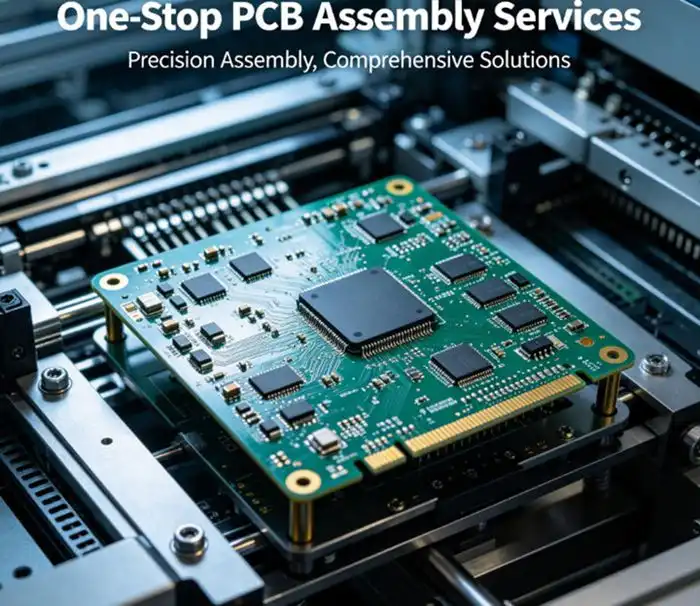
Full total services simplify the buying process and make the supply chain less complicated. Integrated services usually include making PCBs, finding parts, putting them together, and checking their functionality as part of single-source agreements. This method reduces collaboration problems and makes sure that all stages of production are compatible.
Given the problems in the supply chain right now, knowledge of where to find components becomes even more important. Partners with a lot of experience keep up with their suppliers and use inventory management tools that lower the risk of not being able to get parts. Being able to choose from different components helps with problems related to obsolescence while keeping the purity of the design and meeting performance standards.
Design for Manufacturability Support
Working together as engineers during the planning phase stops problems that cost a lot to fix during production and makes it more efficient. DFM analysis finds possible assembly problems early in the development process, which lets designers make changes that raise rates and lower costs. DFA optimization focuses on the needs of the assembly process, making sure that choices about where to put parts and how to route them support efficient production workflows.
Cost and performance goals need to be balanced, and BOM optimization services help make sure that all the parts are available. Engineering teams can offer different parts or changes to the design that keep the usefulness while making the supply chain more resilient. This way of working together usually saves a lot of money and makes the product more reliable.
Technical Best Practices and Troubleshooting in HDI PCB Assembly
To make great products, you need to strictly control the process and use methods to avoid mistakes throughout the whole assembly process.
Common Defect Prevention Strategies
HDI PCB Assembly quality depends a lot on how well the process is controlled and how well it is kept clean. To make sure there is enough solder paste without any bridging risks, the mask needs to be carefully designed and the printing parameters need to be optimized. Accurately placing parts is very important for fine-pitch devices, which means that machines need to be calibrated and vision systems need to be maintained on a frequent basis.
Optimizing the reflow profile keeps parts from getting damaged and makes sure that the solder joint forms properly. Temperature growth rates, peak temperatures, and cooling patterns must be able to handle the different thermal sensitivity of components while keeping results the same in all board locations. Choosing the right flux and controlling the environment can help reduce rust and improve the way things stick together.
Advanced Testing and Quality Assurance
Comprehensive testing procedures make sure that the product is reliable and meets performance standards. Automated visual inspection systems can quickly and accurately find problems with component positioning, solder quality, and placement. X-rays can find flaws in ball grid array packages and under-component solder joints that can't be seen with the naked eye.
Before the final assembly is finished, in-circuit testing makes sure that the electrical connections and operation of all the parts are correct. Flying probe testers are flexible testing tools that can be used for prototypes and low-volume production without the need for expensive specific setups. Boundary scan testing lets you fully check a digital circuit while reducing the number of test points that need to be used.
Emerging Technology Trends and Innovations
The creation of new materials keeps making HDI more useful and expanding its uses. High-frequency function is possible with low-loss dielectric materials that also use less power. In power electronics uses, thermally conductive surfaces help get rid of heat more quickly. Combinations of flexible and rigid materials can be used to make three-dimensional packaging options for uses with limited room.
Automated assembly technologies make things more consistent while lowering the need for human work. Based on real-time input, machine learning algorithms improve the accuracy of placement and process factors. Predictive repair systems keep machinery from breaking down and make sure that the quality of the output stays the same.
Conclusion
HDI PCB Assembly technology gives companies in many different fields the improved tools they need to make the next generation of electronic products. Increasing the number of circuits, making them work better, and making them smaller are all technical benefits that directly solve problems in modern technology and allow for new product designs. Picking the right manufacturing partner is very important for the success of the project. You need to carefully look at their technical skills, quality certifications, and services they offer. Knowing how the costs and benefits of HDI and standard assembly methods compare helps procurement workers make smart choices that meet performance needs while staying within budget. As technology keeps changing, HDI's ability to put together parts will become more and more important for staying ahead in the advanced electronics market.
FAQ
What makes HDI PCB Assembly different from traditional assembly methods?
HDI PCB Assembly uses sequential lamination, microvias, blind and buried vias, and other techniques that make it possible for much higher circuit counts than standard through-hole drills. These advanced features make it possible for smaller form factors to hold more functionality. They also improve electrical performance by cutting down on connecting routes and electromagnetic interference.
How do microvias improve PCB performance?
Microvias make precise electrical links between layers of a circuit without taking up important board surface routing room. Their small size (usually 0.006 inches or less) lets you put a lot of components close together while shortening signal paths. This improves high-frequency performance and lowers power use. Additionally, copper-filled microvias make great paths for heat to escape.
What lead times should I expect from reliable HDI manufacturers?
Professional HDI makers can usually turn around prototype parts in 5 to 7 days and production quantities in 2 to 3 weeks, but this depends on how complicated the order is and how many are needed. Partners with a lot of experience, established supply chains, and manufacturing skills that are available 24/7 can often meet urgent needs while still keeping quality standards.
Partner with Ring PCB for Superior HDI PCB Assembly Solutions
Ring PCB Technology offers the best HDI PCB Assembly services in the business, backed by 18 years of production success and a wide range of quality certifications. Our high-tech building can handle 2-48 layer stackups with accuracy of 3/3mil, impedance control of ±7%, and IPC-6012 Class 3 compliance, so you can be sure that your complex electronics projects will meet the strictest requirements. We offer full package solutions that include making PCBs, finding parts, putting them together using SMT, and following strict testing processes. Our manufacturing operations are open 24/7, and our global engineering team is here to help. Email our HDI PCB Assembly maker experts at [email protected] to talk about your project needs and get a personalized quote that shows how low our prices are and how quickly we can deliver your order.
References
1. Smith, J.A. "High-Density Interconnect Technology: Fundamentals and Manufacturing Processes." Advanced PCB Engineering Journal, Vol. 15, No. 3, 2023, pp. 45-62.
2. Chen, L.M. and Williams, R.K. "Microvia Formation Techniques in HDI Circuit Boards: A Comparative Analysis." Electronic Manufacturing Technology Review, Vol. 28, No. 7, 2023, pp. 112-128.
3. Johnson, P.E. "Cost-Benefit Analysis of HDI vs Traditional PCB Assembly in High-Volume Production." Industrial Electronics Quarterly, Vol. 42, No. 2, 2023, pp. 78-95.
4. Anderson, M.T. "Design for Manufacturability Guidelines for Advanced HDI Applications." PCB Design and Assembly Standards, 4th Edition, Technical Publications Inc., 2023, pp. 234-267.
5. Rodriguez, C.A. "Quality Control and Testing Methodologies for High-Density Interconnect Assemblies." Reliability Engineering in Electronics, Vol. 31, No. 9, 2023, pp. 203-219.
6. Thompson, K.S. "Emerging Trends in HDI PCB Assembly: Materials and Process Innovations." Future Electronics Manufacturing, Vol. 19, No. 4, 2023, pp. 156-174.

Welcome to Ring PCB! Share your inquiry, and receive a tailored quotation!

Ring PCB, your trusted partner for PCB & PCBA Full Turnkey Solutions