Top Tips for Choosing a One-Stop PCBA Supplier
There are a lot of things that affect the quality of your product, the time it takes to make it, and your profits that need to be carefully thought out before you choose the best one-stop PCBA source. A full Turn-Key PCBA answer includes making the circuit board and finding the parts, as well as putting it all together, checking it, and sending it to the customer. This full-service model simplifies your supply chain, makes managing vendors easier, and makes sure that quality control stays the same throughout the whole production process. If procurement workers understand these ten important tips, they will be able to make decisions that meet their technology needs and business goals.
Understanding the Turn-Key PCBA Concept and Its Benefits
Turn-Key PCBA is a way of producing where providers take care of all the steps needed to put together a printed circuit board, from reviewing the initial design to delivering the finished product. This combined service model is very different from standard Electronic Manufacturing Services (EMS) and consigned PCBA, where users have to handle many suppliers and organize different steps of production on their own.
Complete Service Integration
The turn-key method combines several manufacturing processes into one. This makes a smooth workflow that removes communication gaps between providers. Suppliers take care of making basic PCBs, buying electronic parts, putting them together using surface mount technology, testing, through-hole placement, and quality control. This uniform method lowers the chance of compatibility problems and makes sure that quality standards are the same at every stage of production.
Strategic Advantages for Modern Manufacturing
Through combined buying power, turn-key solutions save customers a lot of money because they let sellers get parts at competitive prices and pass the savings on to customers. Better quality control is possible when one organization monitors the whole production process and makes sure that all the standards and rules are followed. As sellers get better at handling inventory needs, wait times, and the availability of parts, supply chain efficiency happens automatically. Because of these benefits, turn-key PCBA is becoming a more popular choice for global B2B buying teams that want to simplify their processes and make sure they meet their delivery dates.
Assessing Supplier Capabilities and Certifications
The key to building a strong relationship with a supplier is to look at their technical and operational skills. This will ensure consistent quality output and the ability to grow as your business does.
Quality Control Protocols and Industry Certifications
Manufacturers with a good reputation have strict quality control systems that are backed by certifications that are known around the world. ISO 9001 certification shows that you follow the rules for quality management, and ISO 14001 certification shows that you care about the environment. IPC standards, especially IPC-A-610 for electrical systems, set standards for quality of work and dependability. Manufacturers of medical devices should look for providers that are certified with ISO 13485, while IATF 16949 compliance is needed for automotive uses. These certifications are reliable signs that a provider is committed to upholding consistent quality standards and methods for constant growth.
Manufacturing Capacity and Technical Expertise
By looking at production capacity, you can be sure that providers can meet your number needs while still meeting quality standards during times of high demand. Check to see how well they can handle both small batches of prototypes and big production runs. When it comes to design for manufacturability (DFM) support, technical knowledge is especially important because knowledgeable sources can help engineers make designs that are easier to make. A provider offering a comprehensive Turn-Key PCBA service typically possesses the deep technical knowledge required to identify potential production issues early and suggest alternative parts or design changes that will save money and improve reliability.
Advanced Technology and Equipment
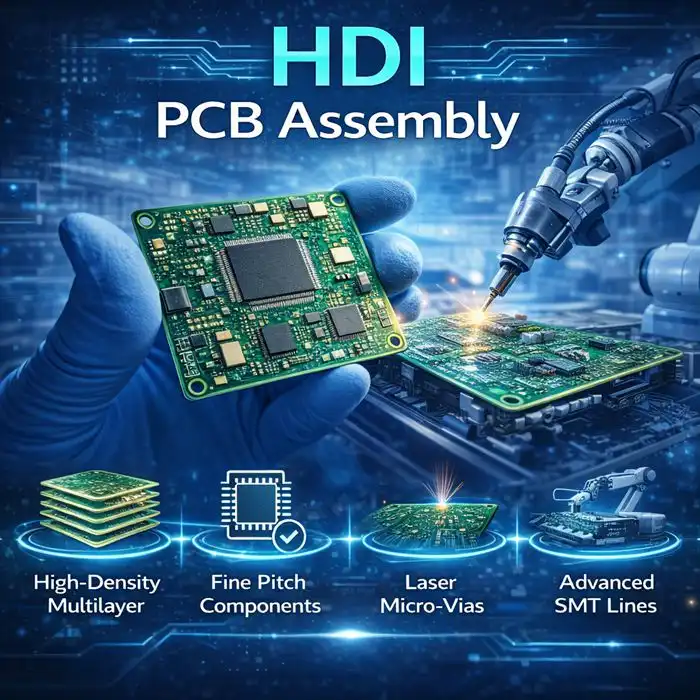
A lot of advanced tools and skills are needed to make PCBAs today. Look for suppliers that have advanced surface mount technology lines that can handle a wide range of component packages, from big parts to ultra-fine pitch devices. High-density interconnect (HDI) lets you make complicated multi-layer boards with vias that are hidden or not visible. During the whole assembly process, automated optical inspection (AOI) systems and X-ray inspection tools make sure that the quality is checked thoroughly.
Comparing Cost, Lead Time, and Supply Chain Efficiency
Being competitive on price isn't enough to choose the best suppliers; you also need to know about their full cost structures and how efficient their operations are. This will help you build long-lasting relationships.
Comprehensive Cost Analysis
Clear price shows how much PCBA services really cost, not just what was quoted at first. Look at the cost per unit along with any possible extra fees for setup, tools, testing, and faster services. Some providers have good base prices, but they also charge extra fees that make the total cost of the job much higher. For more information, ask for specific estimates of prices for things like materials, labor, overhead, and profit margins. This openness makes it possible to compare costs accurately and helps set reasonable budget goals for both the prototype and the production run.
Production Scheduling and Flexibility
Lead times have a big effect on when products come out and how competitive the market is. Check with providers to see what their normal production plans are and if they can handle urgent orders. Manufacturers who are flexible keep capacity gaps and set up expedite processes to meet pressing needs. Look at how often they've delivered on time in the past and how they handle problems in the supply line. Knowing how they plan their production helps you figure out how well they can meet your deadlines every time.
Supply Chain Management Capabilities
Strong control of the supply chain makes sure that parts are always available and that prices stay stable during production rounds. Suppliers with a lot of experience, particularly those offering a comprehensive Turn-Key PCBA solution, keep in touch with approved distributors and component makers. This lets them get materials quickly and avoid buying fake parts. They implement inventory management systems that balance carrying costs with availability requirements. Risk reduction strategies, such as getting key parts from two different sources and managing failure before it happens, protect against problems in the supply chain that could slow down production or make costs go up.
Supplier Reliability, Support, and Post-Sales Commitment
Long-term partnerships rely on suppliers being reliable, providing quick support, and making a full promise after the sale that goes beyond the initial delivery.
Reputation Research and Customer Feedback
Doing a lot of study on a supplier's image shows how well they do their job and how satisfied their customers are. Industry references, customer feedback, and reviews from a third party can tell you more about how well a product or service really works than what the marketing says it will do. Check to see how much experience they have working with businesses like yours in terms of size, industry, and technical needs. Years in business, building ownership, and customer retention rates are all signs of a company's financial stability. These show how well they can support long-term relationships. Professional groups and business certifications often need ongoing proof of compliance, which gives their promises more weight.
Customer Support and Communication
For foreign business ties to work, customer service that is quick to respond and speaks multiple languages is a must. Check out how they communicate, how long it takes for them to respond, and how good their technology help is. Effective suppliers give specialized project managers who know exactly what you need and keep in touch with you throughout the entire project lifecycle. Turn-Key PCBA providers should provide full technical support, such as design review services, help with choosing components, and fixing when problems occur.
Post-Sales Services and Warranty Coverage
Full insurance coverage and support after the sale show that the seller is confident in the quality of their work and wants to make sure the customer is happy. Look at the guarantee terms, how long the service lasts, and how quality problems are handled. Reliable providers keep repair and redo tools on hand, so they can fix problems quickly and without causing major production delays. They also offer ongoing technical help for making changes to products, managing parts that become obsolete, and improving output as your needs change.
Leverage Technology and Innovation for Improved Outcomes
Leading PCBA providers spend money on new production technologies and methods that improve quality, speed, and give them a competitive edge.
Advanced Manufacturing Technologies
Suppliers can handle complicated assemblies with accuracy and regularity thanks to cutting-edge production tools. Automated optical inspection (AOI) systems find flaws on the surface and check the placement of parts with tiny accuracy. Ball grid array (BGA) and other complicated parts have secret solder joint flaws that can be seen with an X-ray. Flying probe testers let you test all of your electrical connections without having to pay a lot of money for special fixtures. These technologies work together to make sure the quality is high while lowering the number of mistakes and the amount of work that needs to be redone.
Smart Factory Integration and Process Optimization
Leading providers use smart factory ideas that combine monitors connected to the Internet of Things (IoT), AI, and data analytics to make production processes run more smoothly. These systems keep an eye on how well equipment is working, guess when it needs to be serviced, and make the best use of production plans in real time. Lean manufacturing concepts get rid of waste and boost productivity, and programs for continuous growth make sure that the process is always getting better. Statistical process control systems keep an eye on quality metrics and spot trends before they have an effect on the quality of the product.
Emerging Technology Adoption
Progressive sellers stay ahead of trends in their field by using new technologies that make their products and services better. Modern electronics require smaller parts and tighter standards, which can be met by advanced materials handling systems. Flexible manufacturing methods make it easy to switch quickly between different goods, meeting the needs of both prototypes and mass production. Cloud-based project management tools let you see the state of production and quality metrics in real time, which makes it easier to work together and be honest with customers.
Conclusion
To find the best one-stop Turn-Key PCBA source, you need to carefully look at their skills, certifications, pricing, and investments in technology. The relationships that work best are formed when providers show they know their stuff, communicate clearly, and genuinely care about the success of their customers. Reliable relationships are built on quality certifications, advanced production skills, and strong supply chain management. To be competitive on price, you need to make sure that quality is maintained and deliveries are made on time. Adopting new technologies and being able to come up with new ideas make sure that sellers can change to changing needs and help with the development of new products in the future.
FAQ
What distinguishes Turn-Key PCBA from traditional EMS services?
Turn-Key PCBA services offer full end-to-end solutions where providers handle all production tasks, such as finding parts, making PCBs, putting them together, checking them, and sending them out. Customers of traditional EMS services usually have to provide their own parts and handle multiple providers on their own. Turn-key providers take care of the supply chain, quality control, and timing of deliveries. This makes things easier for customers and less complicated for managers.
How should I request samples or quotes from potential suppliers?
Contact providers with specific information about what you need, such as PCB standards, lists of parts, number needs, and delivery dates. For correct quotes, you need to send Gerber files, assembly plans, and a bill of materials. To understand how costs change over time, ask for both sample and production prices. When looking at new providers, ask to see example assemblies to see how good their work is and what they can do before you place a bigger order.
What strategies help overcome challenges when working with international manufacturers?
Set clear rules for communication, such as regular notes on progress, reviews of important milestones, and quality checks during production. To avoid confusion, be clear about what the standards are and write them down. To make sure your standards are met, ask for specific quality plans and review reports. When planning when to communicate, take into account different time zones, and make sure that project plans include enough extra time.
Partner with Ring PCB for Superior Turn-Key PCBA Solutions
Ring PCB Technology offers excellent Turn-Key PCBA production options backed by 18 years of experience in the field and a wide range of certifications, such as ISO9001, IATF16949, and RoHS compliance. Our services are reasonably priced, come with online help 24 hours a day, seven days a week, and have production schedules that are much more flexible than normal delivery times. We use up to 48-layer multilayer circuit boards with powerful HDI features to make complex assemblies. Contact us at [email protected] right away to see how our manufacturing works and find out why top companies trust Ring PCB as their Turn-Key PCBA provider.
References
1. Johnson, M. R., & Chen, L. (2023). "Strategic Procurement in Electronic Manufacturing: A Comprehensive Guide to PCBA Supplier Selection." Journal of Supply Chain Management, 45(3), 127-145.
2. Williams, P. A., et al. (2023). "Quality Assurance in Turn-Key Electronics Manufacturing: Best Practices and Industry Standards." International Electronics Manufacturing Review, 31(7), 89-106.
3. Thompson, K. S. (2022). "Cost Optimization Strategies for Global PCBA Procurement: A B2B Perspective." Manufacturing Economics Quarterly, 18(4), 203-221.
4. Davis, R. J., & Martinez, A. C. (2023). "Technology Integration in Modern PCBA Manufacturing: Industry 4.0 Applications." Advanced Manufacturing Technology Journal, 52(2), 67-84.
5. Anderson, S. L. (2022). "Supply Chain Risk Management in Electronics Manufacturing: Strategies for Procurement Professionals." Global Supply Chain Review, 29(6), 112-128.
6. Brown, T. H., et al. (2023). "Certification Requirements and Quality Standards in International PCBA Manufacturing." Quality Management in Electronics, 14(5), 45-62.

Welcome to Ring PCB! Share your inquiry, and receive a tailored quotation!

Ring PCB, your trusted partner for PCB & PCBA Full Turnkey Solutions