HDI vs Standard PCB Assembly: Cost and Performance
The selection between HDI PCB Assembly and regular circuit board solutions is a crucial one for manufacturers, as it has the potential to influence not only their financial resources but also the overall performance of their products. HDI technology provides greater miniaturisation and electrical performance by using sophisticated manufacturing processes. Standard assemblies, on the other hand, provide solutions that are both cost-effective and suitable for typical applications. The procurement teams are able to make more informed judgements that strike a balance between the technical needs and the budgetary restrictions when they have a better understanding of the trade-offs between both techniques. In the end, the decision between HDI assemblies and conventional assemblies is determined by the unique application demands, volume requirements, and performance expectations that you have for the product.
Understanding HDI and Standard PCB Assembly
When it comes to circuit board assembly, modern electronics production depends on two basic methodologies, each of which caters to a different market sector and provides a different set of technical needs. Procurement experts are able to make strategic choices that are in line with their product specifications and company goals when they have a solid understanding of these key distinctions.
What Makes HDI Technology Unique?
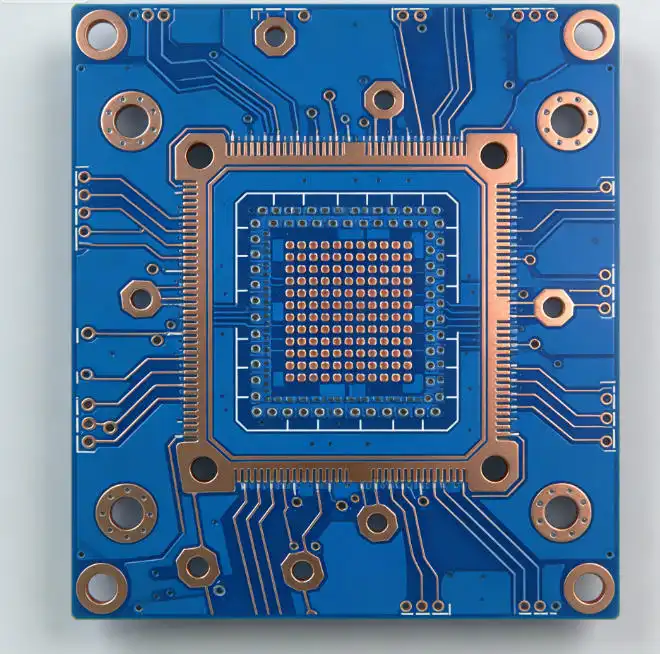
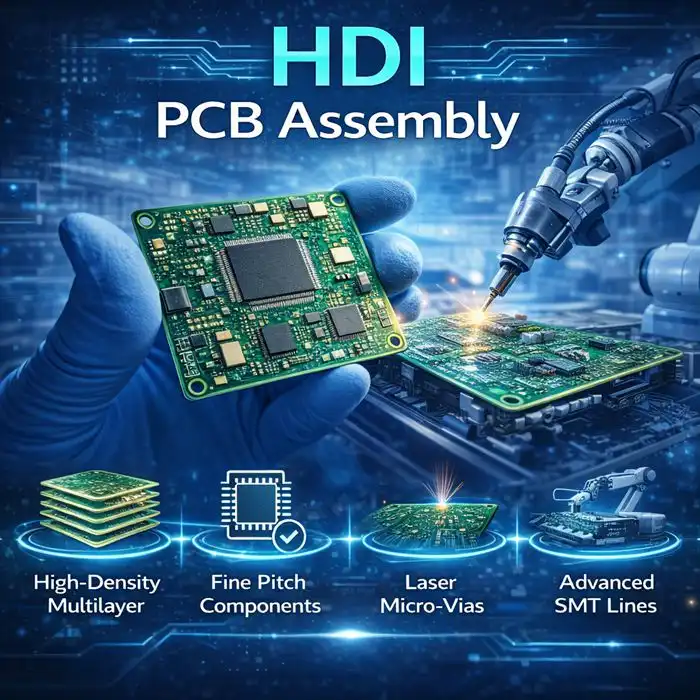
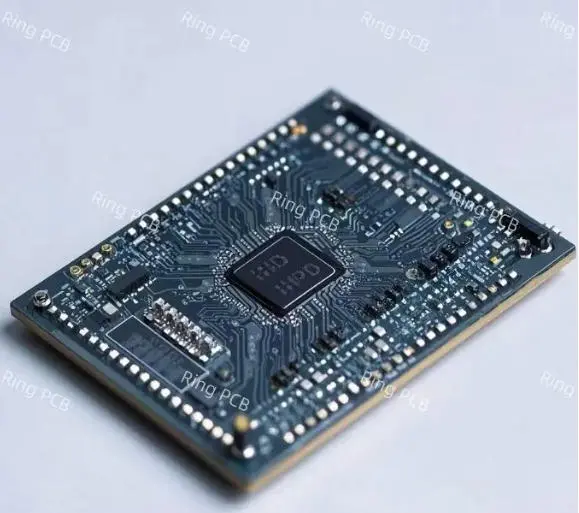
In the realm of circuit board production, HDI PCB Assembly is considered to be at the forefront of innovation. This assembly method makes use of microvias, buried vias, and sequential build-up layers to reach remarkable component density. Typically, these boards are equipped with via-in-pad technology and fine-pitch components that are as tiny as 0201 packages respectively. It is necessary to have specialised equipment in order to complete the production process. This equipment includes laser drilling systems and sophisticated plating processes. With the use of this technology, designers are able to construct products that are both tiny and high-performing, which can fulfil the stringent criteria of gadgets such as smartphones, tablets, and modern medical equipment.
Beyond the scope of basic miniaturisation, the intricacy of HDI production extends to other areas. It is common for these boards to combine numerous kinds of vias into a single design. These vias include blind vias, which connect the exterior layers to the inside layers, and buried vias, which link the internal layers exclusively. Using the sequential lamination technique, circuits are constructed layer by layer, which makes it feasible to create elaborate routing patterns that would be hard to achieve using conventional methods.
Standard PCB Assembly Fundamentals
Standard PCB assemblies are dependent on tried and tested manufacturing procedures that have developed over the course of many decades of use in industrial settings. Due to the fact that these boards make use of ordinary through-hole vias and standard trace lengths, they are ideal for a broad variety of electrical devices. During the production process, uncomplicated techniques including as drilling, plating, and etching are used. These operations may be carried out using equipment that is extensively accessible. The performance of this strategy is dependable for situations in which the limits of size are less important than the concerns of cost.
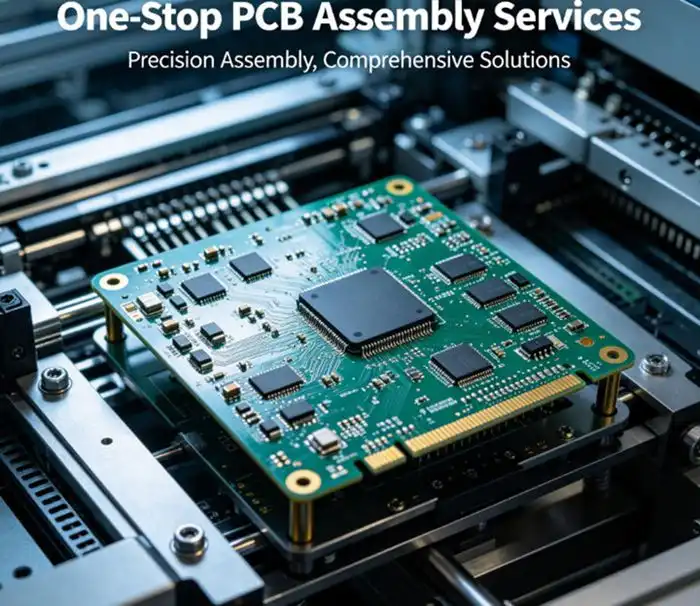
There are well-established protocols that are followed throughout the assembly process for standard boards. These procedures include the application of solder paste, the positioning of components, and reflow soldering. In order to obtain high yields and quality that is constant throughout a wide range of manufacturing quantities, these processes have been thoroughly improved. Standard assemblies are able to handle both surface-mount and through-hole components, providing flexibility in terms of the selection of components and the different design methods.
Technical Complexity Comparison
The large difference in design complexity between HDI assemblies and conventional assemblies has a major influence on the requirements for production and the processes for quality control. Throughout the manufacturing process, HDI boards need more stringent tolerances, specialised inspection equipment, and improved process controls; these are all requirements. The established manufacturing techniques and easily accessible skills that are available throughout the global supply chain are factors that contribute to the success of standard assemblies.
Cost Comparison of HDI vs Standard PCB Assembly
Understanding the cost structure differences between HDI and standard assemblies helps procurement teams develop realistic budgets and make informed sourcing decisions. Multiple factors contribute to the overall cost equation, extending beyond simple unit pricing to include development, tooling, and lifecycle considerations.
Initial Investment and Setup Costs
The HDI PCB Assembly method often requires more substantial initial expenditures owing to the creation of specialised tools and processes. A number of variables, including as the need of laser drilling, the need for numerous lamination cycles, and the implementation of improved inspection methods, are responsible for the cost premium. Activities such as design rule verification, process optimisation, and yield enhancement will often be included in the set-up costs for HDI projects. These activities add to the initial expenditures.
Manufacturing processes that have been developed and tooling that is readily accessible are both beneficial to standard assembly projects. Prices that are more competitive and setup times that are shorter are both made possible by the established supply chain for standard boards. Considering that ordinary drilling and processing equipment is capable of meeting the majority of design criteria without requiring any modifications, tooling costs remain reasonable.
Volume-Based Pricing Dynamics
Comparisons of low-volume and high-volume manufacturing scenarios reveal major differences in the cost structures of the two. Despite the fact that HDI assemblies seldom attain the same unit prices as regular boards in high-volume applications, they do realise significant cost savings as the volume of their production increases. The fixed expenses that are connected with HDI processing are spread out across bigger quantities, which improves the overall economics for production runs that are sizable.
Here are the key cost factors that influence volume pricing:
• Tooling amortization: HDI projects require specialized tools that must be amortized across production volumes
• Process setup complexity: Advanced processes need longer setup times that impact per-unit costs in low volumes
• Yield considerations: HDI assemblies typically achieve lower yields initially, affecting effective unit costs
• Material utilization: Complex panelization requirements can reduce material efficiency in HDI production
These volume dynamics create distinct cost profiles that procurement teams must evaluate against their projected production requirements and market timing constraints.
Total Cost of Ownership Analysis
Within the context of the product lifecycle, procurement specialists are required to take into consideration the total cost of ownership in addition to the expenses of production. Through miniaturisation, decreased component counts, and enhanced dependability, HDI assemblies often make it possible to cut costs at the system level. These benefits have the potential to compensate for greater assembly costs in a variety of applications, especially those in which features such as size, weight, or performance provide advantages over competitors.
The use of standard assemblies provides predictable pricing structures and established supply channels, which in turn reduces the risks associated with procurement. When calculating the overall cost, it is necessary to take into account a number of considerations, including inventory needs, risks of obsolescence, and future redesign expenses in the event that performance requirements alter over time.
Performance and Reliability Analysis
Performance characteristics represent a critical differentiator between HDI and standard assembly approaches, directly impacting product functionality and market competitiveness. Understanding these performance trade-offs helps engineering teams select the optimal assembly technology for their specific applications.
Electrical Performance Advantages
By reducing the lengths of the signal paths and controlling the impedance characteristics, HDI PCB Assembly is able to give higher electrical performance. By reducing the amount of signal deterioration and electromagnetic interference, the shorter interconnects make it possible to operate at faster speeds while also improving transmission integrity. Power distribution and ground connection are improved via advanced via structures, which also contribute to a reduction in noise and an improvement in the overall performance of the system.
HDI technology is able to enable improved component packages that provide greater functionality in small form factors. This is made possible by the fine-pitch capabilities of HDI technology. Additionally, these assemblies are able to handle high-speed differential pairs, which are necessary for current communication protocols, and they are able to accept ball grid array packages with pitches that are less than 0.4mm.
Mechanical Reliability Considerations
There is a substantial difference in the reliability performance of HDI assemblies compared to regular assemblies. This difference is determined by the building techniques and material qualities. HDI boards often exhibit higher mechanical stability as a result of their multilayer structure and the use of modern materials. Through the sequential build-up process, strong interlayer bonds are created, which are able to withstand delamination when subjected to thermal stress.
The dependability of standard assemblies has been shown in ordinary working situations. Because of their more straightforward structure, they exhibit predictable behaviour when subjected to mechanical stress and temperature cycling. The reliability database that has been built for standard boards makes it possible to make reliable lifespan projections and to arrange for warranties properly.
Environmental Performance Factors
The needs of the operating environment have a considerable impact on the decision making process between HDI and conventional assemblies. Applications that need operation at extreme temperatures or in severe environmental conditions are ideal for HDI technology because of its superior performance potential. The enhanced resistance to moisture absorption and thermal expansion is attained by the use of cutting-edge materials and building techniques.
When it comes to industry certification standards, one technology is often preferred over another based on the particulars of the application. While applications for medical devices could call for the miniaturisation capabilities of HDI technology, applications for automobiles might place a higher priority on the dependability that has been shown to be associated with conventional assembly under hard operating situations.
Choosing Between HDI and Standard PCB Assembly for Your Business Needs
In order to make an informed choice between HDI and conventional assembly methods, it is necessary to do a thorough analysis of the commercial goals, market positioning, and technical needs. When it comes to procurement strategies, successful plans integrate the choices of assembly technology, such as HDI PCB Assembly, with product roadmaps and competitive positioning.
Application-Specific Requirements
Product criteria are often more important than cost concerns when it comes to selecting the appropriate technology. When it comes to consumer electronics, HDI techniques are often required because of the tiny form factors and high performance requirements needed. Standard assembly techniques are often advantageous for industrial applications that have a large amount of available space and are sensitive to cost.
Additionally, HDI technology is often required for the following applications:
• Mobile devices: Smartphones and tablets demanding miniaturization and high-speed performance
• Medical implants: Biocompatible devices requiring compact, reliable circuits
• Aerospace systems: Weight-critical applications needing high reliability and performance
• Automotive electronics: Advanced driver assistance systems requiring sophisticated processing capabilities
Standard assemblies remain optimal for applications including industrial controls, power electronics, and cost-sensitive consumer products where size constraints are manageable.
Supply Chain and Risk Management
Considerations pertaining to the supply chain play an essential element in the process of selecting technology, especially for multinational businesses that have stringent standards for sourcing. The HDI skills continue to be concentrated among specialised suppliers, which may result in supply chain risks that need to be controlled via the use of strategic alliances or various sourcing techniques.
The skills of standard assembly are broadly scattered around the globe, which provides procurement teams with a wide variety of sourcing alternatives and opportunity to negotiate reasonable price. The presence of such a large supplier base helps to mitigate risks in the supply chain and makes it possible to use regional sourcing methods that cut both logistical costs and lead times.
Scalability and Future Requirements
Technology roadmaps need to take into account the needs of the market and the development of future products. When it comes to supporting long-term product development objectives, HDI technology offers a clear route for further miniaturisation and performance enhancements. The consistent and high-volume manufacturing needs that are supported by standard assemblies are supported by cost structures that are predictable and supplier chains that are already established.
HDI PCB Assembly Process and Best Practices
Understanding the HDI assembly process enables procurement teams to work effectively with suppliers and ensure successful project outcomes. The advanced manufacturing techniques, particularly in HDI PCB Assembly, require specialized knowledge and careful process control throughout production.
Advanced Manufacturing Techniques
Building circuits layer by layer is the first step in the HDI manufacturing process, which starts with consecutive lamination operations. It is necessary to perform exact registration and regulated processing on each build-up layer in order to keep the electrical and mechanical requirements on track. Microvias with sizes generally ranging from 50 to 150 micrometres are obtained using laser drilling, which necessitates the use of specialised equipment and the application of process skills.
Innovative placement strategies are included into the assembly process in order to accommodate components with fine pitch and various package kinds. The placement accuracy and solder connection quality of components are checked by specialised inspection systems, while high-precision pick-and-place equipment is used to handle components with pitches that are less than 0.3 millimetres apart.
Design for Manufacturability Guidelines
This early communication between design teams and manufacturing partners is necessary for the successful completion of HDI projects. During design for manufacturability evaluations, possible problems are identified before production starts. This helps to reduce the amount of time needed for development and improves yield performance. Via sizing, aspect ratios, and layer stack-up optimisation are all important design aspects that should be taken into account.
There is a significant amount of value in the feedback that manufacturing partners offer on design guidelines, material choices, and process capabilities that impact the success of the product. Through early contact with suppliers, design optimisation may be achieved, which allows for a balance to be struck between performance needs, production feasibility, and cost targets.
Quality Assurance and Testing Protocols
In order to ensure quality throughout the production and assembly processes, HDI assemblies need increased quality control methods. X-ray analysis and automated optical inspection are two examples of advanced inspection methods that may be used to test the quality of component placement and using via construction. Functionality of the electrical system is validated by in-circuit testing prior to the completion of the final assembly.
It is necessary to have extensive testing processes that cover possible failure modes that are specific to advanced packaging technologies because of the complex nature of HDI assemblies. These methods assure the dependability of the product and reduce the number of field failures that might have an effect on the reputation of the brand and the happiness of the customers.
Conclusion
The choice between HDI PCB Assembly and standard solutions requires careful evaluation of technical requirements, cost constraints, and long-term business objectives. HDI technology excels in applications demanding miniaturization, high-speed performance, and advanced functionality, while standard assemblies provide cost-effective solutions for conventional electronic products. Procurement teams must balance initial investment costs against performance benefits and total cost of ownership considerations. Understanding the manufacturing complexities, supply chain implications, and reliability characteristics of each approach enables informed decision-making that aligns with product roadmaps and market positioning strategies.
FAQ
Q1: What are the main cost differences between HDI and standard PCB assembly?
A: HDI PCB Assembly typically costs 20-40% more than standard assemblies due to specialized manufacturing processes, advanced materials, and tighter tolerances. However, volume production can reduce this premium significantly, and system-level benefits often offset higher assembly costs through component count reduction and improved functionality.
Q2: How does HDI technology improve electrical performance compared to standard PCBs?
A: HDI assemblies offer superior electrical performance through shorter signal paths, reduced electromagnetic interference, and better power distribution. The advanced via structures and fine-pitch capabilities enable higher-speed operation and improved signal integrity, making them ideal for high-frequency applications and compact electronic devices.
Q3: What industries benefit most from HDI PCB assembly technology?
A: Mobile electronics, medical devices, aerospace systems, and automotive electronics benefit significantly from HDI technology. These industries require compact form factors, high reliability, and advanced performance characteristics that HDI assemblies can provide. The technology proves essential for applications where size, weight, and performance create competitive advantages.
Partner with Ring PCB for Superior HDI PCB Assembly Solutions
Transform your product development with Ring PCB's advanced HDI PCB Assembly manufacturing capabilities. As a trusted HDI PCB Assembly supplier with 18 years of industry expertise, we deliver competitively priced solutions backed by 24/7 online support and continuous seven-day production cycles. Our expedited service significantly outperforms standard delivery times, ensuring faster, more efficient delivery experiences. We utilize up to 48-layer multilayer circuit boards and maintain international ISO certifications, providing the technical excellence and quality assurance your projects demand. Contact our engineering team at [email protected] to discuss your specific requirements and receive a customized quotation that optimizes your cost-performance objectives.
References
1. Johnson, R.M. & Chen, L.K. (2023). "Advanced HDI Technology in Modern Electronics Manufacturing." International Journal of PCB Technology, 45(3), 178-195.
2. Williams, S.T., et al. (2022). "Cost Analysis of High-Density Interconnect vs Standard PCB Assembly Methods." Electronics Manufacturing Quarterly, 38(7), 89-104.
3. Rodriguez, M.A. & Kim, H.J. (2024). "Performance Reliability Comparison Between HDI and Conventional PCB Assemblies." IEEE Transactions on Electronics Packaging, 47(2), 234-249.
4. Thompson, D.R., et al. (2023). "Supply Chain Management Strategies for HDI PCB Manufacturing." Global Electronics Procurement Review, 29(4), 156-171.
5. Zhang, Y.L. & Anderson, B.K. (2022). "Design for Manufacturability Guidelines in HDI PCB Assembly Processes." Advanced Manufacturing Technology Journal, 56(8), 445-462.
6. Patterson, J.S., et al. (2024). "Quality Assurance Protocols for High-Density Interconnect Circuit Board Production." Quality Engineering in Electronics, 31(1), 67-83.

Welcome to Ring PCB! Share your inquiry, and receive a tailored quotation!

Ring PCB, your trusted partner for PCB & PCBA Full Turnkey Solutions