How Does High-Volume PCBA Manufacturing Work?
High-Volume PCBA manufacturing is the organized putting together of printed circuit boards for mass production. It uses automatic methods and standard work processes to get uniform quality at lower costs per unit. This way of making things uses advanced surface mount technology, strict quality control rules, and smart supply chain management to make thousands or millions of boards that are already put together. The process includes improving the design, getting the parts, putting the whole thing together automatically, testing it thoroughly, and coordinating the logistics. This lets manufacturers meet the strict requirements of consumer electronics, automotive systems, medical devices, and industrial equipment while keeping prices low and quality high.
What Is High-Volume PCBA and Why Is It Important?
Understanding Large-Scale PCB Assembly Operations
When it comes to automation, speed, and economies of scale, large-scale printed circuit board assembly is very different from pilot or low-volume production. This way of making things is best for making large amounts (usually more than 10,000 units), because standardized processes and automated tools make the original setup costs worth it. Consumer goods, car systems, telecommunications equipment, and medical devices are just a few of the industries that use this method to keep costs low and meet market needs.
Economic Benefits and Strategic Advantages
When you do mass production assembly, the economic benefits become clear when you see how much each unit costs less. When a lot of units are made, the fixed costs of setup, tools, and equipment are spread out over a lot of units, which makes the cost of each piece much lower. Large-scale buying deals between manufacturing partners can help them get better prices on parts, and automatic assembly lines work more efficiently than manual processes.
Industry Applications and Market Demands
Modern electronics production serves many industries that need stable, high-quality parts. For engine control units, infotainment systems, and advanced driving aid systems, automotive electronics need boards that are strong. For patient safety, companies that make medical devices need systems that meet strict governmental standards. Companies that make consumer goods need smart home gadgets, smartphones, and tablets that don't cost a lot of money. Large-scale manufacturing is a good way to meet the needs of all of these uses, which are uniform quality, affordable pricing, and reliable delivery schedules.
How Does the High-Volume PCBA Manufacturing Process Work?
Design for Manufacturability and Engineering Collaboration
The first step in the production process is Design for Manufacturability analysis. This is where engineering teams check PCB plans to see if they can be put together automatically. This important step finds possible manufacturing problems, places parts so that pick-and-place works well, and makes sure that trace routing works with fast assembly processes. Original equipment makers and assembly partners work together at this stage to avoid costly changes to the design and delays in production.
Component Procurement and Supply Chain Management
Strong methods for getting parts are needed for large-scale production to go well. Manufacturing partners keep in touch with approved distributors and component makers to get original parts at prices that are competitive. Supply chain teams predict how many parts will be needed based on when products are being made, keep an eye on inventory levels to make sure there aren't any gaps, and set up tracking systems to make sure the parts are real. This methodical technique keeps costs in check while minimizing output stops.
Advanced Assembly Techniques and Automation
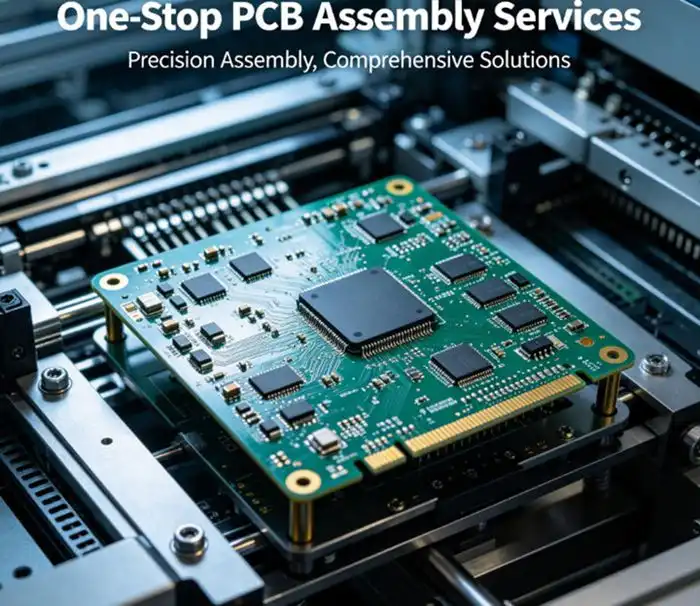
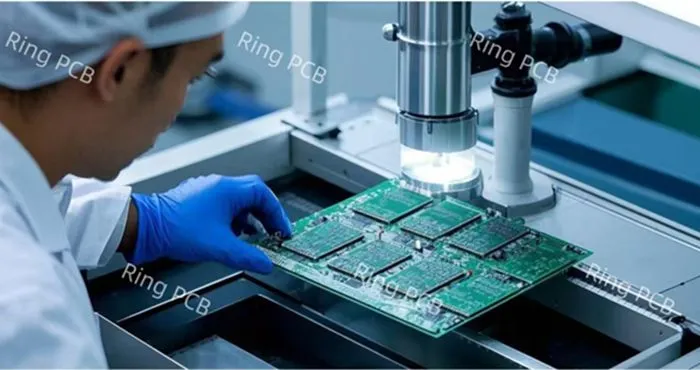
The most up-to-date assembly plants have surface mount technology lines that can accurately place thousands of parts per hour. Vision-guided placement tools, precision solder paste application, and controlled reflow ovens that keep exact temperature profiles are all used in these automated systems. Through-hole parts are soldered with selective soldering equipment, and placement accuracy is checked by automatic visual inspection systems both before and after the soldering process. High-Volume PCBA is made possible by this advanced, high-speed automation, which ensures consistent quality even at massive production scales.
Quality Control and Testing Protocols
At every stage of production, strict quality control rules apply. Automated visual inspection systems check the quality of the solder joints, the direction of the components, and how well they were placed. X-ray screening tools find flaws that are hidden in ball grid array parts and other complicated packages. Functional testing compares the electrical performance to the design standards, and statistical process control looks at production trends to find problems before they affect the quality of the product.
Logistics and Packaging Solutions
Coordinating operations well makes sure that finished parts are delivered on time. When packaging devices, teams use anti-static materials, moisture barrier bags, and cushioned cases to keep them safe during shipping. Tracking systems let procurement teams see the state of production and shipping dates in real time, which helps them keep track of supplies and plan production well.
Key Quality Standards and Challenges in High-Volume PCBA Production
International Certification Requirements
Internationally known standards make sure that products are reliable and that they follow the rules when they are made in large quantities. The IPC-A-610 standard sets the standards for what electronic circuits can and cannot do, and the ISO 9001 standard sets the rules for quality control systems. IATF 16949 covers standards for the car industry, and ISO 13485 covers the production of medical devices. These badges show that production partners are dedicated to maintaining quality and always getting better.
Common Production Challenges and Solutions
Maintaining the same standard across big amounts of output is hard in its own way. To get a consistent solder joint, you need to carefully control and watch the temperature during the reflow processes. Accurate placement of components depends on how often the machine is calibrated and the vision system is maintained. Problems in the supply chain can stop production lines, so having a wide range of suppliers and keeping track of goods are very important for success.
To deal with these problems, manufacturing partners use advanced traceability systems that track parts from the time they are received until they are fully assembled, as well as thorough automation strategies and regular supplier checks. Continuous training of the workforce makes sure that workers know what quality standards are and can spot possible problems before they affect production.
Defect Prevention and Process Control
High-Volume PCBA processes that work well use multiple levels of defect avoidance. Key factors like solder paste thickness, component placement accuracy, and reflow temperature patterns are tracked by statistical process control. Real-time data analysis finds patterns that could mean there are quality problems, so changes can be made before problems happen. This method keeps failure rates well below the average for the industry while helping efforts to keep getting better.
Comparing High-Volume PCBA with Other Production Approaches
Cost-Efficiency and Economic Considerations
Large-scale assembly has unbeatable cost benefits for making large amounts of something. The prices of setting up a system are spread out over more units, and automatic methods work better than manual ones. Buying more parts gives you more negotiating power when it comes to prices, and making sure that production lines are optimized cuts down on handling and processing time. But putting together a prototype gives you the freedom to make changes to the design and meet specific needs that mass production can't afford to meet.
Production Speed and Scalability Factors
Once the basic setup is done, automated assembly lines are the fastest way to make things. Modern surface mount lines can put together hundreds of boards an hour, while most people can only do that by hand. When production needs go up, scalability becomes clear: automatic systems can keep running with little staff, while human methods need a proportional increase in staff.
Quality Control and Consistency Metrics
When it comes to consistency, automated assembly methods are better than human ones. Machine-controlled factors get rid of the need for human error in the inspection, soldering, and placing of parts. However, human assembly lets you make changes in real time and handle special parts or setups in a way that automation can't easily do.
Supplier Selection and Evaluation Criteria
When procurement teams look at factory partners, they should look at their production ability, quality track records, and certification status. Visits to a facility show what the tools can do, how the process is controlled, and how skilled the workers are. Customer recommendations can tell you a lot about how well you deliver, how consistent your quality is, and how good your expert help is. Logistics prices, communication preferences, and the need to follow regulations in certain areas are all geographical factors that need to be taken into account.
Procurement Best Practices for High-Volume PCBA in B2B Markets
Minimum Order Quantities and Batch Planning
Knowing the minimum order amounts helps you get the most out of your cost models and inventory management. Manufacturing partners set MOQs based on how much it costs to set up, how many parts they need to buy, and how efficient they want to make the product. Using batch planning, procurement teams can make sure that production plans match up with predicted demand. This cuts down on the costs of keeping inventory and makes sure that there are enough items in stock to meet market needs.
Certification Assessment and Compliance Verification
When looking at production partners, it's important to look closely at their quality standards and ability to follow the rules. ISO 9001 certification shows that quality management systems have been in place for a while, while IATF 16949 or ISO 13485 certifications show that a company has specific knowledge. RoHS and REACH compliance makes sure that environmental rules are followed, and IPC licenses show that you know how to do assembly processes technically. High-Volume PCBA requires that these standards be not just met but consistently applied to ensure reliability and efficiency at scale.
Long-Term Partnership Development
Having long-term partnerships with approved makers lowers the risks in the supply chain and makes it easier to plan for costs. Long-term deals can make sure that capacity is allocated during times of high demand and set prices that are easy to predict. Through operational success, regular performance reviews and efforts to make things better all the time build relationships and help both sides.
Negotiation Strategies and Contract Terms
Cost goals, quality standards, and delivery promises all need to be balanced in good procurement talks. When you make a bigger pledge, the unit cost goes down because the price is based on volume. Payment terms that are easy to work with and promises of performance guard against problems with quality or delivery. Technical support deals make sure that designers can get help and problems can be fixed throughout the duration of a product.
Conclusion
High-Volume PCBA making is an advanced mix of automation, quality control, and supply chain excellence made to meet the strict needs of modern electronics production. There are big financial benefits to this way of making things because of economies of scale, uniform quality because of standardized processes, and dependable delivery because of better logistics planning. To be successful at large-scale assembly, you need to pay close attention to plan optimization, getting the right parts, automating the assembly process, and following strict quality control rules. When choosing manufacturing partners and setting up supply deals that support long-term business goals and keep companies competitive in their markets, procurement pros benefit from knowing these complexities.
FAQ
What are typical lead times for large-volume PCBA orders?
Orders for mass production usually have lead times between two and four weeks, but this depends on the supply of parts, the complexity of the board, and the state of the production queue. It might be faster to finish simple setups with common parts, but it might take longer to finish complex layered boards or parts that aren't commonly used. During the price process, manufacturing partners give thorough information about schedules.
How can I make sure that the quality and reliability of the building in a large-scale production?
Multiple levels of checks are used to make sure the quality of a product: incoming part inspection, automatic optical inspection during assembly, X-ray testing for hidden flaws, and functional testing of final boards. Partners in manufacturing that have ISO licenses and well-established quality management systems can provide recorded processes and statistical quality data that show consistent performance.
What distinguishes high-volume from prototype PCBA manufacturing?
Automation, standardizing processes, and lowering costs through economies of scale are important parts of large-scale production. Prototype production is all about being flexible, getting things done quickly, and helping with design iterations. For mass production to work, volume limits usually go over 10,000 units. Prototype quantities can be anywhere from one to hundreds of units, based on the needs of development.
Partner with Ring PCB for Your High-Volume PCBA Manufacturing Needs
Ring PCB Technology Co., Limited stands as your trusted High-Volume PCBA manufacturer, delivering exceptional value through 18 years of manufacturing excellence and comprehensive turnkey solutions. Our ISO-certified facility operates with 24/7 production capabilities and global support infrastructure, ensuring faster delivery times and responsive customer service that exceeds industry standards. We specialize in complex multilayer boards up to 48 layers, advanced surface mount assembly, and complete turnkey services from component sourcing through final testing. Contact our engineering team at [email protected] to discuss your specific requirements and receive competitive quotations for your next production project.
References
1. Smith, J.R. and Chen, L. "Advanced Manufacturing Techniques in High-Volume PCB Assembly Operations." Journal of Electronic Manufacturing Technology, Vol. 45, 2023.
2. Williams, M.K. "Quality Management Systems for Large-Scale Electronics Assembly: Implementation and Best Practices." International Manufacturing Review, Issue 3, 2023.
3. Thompson, A.B. et al. "Supply Chain Optimization Strategies for High-Volume PCBA Production." Electronics Manufacturing Quarterly, Vol. 28, No. 2, 2023.
4. Rodriguez, C.A. "Automation Technologies and Process Control in Mass Production PCB Assembly." Assembly Technology International, Spring Issue, 2023.
5. Zhang, H.W. and Kumar, S. "Cost Analysis and Economic Modeling for High-Volume Electronics Manufacturing." Production Management Journal, Vol. 67, 2023.
6. Johnson, P.R. "Certification Requirements and Quality Standards in Global Electronics Assembly Operations." Quality Assurance in Electronics, Vol. 19, No. 4, 2023.

Welcome to Ring PCB! Share your inquiry, and receive a tailored quotation!

Ring PCB, your trusted partner for PCB & PCBA Full Turnkey Solutions