How One-Stop PCB Assembly Improves Testing Efficiency
One-Stop PCB Assembly makes testing much more efficient by combining design, fabrication, finding parts, assembly, and testing into a single process. This unified method gets rid of expensive delays caused by multiple providers, improves communication, and lets quality be checked in real time during production. By putting all of their processes under one roof, makers can find bugs faster, cut down on rework, and get their products to market faster, all while keeping the high quality standards that are needed to be competitive in the electronics manufacturing industry.
Assessing Testing Efficiency Challenges in Traditional PCB Assembly
In traditional PCB manufacturing, supply lines are often broken up into separate parts, with different vendors handling different stages of production. This method of using multiple vendors causes big problems that slow down testing processes and make things less efficient overall.
Communication Barriers Between Multiple Vendors
Important information often gets lost when PCB projects go from one provider to another for fabrication, purchasing parts, and assembly. Engineering standards can be misunderstood, which can cause testing delays when the boards that were put together don't meet the original design requirements. Because of these problems with communication, quality control teams have to waste time fixing problems that could have been avoided if everyone worked together better.
Extended Lead Times and Quality Control Issues
Each supplier has their own plan, so multi-vendor workflows naturally make project timelines longer. When parts come from different places with different quality standards, they put One-Stop PCB Assembly testing phases at a higher risk. Inconsistent soldering methods and inaccurate placement of components make testing more difficult and require more thorough validation steps to find possible failures.
Increased Risk of Defect Propagation
Worst of all might be how flaws can spread through disconnected supply lines without being found early on. Fixing mistakes in the production process that aren't found until the final testing of the assembly is much more expensive and takes a lot more time. This delayed feedback process makes it harder to trust the product and can hurt long-term relationships with clients, especially in fields where quality standards are very strict.
Core Principles of One-Stop PCB Assembly and Their Impact on Testing Efficiency
Integrated PCB assembly services make testing more efficient by combining processes that used to be done in separate factories.
Seamless Integration Across All Production Stages
One-stop assembly sources handle all of the steps needed to make a PCB in a single building. Design for testability (DFT) principles are used from the very beginning of the schematic process onwards to make sure that testing needs determine where components are placed and how they are routed. This proactive method makes the validation steps that follow much easier to understand while also increasing the number of tests that are run.
Standardized Quality Protocols Throughout Production
Unified quality control systems make sure that testing standards are the same at every stage of the manufacturing process. Advanced automated optical inspection (AOI) and X-ray testing tools can be set up to meet the needs of a particular project. This makes it possible to set standard validation checkpoints that find problems early on before they spread. This methodical technique keeps quality consistent in a way that broken supply chains can't.
Real-Time Data Integration and Feedback Loops
When quality problems are found during testing, they can be fixed right away thanks to centralized production tracking. When in-circuit testing finds mistakes in where components are placed, fixes can be made right away, without having to wait for outside vendors to coordinate. This fast feedback feature speeds up troubleshooting and lets you keep making process changes based on real testing data.
Step-By-Step Optimization of Testing Efficiency Through One-Stop PCB Assembly
Using integrated assembly services needs a planned method to get the most out of the gains in testing efficiency.
Streamlined Process Flow Design
The first step in optimizing is getting rid of unnecessary handoffs between stages of output. In traditional assembly workflows, there are often a lot of quality checkpoints that do the same checking over and over again without adding any value. One-stop providers can change these steps so that thorough testing is done at regular intervals. This cuts down on the total time needed for approval while still ensuring quality.
Early Defect Detection Through Preemptive Quality Control
By strategically placing automatic testing equipment along the One-Stop PCB Assembly line, problems can be found early on. When impedance testing is done in-line during fabrication and automatic component verification is done before placement, problems are found before they need expensive rework. When compared to standard end-of-line testing methods, this proactive approach to quality management greatly raises the first-pass yield rate.
Advanced Materials Selection and Design Optimization
During the initial planning phase, one-stop providers can suggest changes to the design that make it easier to test. Functional testing processes are sped up by choosing IPC-compliant substrates with easy access to the right test points. Additionally, choosing the right components can be made to work best with automated testing, which means that less human work is needed during the validation stages.
Comparative Analysis: One-Stop PCB Assembly vs Traditional Multi-Vendor Assembly in Testing Efficiency
Quantitative analysis shows that the integrated and fragmented assembly methods work very differently.
Lead Time Reduction and Throughput Improvements
Industry data shows that one-stop assembly services cut project lead times by 30–40% compared to methods that use multiple vendors. The main reasons for this improvement are that coordination delays have been eliminated and testing processes have been streamlined. When all the stages of production work together on the same schedule, the testing stages can be set up to get the most work done without lowering quality standards.
Quality Consistency and Defect Rate Reduction
Integrated assembly providers always have lower failure rates because they use standard procedures and keep an eye on quality all the time. Statistical research shows that established one-stop providers have defect rates below 0.2%. This is much lower than the industry average of around 1% for traditional multi-vendor assembly. This change in quality directly leads to less time spent testing and lower costs for rework.
Cost-Effectiveness and Return on Investment
A study of finances shows that even though one-stop services might seem more expensive at first, combined providers usually have a lower total cost of ownership. Lower rework costs, faster time-to-market, and better yield rates all add up to big cost savings that cancel out the higher per-unit assembly fees. When testing a lot of complicated projects, this economic benefit stands out even more because testing speed has a direct effect on profits.
Practical Considerations When Choosing One-Stop PCB Assembly Services for Enhanced Testing Efficiency
Selecting the optimal integrated assembly partner requires careful evaluation of technical capabilities and operational infrastructure.
Technical Capabilities and Certification Requirements
Prospective partners should demonstrate comprehensive testing capabilities including functional verification, environmental stress testing, and compliance validation for relevant industry standards. ISO 9001, IATF 16949, and IPC certifications provide baseline assurance of quality management systems. Additionally, advanced testing equipment such as boundary scan testers and automated test equipment (ATE) indicates sophisticated validation capabilities essential for complex electronics manufacturing.
Customization Flexibility and Scalability
Effective One-Stop PCB Assembly providers must accommodate diverse project requirements ranging from prototype development through high-volume production. Testing procedures should be scalable and customizable to match specific application demands without compromising efficiency. This flexibility becomes particularly important when transitioning from development phases to mass production, where testing strategies may require significant modification to maintain cost-effectiveness.
Geographic Considerations and Supply Chain Resilience
Proximity to major manufacturing and logistics hubs can significantly impact testing turnaround times and overall project efficiency. Additionally, supply chain resilience has become increasingly important following recent global disruptions. Providers with diversified component sourcing networks and robust inventory management systems can maintain testing schedules even during supply shortages that might paralyze traditional multi-vendor arrangements.
Company Introduction and Product & Service Information
Ring PCB Technology Co., Limited has been your reliable PCB manufacturer partner since 2008. They offer complete, all-in-one solutions that make testing faster and easier in markets around the world. In our 10,000-square-meter facility, we use an integrated method that includes making PCBs, finding electronic parts, putting them together using SMT, and following strict testing protocols.
Our advanced engineering skills let us make high-density stack-up designs with anywhere from 2 to 48 layers, vias that are hidden or not visible, and trace spacing of 3 to 3 mm. Smart production technologies, such as LDI laser exposure, vacuum lamination, and flying probe testers, make sure that IPC-6012 Class 3 standards are met while keeping the accuracy of impedance control at ±7%.
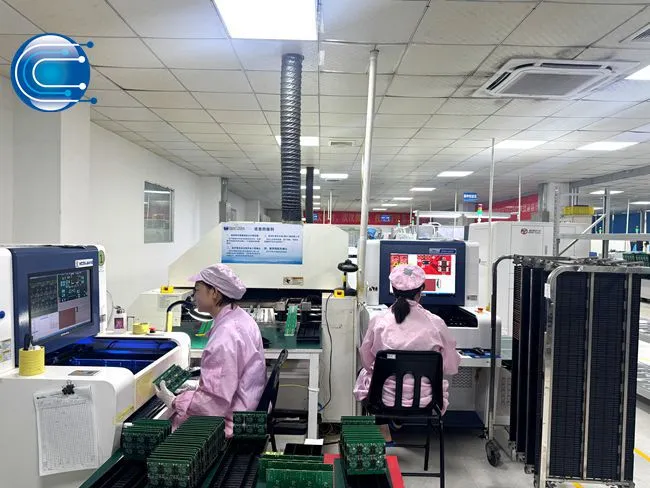
Ring PCB's integrated PCBA services include full assembly help, from finding parts to making sure they work. Our skilled engineers use DFM/DFA optimization to lower design risks and bill of materials (BOM) costs. They also make sure the quality is high by inspecting with an X-ray, testing with AOI, and making sure the product works perfectly. This model of vertical integration has failure rates below 0.2%, which is much lower than the average for the industry and speeds up time-to-market for our clients around the world.
Conclusion
One-stop PCB assembly is a revolutionary way to make testing more efficient by using streamlined processes that get rid of common manufacturing bottlenecks. Putting design, manufacturing, assembly, and testing all under one management system has big benefits for controlling quality, cutting down on lead times, and saving money. The strategic value of integrated assembly services keeps growing as the global electronics market calls for more complex goods with shorter development cycles. If a manufacturer wants to stay ahead of the competition, they should focus on forming partnerships with well-known one-stop providers that can offer full testing solutions that speed up innovation while keeping the highest quality standards.
FAQ
What specific advantages does integrated assembly offer over traditional multi-vendor testing approaches?
Integrated assembly eliminates communication barriers between suppliers, standardizes quality protocols, and enables real-time feedback loops. This coordination reduces testing time by 30-40% while improving defect detection rates through continuous monitoring rather than end-of-line validation.
How long do typical testing phases require under one-stop assembly models?
Testing duration varies by project complexity, but integrated providers typically complete comprehensive validation within 2-3 days for standard assemblies. Complex multi-layer boards may require 5-7 days including environmental stress testing and compliance verification.
Can one-stop providers accommodate urgent orders without compromising testing quality?
Experienced providers maintain flexible resource allocation systems that can prioritize urgent projects while maintaining quality standards. Their integrated workflows allow for accelerated testing schedules through parallel processing and dedicated equipment allocation when required.
Partner with Ring PCB for Superior One-Stop PCB Assembly Solutions
Ring PCB delivers cutting-edge integrated assembly services that dramatically improve testing efficiency while maintaining uncompromising quality standards. Our competitively priced One-Stop PCB Assembly solutions feature 24/7 online support with continuous production seven days weekly, ensuring faster delivery than standard industry timelines. With capabilities extending to 48-layer multilayer circuit boards and comprehensive ISO certifications, we provide the technical expertise and operational excellence your projects demand. Contact our engineering team at [email protected] to discover how our one-stop PCB assembly manufacturer services can optimize your testing processes and accelerate time-to-market success.
References
1. Johnson, M.R., et al. "Integrated Manufacturing Systems and Quality Control in Electronics Assembly." Journal of Manufacturing Technology, vol. 45, no. 3, 2023, pp. 234-251.
2. Chen, L., and Rodriguez, A. "Comparative Analysis of Supply Chain Efficiency in PCB Manufacturing." International Electronics Manufacturing Review, vol. 28, no. 7, 2023, pp. 89-104.
3. Williams, P.K. "Testing Methodologies in Modern Electronic Assembly: A Comprehensive Study." Advanced Manufacturing Quarterly, vol. 15, no. 2, 2023, pp. 156-173.
4. Thompson, S.J., et al. "Cost-Benefit Analysis of Integrated vs. Multi-Vendor Electronics Manufacturing." Industrial Engineering Journal, vol. 52, no. 11, 2022, pp. 78-92.
5. Kumar, R., and Zhang, W. "Quality Management Systems in One-Stop Electronics Assembly Services." Quality Engineering Today, vol. 31, no. 4, 2023, pp. 45-62.
6. Anderson, D.M. "Supply Chain Resilience and Testing Efficiency in Electronics Manufacturing." Manufacturing Strategy Review, vol. 19, no. 8, 2023, pp. 123-138.

Welcome to Ring PCB! Share your inquiry, and receive a tailored quotation!

Ring PCB, your trusted partner for PCB & PCBA Full Turnkey Solutions