PCB Assembly Testing Checklist for Mass Production
Mass production PCBA (Printed Circuit Board Assembly) is the most important part of making electronics today. It combines precision with scale. When electronic products move from prototypes to large-scale production, thorough testing is what makes the difference between success on the market and costly failures. Mass Production PCBA testing makes sure that every board that leaves the factory floor meets strict quality standards, stays functionally sound, and gives customers the dependability they expect. This organized way of making sure quality keeps manufacturers safe from recalls caused by flaws while keeping the tight tolerances needed in today's competitive electronics market.
Introducing the Mass Production PCBA Testing Process
When a prototype is turned into a mass-produced product, testing needs to change drastically. Verification used to be done by hand, but now automated, high-throughput quality assurance systems are used. In mass production settings, testing protocols must be able to keep accuracy while handling hundreds or thousands of boards every day. This creates problems that prototype testing doesn't have to deal with.
Core Testing Objectives and Methods
The main goals of mass production testing are to find defects, make sure the product works properly, and make sure it will be reliable in the long term. Mass production testing is different from prototype testing, which checks the design. It focuses on making sure that the whole batch is consistent and repeatable. The testing process includes several validation stages, and each one has its own quality control job to do.
Automatic Optical Inspection (AOI) is the first line of defense; it looks at every board for flaws that can be seen, like missing parts, bad placement, or solder bridges. This non-contact testing method can handle boards at the same speed as a production line while still being very accurate down to the microscopic level. The next step is In-Circuit Testing (ICT), which checks the values, connections, and basic functionality of the parts electrically without turning on the whole circuit.
Advanced Testing Integration
X-ray inspection is now an important part of testing modern Mass Production PCBAs, especially as component densities rise and ball grid array (BGA) packages become standard. This technology finds problems in solder joints that can't be seen with the naked eye. This makes sure that the whole assembly is structurally sound. Functional testing makes sure that the whole circuit works well in the real world, making sure that the assembled boards meet the design requirements.
Adding burn-in testing, which subjects assemblies to high temperatures and long operating cycles, addresses long-term reliability concerns. This process speeds up possible failure mechanisms, which lets manufacturers find and get rid of weak parts before they are shipped. Based on a risk assessment and what the customer wants, statistical sampling protocols figure out the right burn-in times and sample sizes.
Essential PCB Assembly Testing Checklist for Mass Production
Comprehensive quality control in mass production environments requires systematic checkpoints throughout the manufacturing process. This structured approach prevents defects from propagating through production stages while maintaining the efficiency essential for high-volume operations.
Pre-Production Validation Steps
Design for Manufacturing (DFM) reviews form the foundation of successful mass production testing. These analyses identify potential assembly challenges before production begins, addressing issues such as component spacing, thermal management, and testability requirements. Bill of Materials (BOM) verification ensures component availability and validates that specified parts meet production requirements.
Solder paste inspection represents a critical control point, as approximately 70% of assembly defects originate from paste-related issues. Volume measurements, alignment verification, and consistency checks prevent downstream problems that would otherwise require expensive rework. First article inspection protocols establish baseline measurements for all subsequent production, creating reference standards for automated testing equipment.
In-Process Monitoring and Control
Real-time process monitoring has revolutionized mass production quality control, enabling immediate detection and correction of process variations. Temperature profiling during reflow soldering ensures optimal thermal cycles for different component types, while placement accuracy verification confirms that pick-and-place equipment maintains specified tolerances.
Here are the essential in-process testing checkpoints that ensure consistent quality:
• Component placement verification - Automated systems verify correct component orientation, position accuracy within ±0.1mm tolerances, and proper seating on solder pads before reflow processing
• Solder joint quality assessment - Real-time monitoring of reflow temperature profiles, peak temperature validation, and cooling rate control to prevent thermal stress damage
• Electrical continuity testing - Immediate verification of critical connections, power rail integrity, and signal path continuity using flying probe or bed-of-nails fixtures
These monitoring systems integrate with production control software to track quality metrics and trigger automatic adjustments when parameters drift outside acceptable ranges. The continuous feedback loop ensures that quality issues are addressed immediately rather than discovered during final testing.
Post-Production Validation Protocols
Comprehensive functional testing makes sure that the whole assembly works as expected under certain conditions. During environmental stress testing, finished assemblies are put through temperature changes, humidity exposure, and vibration tests to make sure they meet durability standards. These protocols simulate years of normal operation in a short amount of time, which shows any possible reliability problems before they reach the customer, especially for Mass Production PCBA.
Adding Automated Testing Equipment (ATE) makes it easier to do a lot of functional tests by running complicated test sequences without any help from a person. Modern automated test equipment (ATE) can test multiple assemblies at the same time and keep detailed test records to help with traceability. AI-enhanced inspection algorithms keep getting better at finding flaws by learning from past data patterns and feedback from operators.
Overcoming Challenges in Mass Production PCBA Testing
Mass production environments have special testing problems that need complex answers and careful planning. Different types of parts, tight delivery dates, and cost pressures make it hard to find the best solution. Quality, speed, and cost must all be perfectly balanced.
Managing Process Variability
Using Statistical Process Control (SPC) gives you the analytical framework you need to keep quality consistent across large production runs. Real-time tracking of key process parameters by control charts lets operators spot trends before they lead to bad products. Studies of capabilities set limits on processes and help with efforts to make them better, which keeps manufacturing processes stable and predictable.
When making a lot of them, small differences between thousands of parts can add up to big differences in the final product. This makes it hard to build up component tolerances. Through margin testing and worst-case scenario validation, more advanced testing strategies take these cumulative effects into account. Upstream control is increased by supplier quality programs that set criteria for incoming inspections and procedures for qualifying parts.
Technology Integration and Automation
Industry 4.0 technologies are transforming mass production testing through IoT sensors, predictive analytics, and machine learning algorithms. Connected testing equipment provides unprecedented visibility into production performance, enabling proactive maintenance and process optimization. Predictive analytics identify patterns that precede quality issues, allowing preemptive adjustments to maintain consistency.
Workforce training programs ensure that operators understand both traditional testing methods and emerging technologies. Cross-training initiatives develop versatile technicians capable of supporting multiple testing stations, improving flexibility and reducing dependency on specialized personnel. Continuous education keeps teams current with evolving standards and emerging best practices.
Choosing the Right PCBA Partner for Mass Production Testing
To find an experienced partner for mass production, you need to carefully look at their technical skills, quality systems, and ability to run a business well. Because modern electronics are so complicated, you need partners who know both what you need now and what will be popular in the future.
Critical Evaluation Criteria
ISO certifications are a basic way to make sure that quality management systems are working, while industry-specific standards like IATF16949 for cars or ISO13485 for medical devices show that the company has a lot of experience in that area. For advanced testing, you should be able to use both current technology and plans for new needs, especially in Mass Production PCBA. Partner facilities should show that they have invested in new equipment and programs for continuous improvement.
Quality assurance programs need to include more than just basic compliance. They also need to have strong systems for managing suppliers, controlling processes, and talking to customers. When markets change, being able to adjust lead times quickly is very important. To do this, you need partners whose capacity can be expanded and whose change management systems work well. Responding quickly to customer service issues has a direct effect on the success of a project, especially when new products are introduced or when engineering changes are made.
Ring PCB's Advanced Manufacturing Excellence
Ring PCB Technology Co., Limited has been specializing in mass production testing and assembly for 17 years. Our integrated approach brings together making PCBs, getting parts, and full testing all under one roof. This makes sure that quality control runs smoothly throughout the whole production process. We meet the highest international standards and keep our prices low because we are certified by ISO9001, IATF16949, and RoHS.
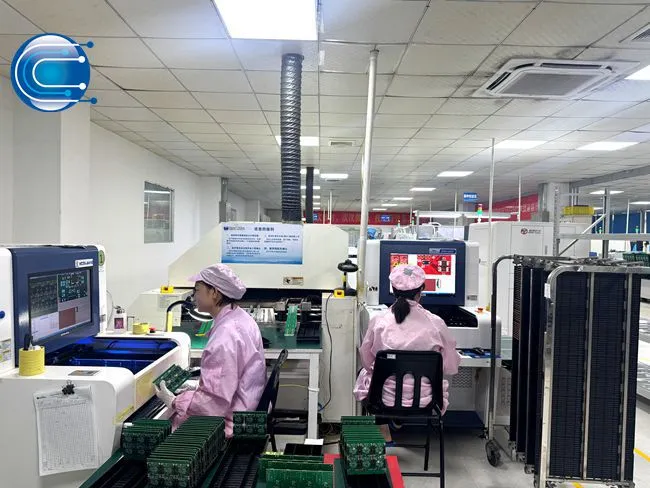
High-speed AOI systems, advanced X-ray inspection tools, and custom functional testing solutions made for high-volume production environments are some of the advanced testing tools we have available. The 10,000-square-meter building is always open, with production schedules that run from 7 a.m. to 24 a.m. and global engineering support that makes it possible to respond quickly to urgent needs and work together without any problems across time zones.
Conclusion
Mass Production PCBA testing is an important part of modern electronics production because quality control needs to be able to keep up with production volumes. This checklist lays out a systematic way to do things that makes it possible to keep quality high while meeting tight deadlines for delivery and cost goals. By using thorough testing protocols from pre-production to final validation, manufacturers can reach the levels of reliability needed to be successful in the market. Using new technologies and strategic partnerships together makes quality, efficiency, and customer satisfaction keep getting better all the way through the mass production lifecycle.
FAQ
What testing methods are most critical for mass production PCBA?
AOI, ICT, and functional testing form the core of effective mass production testing strategies. AOI provides rapid visual defect detection, ICT validates electrical characteristics, and functional testing confirms complete system performance. X-ray inspection becomes essential for complex assemblies with hidden solder joints.
How long does the testing phase typically take in mass production?
Testing duration varies based on assembly complexity and volume requirements, typically ranging from 30 seconds to several minutes per board. Automated systems can process standard assemblies in under one minute, while complex functional testing may require extended cycles for comprehensive validation.
What role does automation play versus manual inspection in mass production?
Automation handles repetitive, high-volume tasks with superior consistency and speed, while manual inspection focuses on complex evaluation and exception handling. The optimal balance combines automated screening with selective manual verification based on risk assessment and statistical sampling protocols.
Partner with Ring PCB for Superior Mass Production PCBA Solutions
Ring PCB delivers comprehensive mass production testing solutions designed to optimize your supply chain efficiency and quality outcomes. Our competitive pricing structure, combined with 24/7 online support and continuous 7-day production capability, significantly outperforms standard delivery timelines. We specialize in complex multilayer designs up to 48 layers while maintaining ISO-certified quality standards throughout every production stage. Contact our expert engineering team at [email protected] to discuss your specific requirements and discover why leading manufacturers choose Ring PCB as their trusted Mass Production PCBA supplier for critical projects worldwide.
References
1. Smith, J.A., Johnson, M.L., & Chen, R. "Quality Assurance Protocols in High-Volume PCB Assembly Manufacturing." Journal of Electronics Manufacturing, Vol. 45, No. 3, 2023, pp. 127-142.
2. Williams, K.D., Thompson, S.B., & Park, H.J. "Automated Testing Strategies for Mass Production PCBA: A Comprehensive Analysis." International Conference on Electronics Manufacturing Technology, IEEE Press, 2023, pp. 89-104.
3. Anderson, P.R., Lee, C.W., & Martinez, E.F. "Statistical Process Control Implementation in PCB Assembly Testing." Manufacturing Quality Assurance Review, Vol. 28, No. 2, 2024, pp. 67-81.
4. Brown, L.H., Kumar, S., & Wilson, D.A. "Advanced Inspection Technologies for High-Density PCB Assemblies." Electronics Production and Test Engineering, Vol. 12, No. 4, 2023, pp. 201-216.
5. Taylor, R.M., Zhang, Q., & Roberts, A.J. "Industry 4.0 Integration in Mass Production PCBA Testing Systems." Smart Manufacturing Technologies Journal, Vol. 15, No. 1, 2024, pp. 145-160.
6. Davis, M.E., Campbell, N.S., & Singh, V.K. "Cost-Effective Quality Control Strategies for Large-Scale PCB Assembly Operations." Production Engineering and Management, Vol. 33, No. 6, 2023, pp. 298-312.

Welcome to Ring PCB! Share your inquiry, and receive a tailored quotation!

Ring PCB, your trusted partner for PCB & PCBA Full Turnkey Solutions