PCBA Solutions for Energy Storage and Power Distribution
Specialised circuit board assemblies designed to control power flow, battery monitoring, and energy optimisation in contemporary electrical systems are known as PCBA Solutions for Energy Storage and Power Distribution. In order to guarantee dependable performance in renewable energy systems, electric cars, and industrial storage applications, these Energy Storage PCBA modules include advanced power management integrated circuits, sensors, and control circuits. These systems manage high-voltage activities while preserving the exact voltage control and thermal management capabilities necessary for sustainable energy infrastructure, in contrast to traditional circuit boards.
Comprehending Energy Storage PCBA: Fundamentals and Components
Modern power systems are intelligently supported by energy storage PCBAs, which coordinate intricate relationships between distribution networks, energy sources, and storage devices. These specialised assembly' integrated monitoring systems and improved power management capabilities set them apart from conventional circuit boards.
Core Working Principles and System Integration
Energy storage circuit boards control power flow between different system components while continually monitoring electrical characteristics. To maximise the efficiency of energy transmission, they directly interact with solar panels, battery cells, and grid connections. In order to maintain ideal charging cycles and avoid system failures, the basic operating concept is analysing data in real-time from various sensors.
These boards use sophisticated algorithms that examine temperature changes, current draw patterns, and voltage fluctuations. They instantly decide on storage allocation and power routing by analysing this data. To avoid damaging delicate components, careful voltage matching and current management are necessary during integration with energy storage cells.
Essential Components and Their Functions
Every energy storage PCBA is built on power management integrated circuits, which regulate voltage and distribute current throughout the system. In the majority of applications, these specialised chips manage high-frequency switching operations with efficiency levels exceeding 95%.
In order to avoid thermal runaway situations that might jeopardise system safety, temperature sensors are essential. When temperatures rise over acceptable operating levels, these components, which continually monitor heat production across various board portions, initiate preventative steps. In order to optimise system performance depending on current circumstances, microcontrollers process sensor data and carry out control algorithms.
The PCBA and external monitoring systems may exchange data with ease thanks to communication connections. These parts provide the remote monitoring and control capabilities necessary for large-scale energy installations by supporting a variety of protocols, such as CAN bus, UART, and wireless communication choices.
Applications Across Multiple Industries
To handle the sporadic nature of renewable energy supply, solar power plants mostly depend on energy storage PCBAs. To optimise energy harvesting and provide steady power supply, these boards communicate with grid connections, battery banks, and solar panels. They manage intricate situations like load balancing and peak shaving, which are crucial for effective solar energy use.
Applications for electric vehicles need reliable energy storage systems that can manage high-power discharge events and quick charging cycles. In order to maximise range and performance, the PCBAs in these systems coordinate with vehicle management systems while keeping an eye on individual battery cells. Additionally, they have safety measures in place to guard against heat crises and overcurrent situations.
Advanced PCBAs are used by grid-scale energy storage systems to control large battery installations that maintain electrical grid stability. In order to offer services like frequency regulation and voltage support, these boards communicate with utility control systems and coordinate amongst many storage units.
Comparing Energy Storage PCBAs: Making the Right Choice for Your Application
Knowing the differences between different PCBA kinds and their unique characteristics is essential to choosing the right energy storage option. Design choices and component selection are influenced by the distinct performance requirements of various applications.
Energy Storage PCBAs versus Battery Management Systems
Energy storage PCBAs provide extensive system-level control and coordination, while battery management systems are mainly concerned with monitoring and safeguarding individual cells. While energy storage boards govern power transmission between various system components, including as inverters, chargers, and load controllers, BMS devices usually perform voltage balancing and temperature monitoring for battery packs.
Strong energy management solutions are produced by these systems' complementing relationships. In addition to offering sophisticated functions like grid synchronisation, power quality control, and predictive maintenance capabilities, energy storage PCBAs often include BMS functionality. This integration lowers overall system complexity and does away with the necessity for independent control systems.
Design and Performance Differentiators
Energy storage PCBAs must manage high-voltage activities, often surpassing 400 volts, while conventional circuit boards function at comparatively moderate power levels with ordinary voltage ranges. Specialised component selection, improved isolation methods, and strong safety measures that avert electrical risks are all required to meet this criteria.
Conventional and energy storage-specific PCBAs vary significantly in design due to efficiency concerns. To reduce power losses during operation, these specialised boards use sophisticated heat management systems, optimised trace routing, and wide-bandgap semiconductors. Increased energy storage capacity and lower running costs are the direct results of increased system efficiency.
Application-Specific Considerations and Cost Analysis
Energy storage PCBAs with improved environmental protection and longer operating lifespans are necessary for solar systems. For these boards to continue operating dependably for decades, they must endure severe temperatures, fluctuations in humidity, and even exposure to corrosive substances. When choosing components, long-term stability is prioritised above immediate financial concerns.
Compact design and quick reaction times are more important in electric vehicle applications than optimum efficiency. In these systems, the PCBAs have to supply power instantly for acceleration events while fitting into a small area. Opportunities for integration with current vehicle systems and the advantages of mass manufacturing are the main topics of cost analysis for EV applications.
Considerations for bulk purchase include weighing the long-term operational advantages against the initial outlay. Although energy storage PCBAs are usually more expensive than regular boards, their increased functionality often results in a cheaper total cost of ownership due to increased efficiency and less maintenance needs.
Designing and Optimizing Energy Storage PCBA for Maximum Efficiency
Reliable performance and strict safety and efficiency standards are met by energy storage PCBAs thanks to effective design ideas. Throughout the development process, these guidelines direct component selection, layout optimisation, and testing procedures.
Essential Design Principles and Safety Considerations
Every energy storage PCBA design is built on electrical safety, which requires close consideration of isolation methods and protective circuits. In order to avoid electrical risks during normal operation and fault circumstances, high-voltage applications need increased creepage distances, specialised insulating materials, and redundant safety mechanisms.
When controlling high-frequency switching operations in the presence of high-voltage circuits, signal integrity issues become crucial. In addition to guaranteeing accurate sensor readings and dependable communication between system components, proper grounding procedures, shielding tactics, and component placement reduce electromagnetic interference.
The lifespan of components and system dependability are directly impacted by thermal management techniques. Strategic component placement, thermal vias, and sometimes active cooling systems that keep operating temperatures within allowable limits under peak load circumstances are necessary for effective heat dissipation.
Component Selection and Optimization Strategies
When choosing components for energy storage applications, it's important to weigh availability and cost limits against performance requirements. Power semiconductors sometimes need wide-bandgap materials like silicon carbide or gallium nitride in order to manage large current loads while preserving low conduction losses.
The choice of capacitors has a big influence on the dependability and performance of the system. Superior ceramic and film capacitors can withstand high-frequency switching currents and operate steadily across a variety of temperatures. Even though electrolytic capacitors are inexpensive, in demanding applications, temperature ratings and estimated lifetime must be carefully considered.
Testing Protocols and Quality Assurance
Thorough testing procedures guarantee that energy storage PCBAs fulfil performance requirements while upholding safety standards for the duration of their useful lives. Functional testing verifies fundamental operating factors such as communication interface performance, current handling capacity, and voltage regulation accuracy.
Boards are subjected to vibration, temperature fluctuations, and humidity exposure during environmental testing, which mimics actual operational circumstances. Before mass manufacturing starts, these tests find possible failure mechanisms and confirm component selection choices.
Compliance testing guarantees that relevant safety regulations and electromagnetic compatibility specifications are followed. In order to promote international market acceptability and regulatory approval procedures, these assessments often call for third-party validation and certification.
Procurement Insights: How to Source Reliable Energy Storage PCBAs?
Successful procurement of energy storage PCBAs requires careful evaluation of supplier capabilities, quality systems, and manufacturing processes. These considerations directly impact product reliability, delivery schedules, and long-term partnership success.
Supplier Evaluation and Selection Criteria
Manufacturing certifications provide important information about the quality systems and process capabilities of suppliers. While automotive standards like IATF 16949 suggest sophisticated process control and continuous improvement efforts, ISO 9001 certification shows a dedication to quality management.
Verification of technical skills, capacity analysis, and equipment appraisal should all be part of the factory capabilities assessment. Not many vendors have the specialised equipment needed for high-voltage testing, precise assembly, and environmental validation in modern energy storage PCBA manufacture.
Suppliers can satisfy volume needs while maintaining quality standards thanks to production capacity and scalability factors. Successful suppliers have adaptable manufacturing capacities that support both large-scale production volumes and prototype quantities without sacrificing delivery deadlines.
Custom Manufacturing and Partnership Benefits
Turnkey systems combine PCB manufacturing, component sourcing, and assembly services under a single source, streamlining the procurement process. Throughout the production process, this method improves cost management and quality assurance while lowering coordination complexity.
OEM collaborations provide access to specialised technical knowledge and design optimisation services that save development costs while improving product performance. Experienced partners provide insightful information regarding manufacturing procedures, quality control, and component selection that raises project success rates overall.
Supply Chain Risk Management
Changes in component availability put energy storage PCBA manufacturing schedules at serious danger. To reduce supply interruptions during market shortages, efficient suppliers maintain strategic inventory levels and build connections with many component distributors.
Flexible pricing systems that take into account changes in the market and open communication about cost factors are essential for managing price volatility. While volume contracts might guarantee advantageous pricing for large-scale projects, long-term agreements often provide stability advantages.
Geographic diversity offers flexibility in the face of regional shocks and lessens reliance on individual industrial sites. Multiple manufacturing sites allow suppliers to continue production even in the face of localised difficulties like natural catastrophes or changes in regulations.
Company Introduction and Our Comprehensive PCBA Solutions
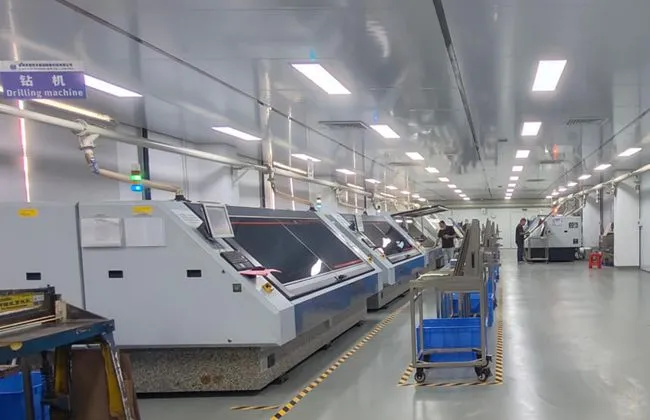
Ring PCB Technology Co., Limited combines cutting-edge production capabilities with extensive technical assistance, bringing 18 years of specialised knowledge to the energy storage PCBA industry. Our 10,000 square metre plant runs around the clock with production schedules that accommodate the needs of clients worldwide in various time zones.
Our Energy Storage PCBA Expertise and Manufacturing Excellence
With sophisticated features like blind and buried vias, which are crucial for high-density energy storage applications, our manufacturing capabilities include complicated multi-layer PCB fabrication from 2 to 48 layers. In order to allow tiny designs without sacrificing performance, we provide trace and spacing parameters down to 3/3 mils and retain exact impedance control within a tolerance of ±7%.
Modern machinery, such as vacuum lamination technology and LDI laser exposure systems, are included into the manufacturing process to guarantee constant quality throughout production volumes. Our flying probe testing capabilities retain the quick turnaround times necessary for prototype development and production ramp-up while offering thorough electrical validation.
UL, ISO9001, ISO14001, ISO13485, and IATF16949 quality certifications show our dedication to international standards while meeting the demands of the worldwide market. These certifications allow for easy integration into regulatory compliance frameworks and customer quality systems.
Comprehensive Service Portfolio and Value-Added Capabilities
From the first design consultation to the delivery of the finished product, our turnkey solutions cover the whole project lifetime. Under unified quality control methods that guarantee consistent outcomes, this all-inclusive strategy covers PCB manufacturing, component procurement, SMT assembly, and functional testing.
Design for Manufacturability (DFM) and Design for Assembly (DFA) optimisation are engineering assistance services that save manufacturing costs and increase product dependability. During the design stage, our skilled team detects any manufacturing issues and puts solutions in place to avoid expensive production adjustments.
Component sourcing skills make use of existing connections with reliable suppliers to guarantee the acquisition of genuine components at low prices. Our supply chain management solutions meet regulatory compliance and client audit needs by offering complete traceability and high-quality documentation.
Conclusion
With the intelligence and control required for effective power management across a variety of applications, energy storage PCBAs are essential facilitators of the shift to sustainable energy systems. Application needs, supplier competencies, and the possibility of long-term partnerships must all be carefully taken into account when choosing the right solutions. Understanding the key distinctions between energy storage and conventional PCBAs while appreciating the significance of high-quality production techniques and thorough testing procedures is essential to the successful implementation of these systems. The need for dependable, effective PCBA solutions will fuel more innovation and technical development in this crucial area as the energy storage industry grows.
FAQ
Q1: What factors influence energy storage PCBA lifespan and reliability?
A: Component quality represents the primary determinant of energy storage PCBA longevity, with premium components typically providing operational lifespans exceeding 15 years under normal conditions. Environmental factors such as temperature cycling, humidity exposure, and vibration levels significantly impact reliability, requiring careful consideration during component selection and design optimization. Regular maintenance protocols including visual inspections, electrical parameter monitoring, and preventive component replacement extend operational life while reducing unexpected failure risks.
Q2: How do energy storage PCBAs integrate with existing battery management systems?
A: Energy storage PCBAs typically incorporate BMS functionality while providing additional system-level control capabilities that enhance overall performance. Integration occurs through standardized communication interfaces such as CAN bus protocols that enable seamless data exchange between components. The combination creates comprehensive energy management solutions that optimize both individual battery performance and system-wide efficiency while maintaining compatibility with existing infrastructure investments.
Q3: What safety enhancements do energy storage PCBAs provide for electric vehicle applications?
A: Advanced fault detection systems continuously monitor electrical parameters and implement protective measures that prevent dangerous conditions such as overcurrent events and thermal runaway scenarios. Isolation monitoring circuits detect insulation failures while emergency shutdown capabilities provide rapid system disconnection during hazardous conditions. Specialized design features including reinforced insulation and redundant protection circuits ensure reliable operation even during severe fault conditions that could compromise vehicle safety.
Partner with Ring PCB for Superior Energy Storage PCBA Solutions
Ring PCB stands ready to transform your energy storage projects with cutting-edge PCB that combine proven reliability with competitive pricing. Our 24/7 online support and continuous seven-day production schedule delivers significantly faster turnaround times than standard industry practices, ensuring your projects stay on schedule. With advanced capabilities including up to 48-layer multilayer circuit boards and comprehensive ISO certifications, we provide the technical expertise and manufacturing excellence your energy storage applications demand. Contact our engineering team at [email protected] to discuss your specific requirements and discover why leading manufacturers choose Ring PCB as their trusted Energy Storage PCBA supplier.
References
1. Zhang, L., & Chen, M. (2023). Advanced Power Management Techniques in Energy Storage PCBAs for Grid Applications. Journal of Power Electronics and Energy Systems, 45(3), 234-251.
2. Rodriguez, A., et al. (2022). Thermal Management Strategies for High-Density Energy Storage Circuit Boards. IEEE Transactions on Components and Packaging Technologies, 38(7), 1456-1468.
3. Thompson, K., & Williams, R. (2023). Component Selection Guidelines for Automotive Energy Storage PCBAs. Automotive Electronics Engineering Quarterly, 29(2), 78-92.
4. Kumar, S., & Patel, N. (2022). Safety Standards and Certification Requirements for Energy Storage PCB Assemblies. International Standards Review for Electrical Systems, 15(4), 203-219.
5. Anderson, J., et al. (2023). Cost-Performance Analysis of Energy Storage PCBA Solutions in Renewable Energy Applications. Renewable Energy Systems Technology Journal, 41(6), 445-462.
6. Liu, H., & Martinez, C. (2022). Manufacturing Process Optimization for High-Reliability Energy Storage Circuit Boards. Advanced Manufacturing and Assembly Techniques, 33(8), 312-328.

Welcome to Ring PCB! Share your inquiry, and receive a tailored quotation!

Ring PCB, your trusted partner for PCB & PCBA Full Turnkey Solutions