Smart PCB Assembly: How PCBA Factories Adapt to Industry 4.0
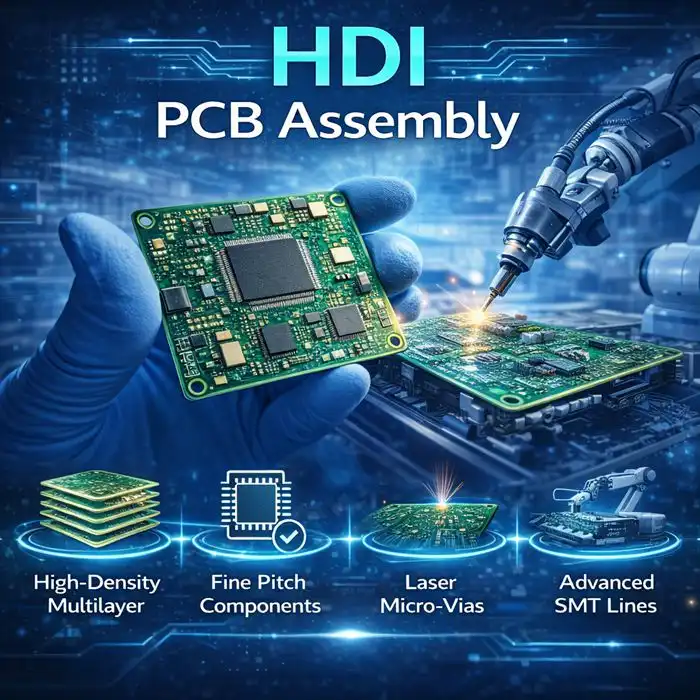
One example of how advanced Industry 4.0 technology and traditional electronics manufacturing combine to fundamentally alter PCBA factory operations is Smart PCB Assembly. This novel approach integrates Internet of Things (IoT) sensors, automated digital technology, and artificial intelligence algorithms into every stage of the assembly process. Unlike traditional methods that mostly rely on manual monitoring and reactive quality control, smart assembly creates linked production ecosystems where machines communicate in real-time, predict potential issues, and modify manufacturing settings on their own. The shift not only drastically reduces manufacturing costs and human error, but it also enables manufacturers to achieve unprecedented levels of accuracy, traceability, and efficiency.
Comprehending Smart PCB Assembly in the Industry 4.0 Era
Real-Time Data Integration and Digital Twin Technology
Thorough data gathering and analysis across the production cycle is the cornerstone of smart assembly. Thousands of sensors are used throughout the production lines of contemporary PCBA factories to collect data on environmental conditions, solder paste viscosity, temperature fluctuations, and component placement precision. Before making adjustments on the actual production line, engineers can simulate various situations and optimize parameters by feeding this data into digital twin systems that build virtual reproductions of the complete manufacturing process.
Digital twin technology particularly excels in predicting component behavior under various stress conditions. Proactive modifications that preserve constant output quality are made possible by advanced algorithms that examine prior performance data to find trends that precede quality concerns. For procurement managers looking for dependable suppliers who can provide consistent delivery dates and quality standards, this predictive capability is important.
Artificial Intelligence in Component Placement and Quality Control
Accurate component placement and flaw detection have been transformed by machine learning techniques. AI-powered vision systems installed in contemporary pick-and-place robots can detect contamination problems, missing parts, and component orientation abnormalities with accuracy rates higher than 99.8%. Particularly in Smart PCB Assembly, these systems are constantly learning from every assembly cycle, improving their detection algorithms to identify ever-more-subtle flaws that human operators could overlook.
AI integration goes beyond basic flaw detection to provide thorough quality prediction. In order to anticipate possible quality problems before they materialize, smart systems examine environmental factors, process parameters, and component batch information. From medical equipment to automotive electronics, this proactive strategy guarantees that goods fulfill strict quality criteria while drastically lowering rework rates.
Evolution from Traditional to Smart PCB Assembly
Limitations of Conventional Assembly Methods
Scalability and consistency of quality are impacted by the inherent limitations of traditional PCB assembly techniques. Despite their thoroughness, manual inspection techniques include variability depending on operator weariness and expertise. Without significant reprogramming, traditional automated optical inspection systems struggle to adjust to new component types or package variances since they rely on predetermined criteria.
According to statistical analysis, smart assembly techniques regularly produce defect rates below 50 parts per million (PPM), whereas traditional assembly methods often reach defect rates between 100 and 500 PPM. Continuous monitoring and real-time modification capabilities that avoid quality drift over long production runs are the cause of this improvement.
Transformative Technologies Driving Smart Assembly
The shift to smart assembly includes a number of innovative technologies that complement one another to improve manufacturing capabilities. Deep learning algorithms are increasingly used in automated optical inspection systems to find flaw patterns in various product lines without the need for human programming. By keeping large databases of permissible component variations, these systems are able to differentiate between genuine flaws and typical manufacturing tolerances.
Robotics integration now includes adaptive manipulation capabilities in addition to basic pick-and-place tasks. Contemporary robotic systems are able to modify their handling strategies in response to ambient factors, force sensor feedback in real time, and component fragility. Processing mixed-technology assemblies that incorporate both surface-mount and through-hole components makes this flexibility particularly useful.
Instead than reacting to unplanned breakdowns, predictive maintenance algorithms organize repair tasks during scheduled downtime based on equipment performance indicators. By optimizing maintenance scheduling, this method prolongs the lifespan of equipment and avoids unexpected interruptions by up to 70%.
Evaluating Smart PCB Assembly Solutions for Your Business
Comprehensive Assessment Framework
It is necessary to systematically evaluate a number of technical and business criteria in order to choose the best smart assembly solutions. Since deploying state-of-the-art systems without sufficient infrastructure support might result in integration issues and lengthy learning curves, technology readiness is an important factor to take into account. Strong IT infrastructure, knowledgeable technical staff, and thorough change management procedures are necessary for successful implementation.
Both present volume requirements and future scalability requirements must be taken into account when evaluating production capacity. Smart assembly systems perform best in settings where high production quantities make the initial expenditure on sophisticated machinery and software platforms worthwhile. Instead of building up their own capabilities, smaller businesses could find it more advantageous to collaborate with well-known smart assembly suppliers.
Certification and Quality Standards Assessment
Industry certifications offer trustworthy measures of a manufacturer's dedication to process discipline and quality. While ISO 14001 denotes environmental responsibility in industrial operations, ISO 9001 certification shows commitment to quality management principles. ISO 13485 certification is crucial for medical device applications, while IATF 16949 compliance is necessary for automotive electronics, especially in Smart PCB Assembly.
UL certification guarantees that production procedures adhere to safety regulations for electronic assemblies, which is crucial for industrial and consumer electronics applications. Verification of RoHS compliance ensures that assembled items adhere to environmental standards regarding prohibitions on hazardous substances.
All of these important certifications are maintained by Ring PCB Technology, proving our dedication to fulfilling a variety of industry demands. To guarantee ongoing adherence to changing standards, our quality management systems are routinely audited by outside parties.
Geographic and Service Portfolio Considerations
Prominent smart assembly suppliers usually provide extensive service portfolios that go beyond simple assembly tasks. Design for Manufacturability consultancy lowers material costs and optimizes product designs for effective assembly. In order to guarantee dependable component supply at competitive pricing, component sourcing services make use of existing supplier connections.
In order to validate designs quickly before committing to mass manufacturing, advanced providers can provide rapid prototyping capabilities. Startups and businesses creating cutting-edge products with strict time-to-market constraints find this service very helpful.
Optimizing Your Smart PCB Assembly Experience
Design for Manufacturability Best Practices
Design optimization that takes use of automated systems' capabilities while avoiding typical manufacturability hazards is the first step in a successful smart assembly project. Because standardized component packages and uniform positioning requirements maximize the efficiency of smart assembly systems, component selection is critical.
Assembly efficiency and quality results are greatly impacted by trace routing and route placement. Complex routing patterns can be accommodated by smart assembly systems, but more consistent placement accuracy is made possible by designs that reduce variances in component density. The placement of test sites strategically reduces the requirement for human interaction while facilitating automated testing processes.
As component densities rise and smart assembly technologies allow for closer component spacing, thermal management considerations become more crucial. Reliable long-term performance in operating settings is ensured by proper thermal design, which also reduces component stress during reflow soldering.
Proactive Troubleshooting and Maintenance Strategies
Proactive problem identification and resolution are made possible by the vast amounts of diagnostic data generated by smart assembly systems. Temperature profiling during reflow soldering helps identify any problems with thermal stress before they become field failures. Placement equipment vibration monitoring reveals bearing wear or alignment problems that may compromise placement accuracy.
Frequent software upgrades guarantee that enhanced component libraries and algorithm advancements continue to benefit smart systems. Maintaining optimal system performance as production requirements change is made easier by building partnerships with equipment vendors who offer continuing technical support and training.
Systems for component traceability that are integrated into intelligent assembly procedures offer thorough documentation for regulatory compliance and quality investigations. These systems provide for quick root cause investigation in the event of quality problems by tracking component lot codes, assembly settings, and test results for every single unit.
Cost Management and Lead Time Optimization
Understanding how design complexity, production volume, and manufacturing efficiency relate to one another is essential for efficient cost management in smart assembly environments. Smart systems may manage intricate assemblies more effectively than conventional techniques, but for maximum cost-effectiveness, manufacturing capabilities and design sophistication must be balanced.
For smart assembly systems, minimum order quantity negotiations should take setup costs and changeover time needs into account. Although these systems are excellent at quickly switching between various product configurations, modest batch sizes that balance setup and inventory carrying costs are usually preferred for economic optimization.
Future Trends and Strategic Insights in Smart PCB Assembly
Advanced AI and Machine Learning Applications
The next generation of smart assembly systems will incorporate enhanced machine learning capabilities that enable autonomous optimization of manufacturing parameters. These systems will analyze real-time production data to identify optimization opportunities and implement improvements without human intervention. Advanced predictive algorithms will forecast demand patterns and automatically adjust production schedules to optimize resource utilization.
Computer vision systems will evolve to incorporate hyperspectral imaging that can detect material composition variations and contamination at the molecular level. This capability will enable quality control standards that exceed current detection thresholds while reducing dependence on destructive testing methods, especially in Smart PCB Assembly.
Internet of Things Integration and Connectivity
Expanded IoT integration will create fully interconnected manufacturing ecosystems where every component, machine, and process step communicates seamlessly. This connectivity will enable real-time optimization across entire production networks, automatically balancing workloads and resource allocation to maximize efficiency.
Supply chain integration through IoT platforms will provide real-time visibility into component availability, shipping status, and quality metrics from suppliers. This transparency will enable proactive scheduling adjustments and alternative sourcing decisions that minimize production disruptions.
Customization and Agile Manufacturing
Industry 4.0 principles are driving demand for highly customized products with shorter product lifecycles. Smart assembly systems will evolve to support mass customization capabilities that enable efficient production of personalized products without sacrificing manufacturing efficiency.
Agile manufacturing methodologies will become standard practice, enabling rapid response to market changes and customer requirements. Smart systems will support rapid prototyping, small-batch production, and seamless transitions between different product configurations.
Conclusion
Smart PCB Assembly represents a major change in the manufacturing of electronics in terms of quality, productivity, and cost-effectiveness. Industry 4.0 technology integration provides previously unheard-of levels of precision and consistency along with the flexibility to adjust to market demands. For implementation to be effective, a comprehensive evaluation of the supplier's qualifications, long-term strategic objectives, and technological capabilities is required. Companies that use these advanced production techniques position themselves for sustained competitive advantage in an increasingly demanding market.
FAQ
What distinguishes smart PCB assembly from traditional assembly methods?
Smart PCB assembly integrates IoT sensors, artificial intelligence, and real-time data analytics throughout the manufacturing process, enabling predictive quality control and autonomous optimization. Traditional methods rely primarily on manual inspection and reactive quality measures, resulting in higher defect rates and longer response times to quality issues.
How do smart assembly systems improve production efficiency?
Advanced systems reduce setup times through automated changeover procedures, minimize defects through predictive quality control, and optimize resource utilization through real-time scheduling algorithms. These improvements typically result in 30-50% reductions in production cycle times compared to conventional methods.
What certifications should I look for when selecting a smart assembly provider?
Essential certifications include ISO 9001 for quality management, industry-specific standards like ISO 13485 for medical devices or IATF 16949 for automotive applications, and UL certification for safety compliance. RoHS compliance ensures environmental regulation adherence for global market access.
Partner with Ring PCB for Advanced Smart PCB Assembly Solutions
Ring PCB Technology combines 17 years of manufacturing excellence with cutting-edge Industry 4.0 capabilities to deliver superior smart assembly solutions. Our comprehensive smart PCB assembly services encompass everything from initial design optimization through final product delivery, ensuring seamless project execution and exceptional quality outcomes.
Our competitively priced solutions leverage advanced 48-layer multilayer circuit board capabilities and state-of-the-art manufacturing equipment to deliver exceptional value. With 24/7 online support and continuous production seven days a week, we significantly outperform standard delivery times, ensuring efficient and faster delivery experiences that meet your most demanding schedule requirements.
As a certified smart PCB assembly manufacturer holding ISO9001, ISO14001, ISO13485, and IATF16949 certifications, we guarantee compliance with the most stringent industry standards. Our self-owned 10,000 square meter facility features advanced equipment including LDI laser exposure systems, vacuum lamination technology, and flying probe testers that ensure consistent quality and reliability.
Connect with our engineering team at [email protected] to explore how our smart assembly capabilities can optimize your next project. Our global support team operates across multiple time zones to provide responsive technical consultation and project guidance tailored to your specific requirements.
References
1. Kumar, A. & Chen, L. (2023). Industry 4.0 Implementation in Electronics Manufacturing: A Comprehensive Analysis of Smart Assembly Technologies. Journal of Manufacturing Technology and Innovation, 15(3), 245-267.
2. Thompson, R. et al. (2024). Artificial Intelligence Applications in PCB Assembly: Quality Enhancement and Process Optimization. International Conference on Advanced Manufacturing Proceedings, 89-104.
3. Martinez, S. & Patel, K. (2023). IoT Integration in Electronics Manufacturing: Real-Time Monitoring and Predictive Maintenance Strategies. Smart Manufacturing Review, 8(2), 178-195.
4. Williams, J. (2024). Digital Transformation in PCB Assembly: From Traditional Methods to Smart Manufacturing. Electronics Production Technology Quarterly, 41(1), 34-52.
5. Anderson, M. & Liu, X. (2023). Cost-Benefit Analysis of Smart Assembly Implementation in Medium-Scale Electronics Manufacturing. Industrial Engineering and Management Science, 29(4), 412-428.
6. Brown, D. et al. (2024). Future Trends in Automated PCB Assembly: Machine Learning and Advanced Robotics Applications. Technology Forecasting and Innovation Management, 18(2), 156-173.

Welcome to Ring PCB! Share your inquiry, and receive a tailored quotation!

Ring PCB, your trusted partner for PCB & PCBA Full Turnkey Solutions